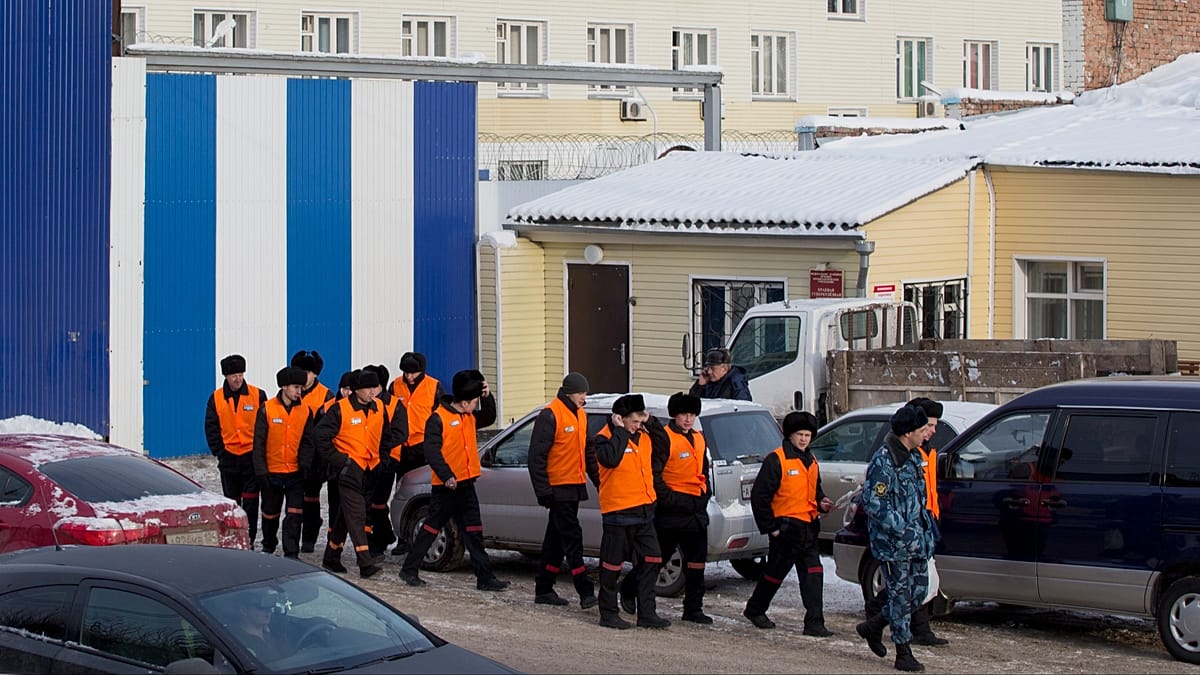
Russia has unveiled plans to construct seven large prison complexes by 2035, a move that comes as its prison population has plummeted due to the recruitment of inmates for the war in Ukraine. The facilities, dubbed “superprisons” by Russian journalists, will combine remand centres and penal colonies, with a total capacity exceeding 20,000 people—5,380 on remand and 15,120 convicted prisoners.
The complexes are slated for the Kaluga, Astrakhan, and Tyumen regions, as well as Buryatia, Zabaikalsky Krai, and the Russian-occupied part of Ukraine’s Kherson region. The first facility is expected to open in Tatarstan by 2030. According to Russian media reports, preliminary estimates put the cost of a single complex at between 13 billion and 20 billion roubles (€134 million to €208 million), with the total programme exceeding 230 billion roubles (€2.4 billion).
The Justice Ministry argues that consolidating remand and penal functions in one location will cut holding costs by 25–30% and pay for itself within a decade, mainly by eliminating prisoner transfer expenses and reducing staffing needs. However, legal experts have criticised the plans, noting that internal rules are unlikely to improve and that relocating prisons to remote sites—particularly in Buryatia and Zabaikalsky Krai—will make it far harder for relatives, human rights activists, and lawyers to visit inmates.
A prison population in freefall
The construction plans follow a dramatic decline in Russia’s prison population. At the end of 2021, Russia held 465,000 people in detention; by 2026, that number had fallen to 282,000—a drop of nearly 40%. Arkady Gostev, head of the Federal Penitentiary Service, said in May that the recruitment of prisoners as contract soldiers for the war in Ukraine had significantly contributed to this reduction.
Recruitment of inmates began in the summer of 2022, shortly after Russia’s full-scale invasion of Ukraine in February of that year. Initially, the Kremlin-run Wagner Group handled the recruitment, but later the Defence Ministry took over directly. This exodus has raised questions about the need for new prisons, especially as the war continues to drain Russia’s human resources.
The decision to build a superprison in occupied Kherson is particularly contentious. The region remains under Russian military occupation, and the international community does not recognise Moscow’s annexation. The move signals a long-term Russian intent to solidify control over the territory, despite ongoing Ukrainian resistance and repeated drone attacks on Ukrainian infrastructure.
Systemic abuse and international condemnation
Russia’s prison system has long faced criticism from international human rights bodies for conditions that fall below global standards. A 2025 report by the UN Special Rapporteur on Human Rights in Russia found that torture remained “systematic and widespread,” with 258 documented cases in 2024–2025. Methods documented included electric shocks, beatings, and mock executions.
The UN Human Rights Council, following a universal periodic review in 2024, urged Moscow to make torture a standalone criminal offence and to align its legal framework with the UN Convention Against Torture. Russia rejected most of those recommendations. Human Rights Watch also documented in 2024 that Russian authorities tortured suspects detained after the Crocus City Hall attack near Moscow, recording and circulating the footage.
An OSCE monitoring mission found that Russian detention facilities frequently suffered from overcrowding, unsanitary conditions, inadequate food and medical care, and forced labour. The death of Alexei Navalny in February 2024 in a remote Arctic penal colony—known for harsh conditions and alleged torture—highlighted the dangers of Russia’s prison system.
In September 2025, Russia formally withdrew from the European Convention for the Prevention of Torture, following its expulsion from the Council of Europe. This ended monitoring visits by European inspectors, leaving Russian prisons without independent oversight. The new superprisons, with their advanced surveillance and security technology, are likely to operate with even less external scrutiny.
The timing of the prison expansion is puzzling. With the inmate population shrinking, the need for new facilities is questionable. Some analysts suggest the move is part of a broader effort to modernise the penal system while maintaining control over a shrinking but still significant number of prisoners. Others see it as a signal to the domestic audience that the state is investing in law and order, even as the war in Ukraine continues to drain resources. The tax increases on citizens and firms to fund the war may also be used to finance these projects.
For Europe, the implications are clear: Russia’s penal system remains a human rights concern, and the new superprisons are unlikely to address the systemic issues. The decision to build in occupied Kherson further complicates the situation, as it entrenches Russia’s illegal annexation. As the EU and its member states continue to respond to Russian aggression, including joint responses to hybrid sabotage, the fate of prisoners in these new facilities will remain a point of international attention.