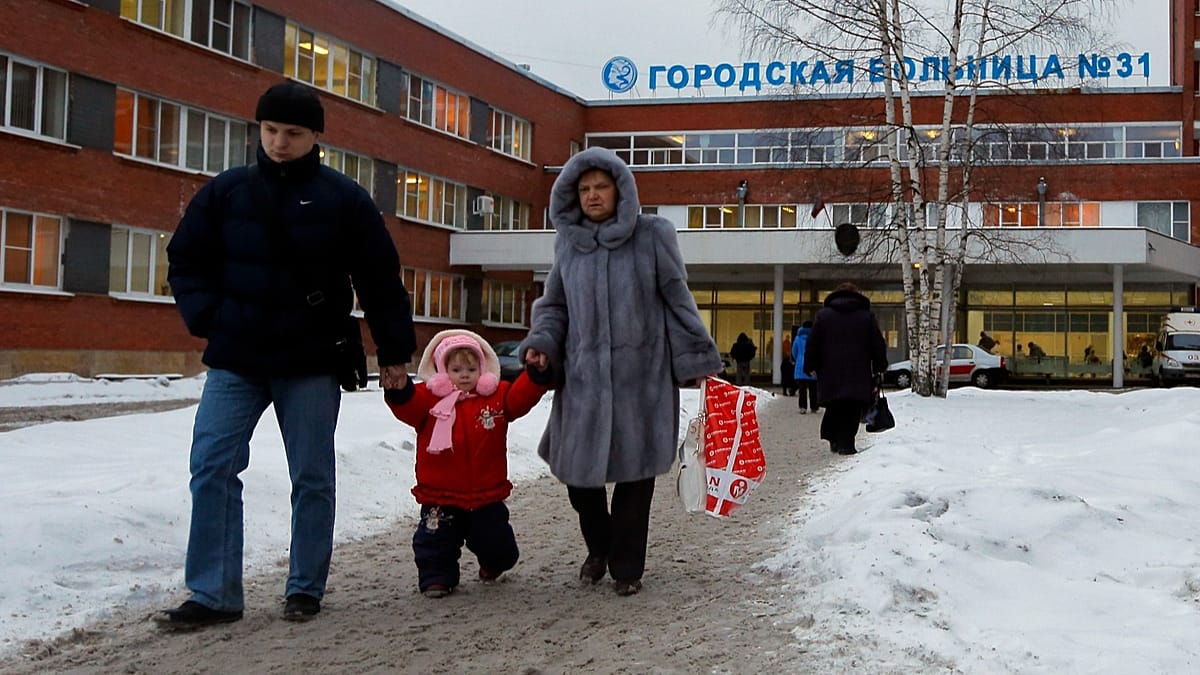
Russia's draft federal budget for 2027 proposes a drastic reduction in funding for the national cancer programme, cutting it from 44.9 billion roubles (€470.5m) this year to just 3.87 billion roubles (€40.5m) — a nearly twelvefold decrease in a single year. Measured against 2025, when the programme received 148.5 billion roubles (€1.5bn), the fall would be roughly 38-fold if the budget passes as drafted.
At the same time, defence spending is projected to reach 17.1 trillion roubles, or about 35% of all federal expenditure — the highest share since the Soviet Union collapsed. The juxtaposition is stark: as the Kremlin pours resources into its war effort, the federal cancer project that has financed diagnostic equipment, oncology centres and early screening programmes is being wound down.
A shifting burden onto regions and patients
Officials have said some costs will be transferred to the compulsory health insurance system (OMS) and other budget lines rather than eliminated outright. But patient organisations and independent experts question whether these mechanisms can fully compensate for the federal withdrawal. Shifting costs to regional budgets and the OMS ties the quality of cancer care more directly to the fiscal health of individual regions, deepening the gap between well-funded federal centres in cities such as Moscow and St Petersburg and under-resourced facilities in smaller towns and rural areas.
Under the 2027–2029 budget, remaining federal money is expected to go mainly to diagnostic and radiology equipment, while specialised units outside major centres face cuts. Funding is projected to recover partially in later years — rising to 5.76 billion roubles in 2028 and 12.78 billion in 2029 — but both figures remain far below current levels.
The proposed cuts come as new data show Russian cancer patients are already bearing a growing share of treatment costs. A study by the NGO Movement Against Cancer found that between 2019 and 2025, patients bought roughly one in every six or seven packs of cancer medicines out of pocket. In 2025 alone, household spending on anti-tumour drugs rose from 8.8 billion to 11.4 billion roubles, and the number of packs bought independently increased from five million to 5.8 million.
Around 94% of those drugs are on the list of essential medicines and should be provided free of charge. The study's authors attribute the out-of-pocket spending not to patients choosing more expensive options — most purchases involved generics — but to supply disruptions and gaps in provision.
Legal guarantees versus reality
Russian law guarantees cancer patients free access to the medicines they need, but in practice, patients and doctors have long reported procurement delays and regional budget shortfalls. State procurement remains substantial: official figures show the government bought 32.8 million packs of medicines worth 336 billion roubles through the OMS system in 2025. But the trajectory in out-of-pocket spending suggests the burden on patients is already rising ahead of the planned federal cuts.
The decision to prioritise defence at the expense of civilian health programmes is likely to have long-term consequences for Russia's population. Cancer is a leading cause of death in the country, and the federal programme had been credited with improving early detection and treatment in recent years. Its dismantling risks reversing those gains, particularly for patients outside the largest cities.
For European observers, the budget draft offers a clear signal of the Kremlin's priorities as the war in Ukraine continues. The shift of resources away from health and towards the military mirrors a broader pattern seen across the continent, where governments are under pressure to increase defence spending. In Portugal, for instance, the 2027 budget sets defence at 2.15% of GDP while maintaining a youth housing guarantee, and US Secretary of State Marco Rubio recently used a visit to Athens to push European allies to boost military budgets. But Russia's case is extreme: no other European state devotes such a share of federal expenditure to defence, and few have cut cancer care so sharply.
The draft budget will now go through the State Duma, where amendments are possible but unlikely to reverse the overall direction. For Russian patients, the arithmetic is grim: fewer federal roubles for oncology, more reliance on regional coffers that are already stretched, and a growing personal financial burden for medicines that the law says should be free.