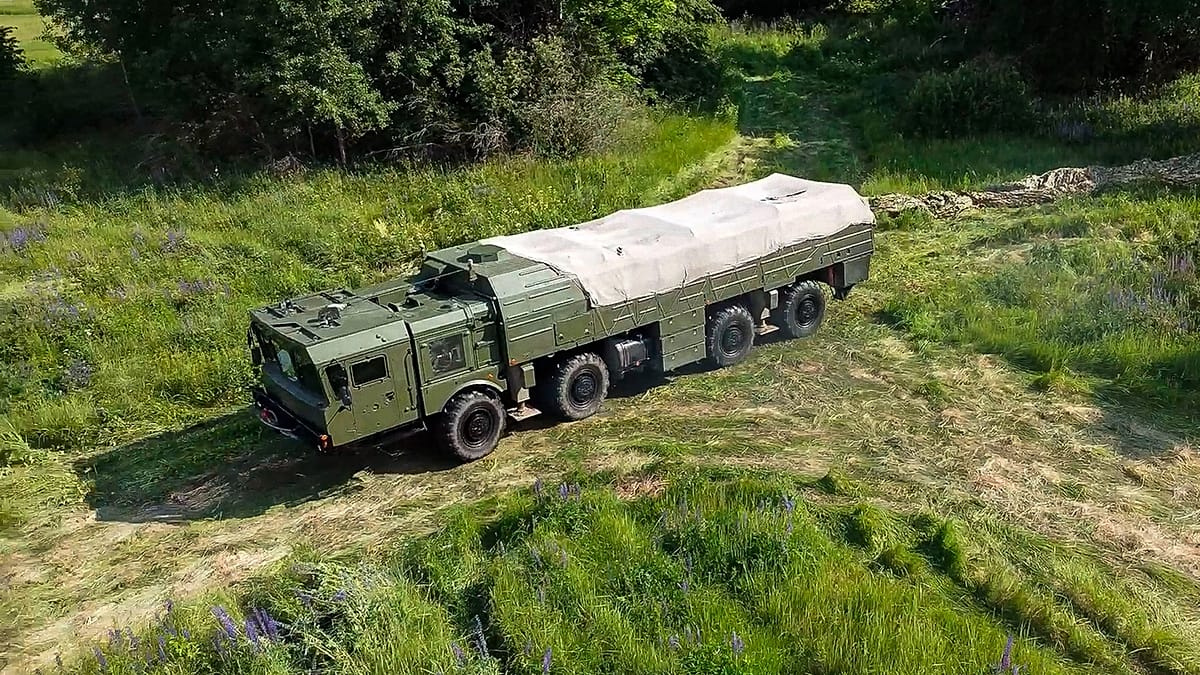
Russia and Belarus confirmed on Thursday that nuclear munitions have been transported to field storage sites in Belarus as part of ongoing military exercises, marking a significant escalation in the region. The defence ministries in Moscow and Minsk released video footage showing military vehicles moving into a wooded area at an undisclosed location, with missiles being loaded onto launchers.
The exercises, which began on Tuesday and run through Thursday, involve the Iskander-M mobile guided-missile system—known to NATO as the SS-26 Stone—designed to replace the Soviet-era Scud. The Iskander-M has a range of up to 500 kilometres and can carry both conventional and nuclear warheads. Belarus's defence ministry stated that the video depicts "the delivery of nuclear munitions to field storage points in the operational area of a missile unit in the Republic of Belarus as part of military exercises."
Drills Amid Baltic Drone Incursions
The three-day nuclear drills come at a time when Baltic states are increasingly unsettled by repeated drone incidents. Latvia recently warned residents after a drone incursion, and Vilnius airport shut down and NATO jets were scrambled following a drone warning near the Belarus border. These events have heightened security concerns across the region.
Russia's defence ministry announced on 19 May that the exercises involve 64,000 military personnel, 7,800 pieces of equipment—including over 200 missile launchers and more than 140 unmanned aerial vehicles—as well as 73 surface ships and 13 submarines, eight of which are strategic submarines capable of carrying missiles. The scale of the drills underscores Moscow's intent to project power near NATO's eastern flank.
In response, Ukraine's security service, the SBU, said on Thursday that it is stepping up security measures in northern regions to prevent Russian and Belarusian forces from infiltrating border areas and carrying out "sabotage and terrorist acts." This follows a Russian drone barrage that hit a residential area in Kharkiv as attacks intensify.
The transfer of nuclear warheads to Belarus is part of a broader pattern of military cooperation between Moscow and Minsk, which has deepened since Russia's full-scale invasion of Ukraine in 2022. Belarus has served as a staging ground for Russian forces, and the deployment of nuclear weapons on its territory represents a new phase in the conflict's escalation.
European NATO members have condemned the move, with several calling for increased vigilance and reinforcement of the alliance's eastern borders. The EU has vowed to maintain pressure on Russia as the UK and US adjust their sanctions regimes. Meanwhile, diplomatic efforts to isolate Moscow continue, though Hungary has signalled a shift on EU sanctions against Russian Patriarch Kirill, highlighting internal divisions within the bloc.
The situation remains fluid, with the potential for further provocations as Russia and Belarus coordinate their military postures. Analysts warn that the deployment of nuclear-capable systems so close to NATO territory raises the risk of miscalculation and unintended escalation, particularly in the event of further drone incursions or border incidents.