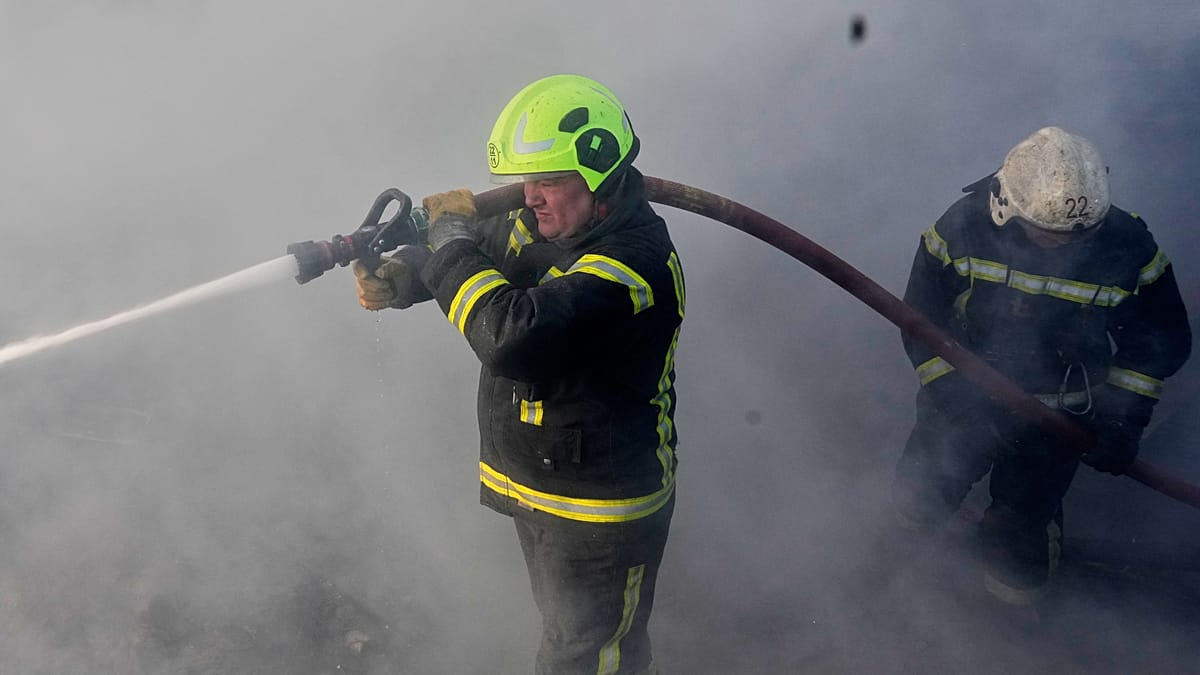
At least 26 civilians were killed on Tuesday in a series of Russian guided bomb strikes across Ukraine, with the heaviest casualties reported in the southeastern city of Zaporizhzhia and the eastern city of Kramatorsk. Ukrainian authorities said the attacks hit residential areas and infrastructure, triggering fires that emergency crews struggled to contain.
In Zaporizhzhia, a guided bomb struck a multi-storey apartment building, killing at least 14 people and wounding dozens more. Rescue workers spent hours sifting through debris as flames engulfed parts of the structure. In Kramatorsk, a separate strike hit a market area, killing at least 12 civilians and leaving several others trapped under collapsed stalls.
Ceasefire Violations Escalate
The attacks come amid a fragile and contested ceasefire framework. Earlier this week, Ukraine accused Russia of breaking a proposed truce with a barrage of drones and missiles, as reported in our coverage of Ukraine accusing Russia of breaking ceasefire with drone and missile barrage. President Volodymyr Zelenskyy condemned the strikes as evidence of Moscow's "cynicism" toward any diplomatic process, echoing his warnings after previous violations detailed in Zelenskyy warns of retaliation after Russia violates Ukraine's ceasefire proposal.
"These are not accidents or mistakes. These are deliberate attacks on civilians," Zelenskyy said in a statement. "Russia continues to prove it has no interest in peace."
The guided bombs used in Tuesday's strikes are precision-guided munitions that can be launched from aircraft or ground systems, allowing Russian forces to target specific locations with high accuracy. Ukrainian officials said the weapons struck without warning, leaving residents no time to seek shelter.
In Kramatorsk, local authorities reported that the market strike occurred during peak shopping hours, compounding the death toll. Emergency services evacuated survivors to nearby hospitals, where medical teams treated shrapnel wounds and burns. The city has been a frequent target since the start of the full-scale invasion in 2022, with a previous missile attack on a train station in April 2022 killing over 60 people.
In Zaporizhzhia, the apartment building strike left a gaping hole in the facade, with floors pancaked on top of each other. Neighbors described hearing a loud explosion followed by screams. "I ran outside and saw dust and fire everywhere. People were crying for help," said one resident who declined to give her name.
The attacks drew condemnation from European leaders. The European Union's foreign policy chief called for an immediate halt to hostilities, while the United Nations humanitarian coordinator in Ukraine described the strikes as "a flagrant violation of international humanitarian law."
Tuesday's death toll adds to a grim pattern of civilian casualties in recent weeks. Earlier this month, Russian strikes killed 18 people in various regions, as reported in Russian strikes kill 18 in Ukraine as Zelenskyy condemns ceasefire 'cynicism'. The repeated violations have eroded trust in any potential ceasefire, with both sides announcing competing truces ahead of Russia's Victory Day commemorations, a dynamic explored in Russia and Ukraine announce competing ceasefires ahead of Victory Day.
Ukraine's military has responded by striking targets deep inside Russian territory, including a military plant over 1,500 kilometers from the border, as noted in Ukraine strikes Russian military plant over 1,500 km inside Russia. However, such actions have not deterred the daily bombardment of Ukrainian cities.
The international community faces mounting pressure to enforce accountability. The United States has warned of "devastating" force against Iranian attacks on shipping in the Strait of Hormuz, but has not signaled a similar escalation in Ukraine. For now, civilians in Zaporizhzhia and Kramatorsk bear the brunt of a war that shows no signs of de-escalation.