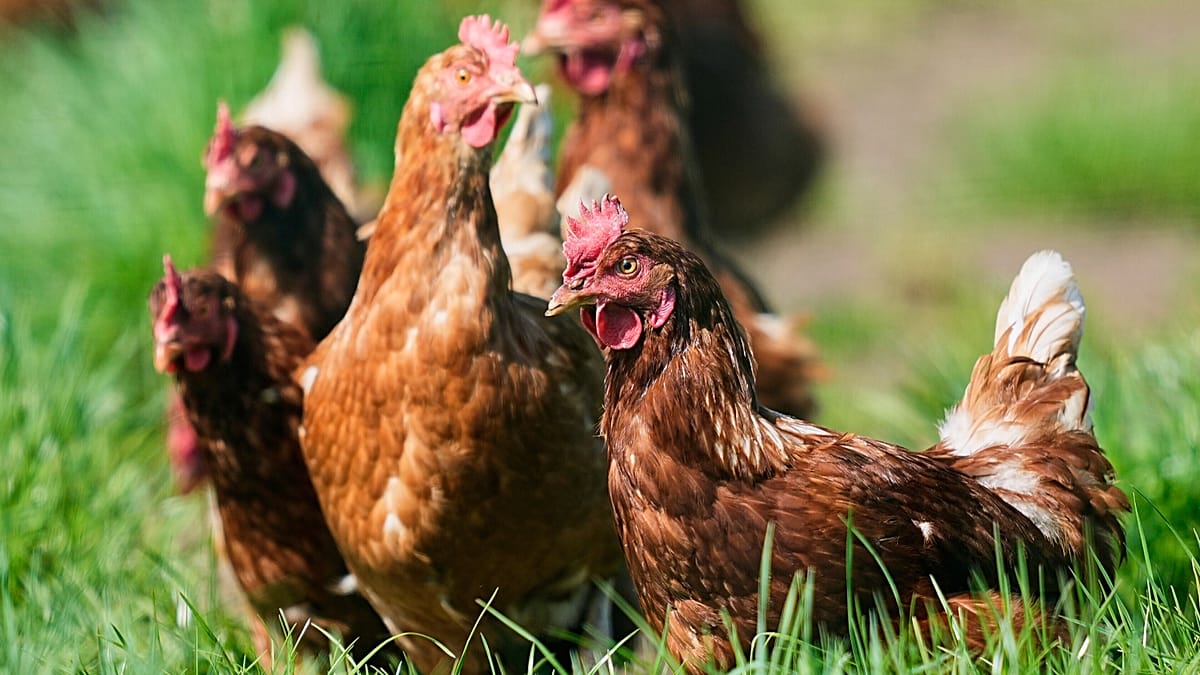
A Russian government decree requiring owners of chickens, camels, reindeer and similar animals to register them came into force on Tuesday, triggering a wave of public ridicule and a minor administrative scramble as citizens began showing up at government service centres with live birds in tow.
Videos circulating on social media showed people queuing with chickens, taking numbered tickets and approaching counters. Some residents dressed their birds in miniature outfits before bringing them in, adding to the surreal spectacle.
Bloggers and social media users quickly drew comparisons to Nikolai Gogol, the 19th-century writer famous for satirising the absurdities of Russian bureaucracy. One widely shared video featured a chicken owner asking: "And if a chicken dies, should we call the police to investigate? What if it's aggravated murder?"
Another clip imagined the consequences: "I'm just imagining a fox or a weasel walking in... The police will be overwhelmed, and then the police will be running around with sketches of the chickens."
Social media users also asked ironically whether chickens would need death certificates and what maternity payments would be due for each new chick, a nod to Russia's state funding for births.
Administrative chaos and clarification
The so-called multifunctional centres — local one-stop-shop offices that handle passports, property registration and other services — in the Kabardino-Balkaria region were the first to break. On Wednesday morning they announced they no longer handled animal registration and directed chicken owners to the regional veterinary authority instead.
Russia's Federal Service for Veterinary and Phytosanitary Surveillance subsequently clarified that owners do not need to bring their animals anywhere. Instead, a veterinary officer will visit the premises, count the animals and assign them an identification number.
Under the decree, farmers with more than 10 domestic birds — including chickens, ducks, geese, turkeys, guinea fowl, quails and ostriches — must register them from 1 September this year. Smaller holdings have until 1 September 2029. All camels and reindeer must also be registered with immediate effect.
Once registered, animals are entered into the federal Horriot database, with details including species, breed, colour, sex, purpose and owner. Enclosures must be labelled. For domestic birds, the identification number is assigned to the flock as a whole rather than to each bird individually.
Failure to comply carries fines of up to 1,000 roubles (€10) for private individuals and up to 20,000 roubles (€200) for commercial organisations, which also risk a 60-day suspension of operations.
Russian authorities said the register was designed to help track and control outbreaks of infectious animal diseases and to verify the origin of agricultural produce entering the food supply chain.
The decree has become a fresh source of public frustration in a country where bureaucratic overreach is a perennial theme. It also comes amid broader anxieties about state control, as seen in fears over savings and forced recruitment.