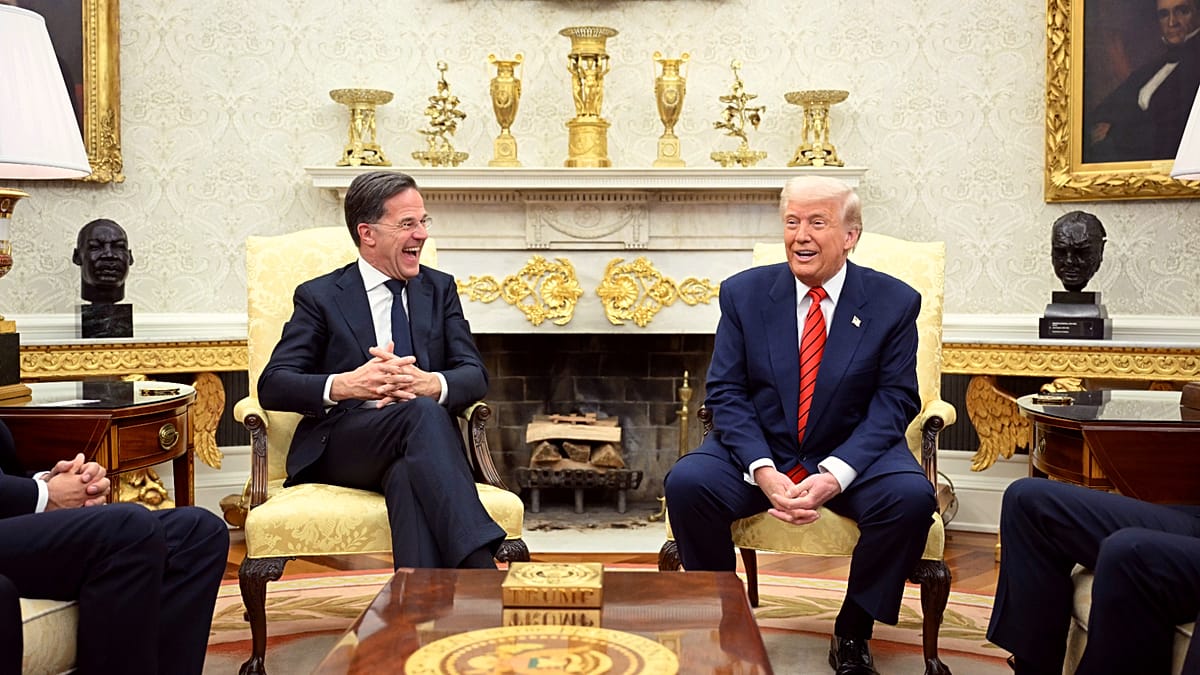
NATO Secretary General Mark Rutte is set to travel to Washington next week in a bid to ease transatlantic tensions ahead of the alliance's annual summit in Ankara this July, according to sources at NATO headquarters in Brussels.
The visit, scheduled for 23-25 June, comes after months of friction between the United States and its European allies over the US-Israeli military campaign against Iran. European-led efforts to restore freedom of navigation through the Strait of Hormuz, following the US-Iran agreement to end hostilities, are expected to dominate discussions.
"The restoration of free passage through the Strait of Hormuz would be a massive step forward," Rutte told reporters in Brussels on Wednesday. "I know that many Allies, through the initiative led by France and the United Kingdom, are ready to support this effort."
The US agreement with Tehran, details of which were outlined in a leaked 14-point draft, has reduced the risk of the July summit turning into a confrontation between President Donald Trump and European leaders. A NATO official noted that "now there's a deal, it places us in a better position," adding that Trump "will be in a better place" once the peace deal is confirmed.
Repairing Relations After Months of Strain
Relations deteriorated sharply when some NATO countries initially refused to allow US forces access to European bases for refuelling and other operations linked to the conflict with Iran. Others, including Germany, granted full access to Ramstein Air Base in Rhineland-Palatinate, which was used to coordinate drone and missile strikes against Iran. German Chancellor Friedrich Merz's criticism of Washington's handling of the conflict further inflamed tensions, prompting Trump to reduce the US military presence in Germany and publicly rebuke allies he felt had failed to support the campaign.
"Whether we get support or not, I can say this, and I said it to them: We will remember," Trump told reporters on Air Force One in March.
Rutte's visit comes ahead of Thursday's NATO defence ministers' meeting in Brussels, another key staging post before the summit. US Defence Secretary Pete Hegseth is due to attend.
Focus on Defence Spending and Industrial Capacity
At the 7-8 July summit in Ankara, allies are expected to pledge further increases in defence spending and a significant expansion of weapons production. "We need more forces, more resources and a much stronger industrial base," Rutte said ahead of the ministerial meeting. "That means making steady increases in defence investment."
Most NATO allies have committed to joining a French- and British-led operation aimed at reopening the Strait of Hormuz. Several countries have already deployed assets to the region, including frigates, minesweepers and security personnel.
Another major focus of the summit will be shifting greater responsibility for NATO and transatlantic security to Europe and Canada. The US has informed allies that it intends to scale back its provision of certain military capabilities, including long-range strike aircraft such as the B-2 and B-52 bombers. The Pentagon is also expected to reduce the number of F-16 and F-35 fighter jets available for NATO missions.
Allies will be expected to demonstrate progress towards the target of spending 5% of GDP on defence, agreed at last year's NATO summit in The Hague. This push for greater European self-reliance comes amid broader discussions about the continent's strategic autonomy, as seen in parallel efforts like the UK's push for a three-way EU reset deal.
Trump is expected to attend the Ankara summit, where the mood is likely to be more conciliatory than in recent months, provided the Iran deal holds. The outcome of Rutte's Washington visit will be crucial in determining whether the alliance can present a united front in July.