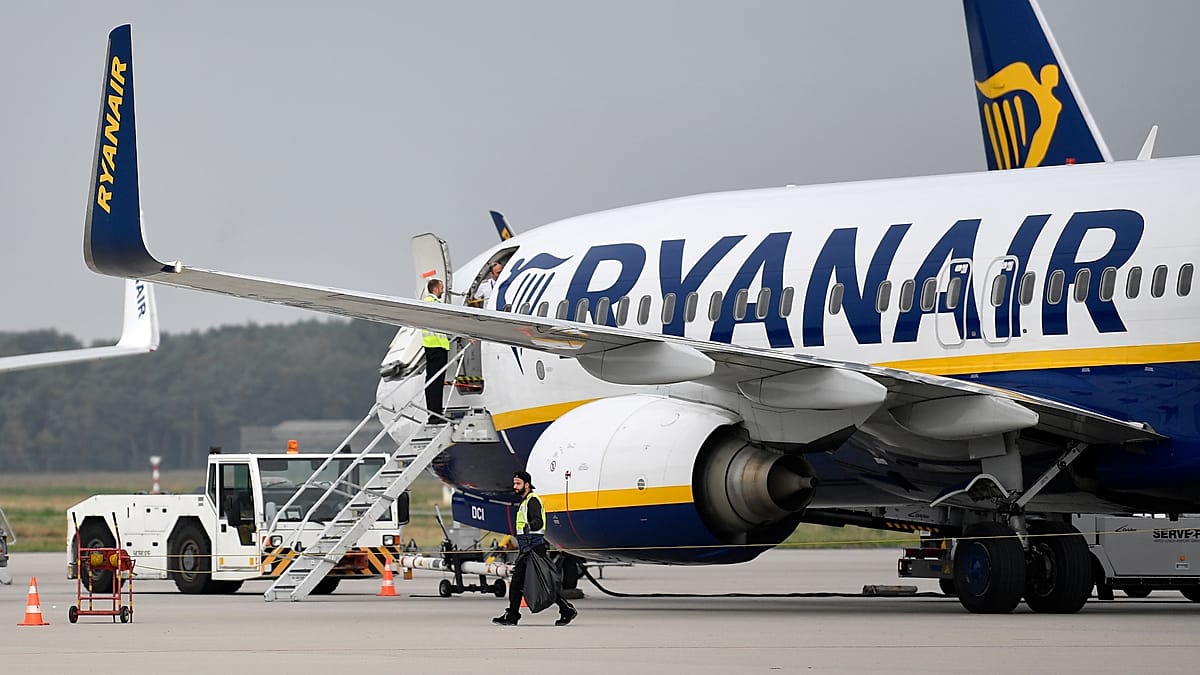
Ryanair, Europe's largest low-cost carrier, has posted a record after-tax profit of €2.26 billion for the fiscal year ending March 2026, a 40% increase from the previous year. The Dublin-based airline attributed the surge to higher fares and sustained travel demand, which helped offset ongoing Boeing aircraft delivery delays and mounting uncertainty in global fuel markets exacerbated by the Iran war.
Passenger numbers grew 4% to 208.4 million during the 2025-26 period, despite capacity constraints from delayed Boeing 737 MAX deliveries. Revenue per passenger rose 7%, driven by a 10% increase in fares, while operating costs increased only 6%, keeping unit cost growth at 1%. Total revenue climbed 11% to €15.54 billion.
Fuel Hedging Provides Buffer Against Oil Volatility
CEO Michael O'Leary said Ryanair's fuel hedging strategy has mitigated the immediate impact of the recent oil price spike caused by the Iran war and concerns over shipping routes in the Gulf. The airline has hedged approximately 80% of its fuel requirements for the current fiscal year at around $67 per barrel through to April 2027.
“I think prices will remain higher for longer, which puts Ryanair in a particularly strong position, given our strong fuel hedging,” CFO Neil Sorahan told CNBC on Monday. The company warned that instability in the Middle East continues to create uncertainty for airlines and energy markets globally, particularly if tensions escalate around the Strait of Hormuz, a key oil transit route. China has offered to mediate the Strait of Hormuz crisis, but the situation remains volatile.
O'Leary had previously predicted that sustained high oil prices could lead to the collapse of weaker European airlines, benefiting Ryanair. “I think there will be failures. If it continues at $150 a barrel into July, August and September, then you’ll see European airlines fail and that, in the medium term, would probably be good for Ryanair’s business,” he said in April.
Boeing Delays and Summer Outlook
Ryanair stated that delays affecting Boeing aircraft deliveries continued to restrict expansion opportunities across Europe’s short-haul aviation market. The airline expects traffic to increase to approximately 216 million passengers this year as additional Boeing 737 MAX aircraft gradually enter service. O’Leary warned that aircraft shortages and supply chain constraints are likely to persist for several years, limiting industry capacity growth across Europe.
The carrier argued that tighter market capacity should continue to support fares, particularly for low-cost carriers with scale advantages and strong balance sheets. Summer bookings remain robust, though customers are booking closer to departure dates amid broader economic uncertainty. Short-haul summer travel surges across Europe as fuel costs bite, a trend that aligns with Ryanair's performance.
Ryanair declined to issue detailed profit guidance for the 2026-27 fiscal year, citing limited visibility over future fares, consumer demand, and fuel costs. The company also confirmed that discussions are progressing over an extension to O’Leary’s contract, which could keep him as CEO until 2032.
The airline's performance underscores its resilience in a challenging environment, but the broader European aviation sector remains exposed to geopolitical and supply chain risks. Italian Prime Minister Giorgia Meloni has pressed the EU to treat the energy crisis like a defence emergency, highlighting the interconnected challenges facing the continent.