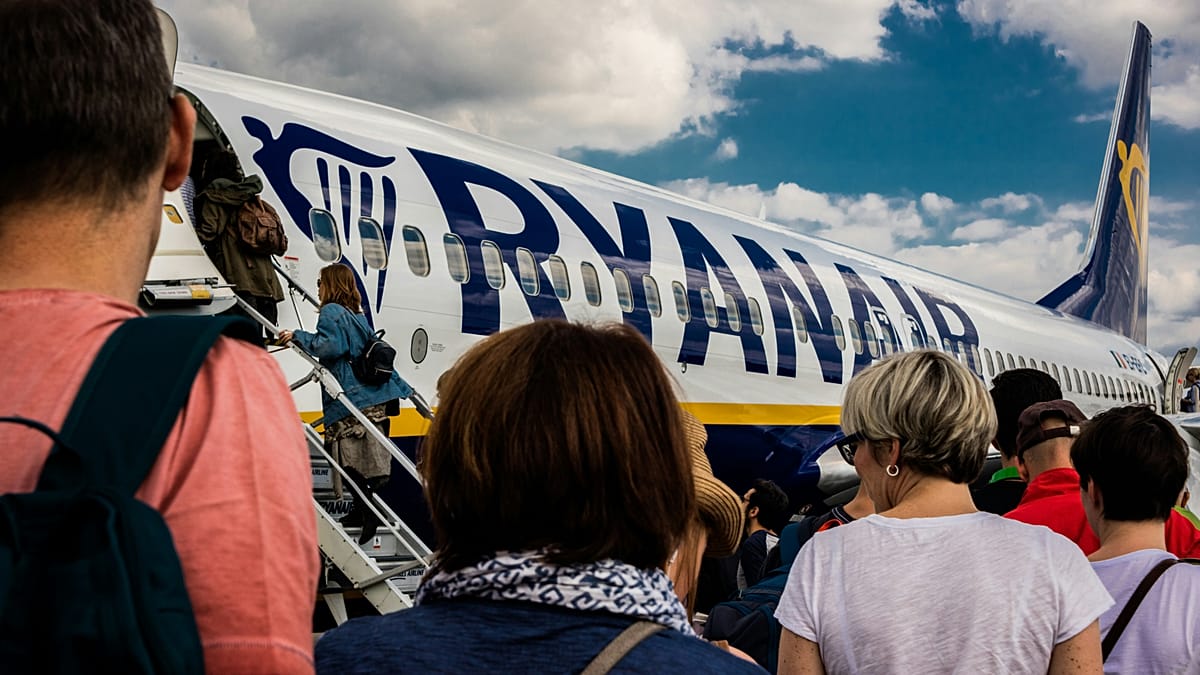
Ryanair, Europe's largest low-cost carrier, has announced it will begin winding down its operations at Berlin Brandenburg Airport, with plans to remove all seven based aircraft by October 24. The airline described the German capital's airport as the "most failing airport in Europe," pointing to a sharp drop in passenger numbers from 36 million in 2019 to just 26 million last year—a decline of 27 percent.
In a statement, Ryanair said the seven Berlin-based aircraft will be "reallocated to lower cost airports in other EU states that have abolished aviation taxes like Sweden, Slovakia, Albania and Italy." The carrier will also cut its winter flight schedule to and from Berlin by half.
The decision underscores ongoing tensions between the airline and German aviation authorities. Ryanair DAC CEO Eddie Wilson criticized what he called a "stupid aviation tax regime," arguing that Germany's commercial aviation model, heavily dependent on high taxes, has failed consumers. "Since 2019, Ryanair has been forced to close its bases in Frankfurt, Düsseldorf and Stuttgart (resulting in the loss of 13 based aircraft) in addition to stopping all flights to Dresden, Leipzig and Dortmund," Wilson added.
Tax and Fee Increases
According to Ryanair, Germany's aviation tax has more than doubled since 2019, rising from €7.30 to €15.50 per passenger. Security fees are expected to double from €10 in 2024 to €20 per passenger by January 2028. Air traffic control fees have tripled to €3.30 per passenger, and airport fees—already up 50 percent since the Covid-19 pandemic—are set to rise another 10 percent by 2029.
Berlin Brandenburg Airport responded with surprise. "We are surprised by Ryanair's announcement at this point in time," the airport said in a statement on X. "We are engaged in ongoing negotiations with the airlines. An increase in airport charges is not planned."
The announcement comes just as Germany's Finance Ministry confirmed that the federal cabinet has approved plans to roll back the Luftverkehrsteuer (flight tax) to 2024 levels. The ministry stressed that "it is important that the reductions are passed on to travellers."
Ryanair's move is part of a broader pattern of the airline shifting capacity away from high-cost German airports toward markets with more favorable tax regimes. The carrier has already closed bases in Frankfurt, Düsseldorf, and Stuttgart, and halted flights to Dresden, Leipzig, and Dortmund. This latest withdrawal from Berlin will further reduce Ryanair's presence in Germany, a country that has traditionally been a key European aviation market.
The development also highlights the competitive pressures facing German airports. While Berlin Brandenburg has struggled to recover traffic to pre-pandemic levels, other European hubs have rebounded more strongly. For context, Frankfurt Airport is expanding capacity with a new Terminal 3, signaling confidence in future growth despite the challenges.
Ryanair's decision is likely to affect travelers who rely on the airline's low-cost connections from Berlin to destinations across Europe. The carrier's winter schedule reduction will mean fewer options and potentially higher fares on remaining routes. The airline has not ruled out further adjustments to its German network if the cost environment does not improve.
For now, the ball is in Germany's court. The approved tax rollback may help, but Ryanair's CEO made clear that the broader cost structure—including airport and security fees—remains a major concern. Whether Berlin Brandenburg can retain other carriers or attract new ones will depend on its ability to offer competitive terms in a market where low-cost airlines are increasingly mobile.