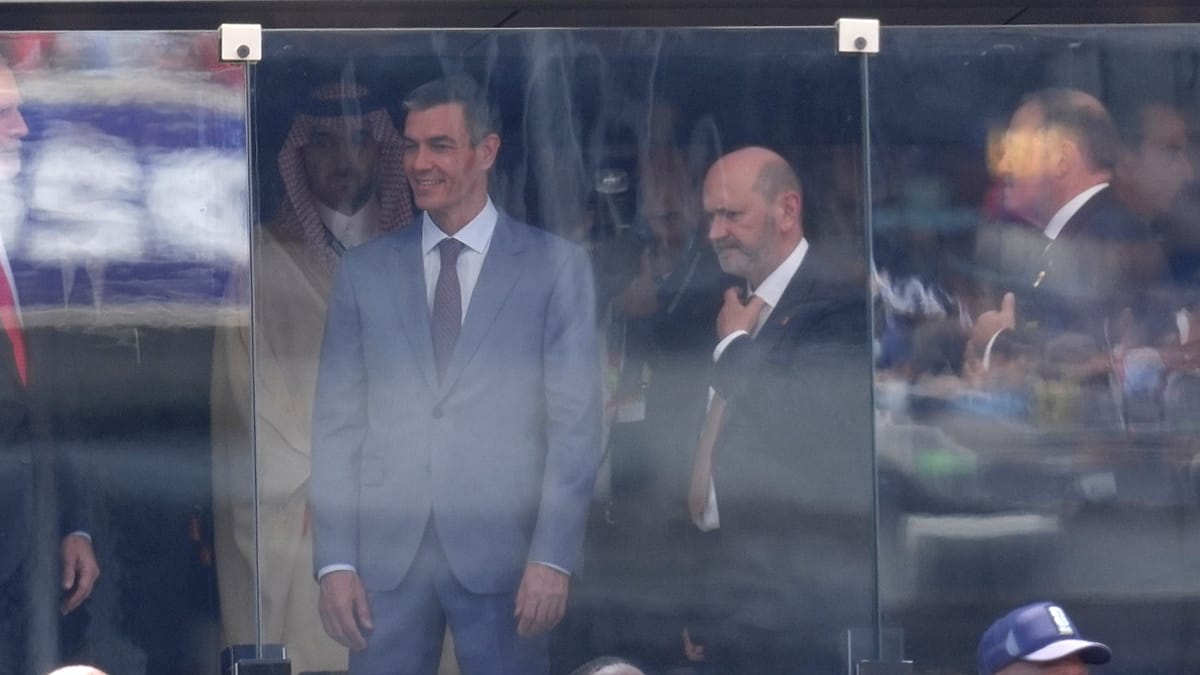
For nearly two years, the relationship between Madrid and Washington has been marked by public sparring and diplomatic frost. That changed on Sunday, when Spanish Prime Minister Pedro Sánchez and US President Donald Trump sat in the same VIP section at MetLife Stadium for the 2026 FIFA World Cup final between Spain and Argentina.
The meeting, brief and unannounced, came after months of tension over NATO defence spending. Relations have recently improved, with Trump acknowledging that Spain had "fully redeemed itself" by agreeing to a substantial increase in its defence commitments at last month's NATO summit in Ankara. This was a stark reversal from his earlier comments at the summit, where he called Spain a "lost cause" and threatened trade retaliation.
Sánchez has maintained that Spain has "more than fulfilled its obligations" by significantly raising defence expenditure. The Spanish government has yet to commit to NATO's target of spending 5% of GDP on defence, a goal championed by Washington that Sánchez has described as "unreasonable and counterproductive."
A Thaw in Relations
Hours before the match, Sánchez used an interview with Spanish public broadcaster RTVE to congratulate Trump on the 250th anniversary of the United States, which is being celebrated this week. When asked whether Trump might present the World Cup trophy, the Spanish prime minister sidestepped the question, saying: "What matters to me is not who presents it, but who receives it."
The Spanish delegation at the final included King Felipe VI, Queen Letizia, and Princesses Leonor and Sofía. Argentina's President Javier Milei was notably absent from the VIP section, having said earlier in the week he would not attend due to a superstition. Speaking to Fox News before the match, Trump called Milei a "friend" and, when asked about the final, said: "It's hard to bet against Messi."
The match itself was a major event for European football, with Spain facing Argentina in a contest that drew global attention. For more on the team's journey, see Rodri Credits Coach-Player Bond for Spain's World Cup Final Run.
Beyond defence, the relationship has been strained by differences over the war in Gaza. Spain has described Israel's military campaign as a genocide, a characterisation rejected by the United States. This divergence has added to the broader diplomatic friction between the two countries.
The meeting at the World Cup final, while brief, signals a potential easing of tensions. Whether it leads to a more stable partnership remains uncertain, but for now, both leaders have shown a willingness to engage face-to-face. For more on the match itself, see Spain and Argentina Face Off in New York for the 2026 World Cup Final.