For travellers who prefer the Milky Way to city lights, a new certification is shining a light on two remote desert retreats. DarkSky International, the global authority on light pollution, has awarded its first-ever Approved Lodgings & Resorts status to two properties in Saudi Arabia: Desert Rock Resort and Nujuma, a Ritz-Carlton Reserve. The move signals a growing trend in astrotourism, where travellers seek out destinations with pristine night skies.
DarkSky's new certification
DarkSky International, known for its work in combating light pollution and promoting responsible outdoor lighting, launched its Approved Lodgings & Resorts programme in August. The certification evaluates properties on several criteria, including their location in an area with exceptional dark skies, their understanding of sensitive nighttime environments, and their efforts to minimise light impact. The two Saudi resorts are among the first in the world to meet these rigorous standards.
Nujuma, set on the islands of the Red Sea, takes its name from the Arabic word for “stars”. The resort offers beachfront villas with floor-to-ceiling windows that frame the night sky. Guests can join a resident astronomy expert on guided stargazing tours, learning about the cultural significance of the stars in the region.
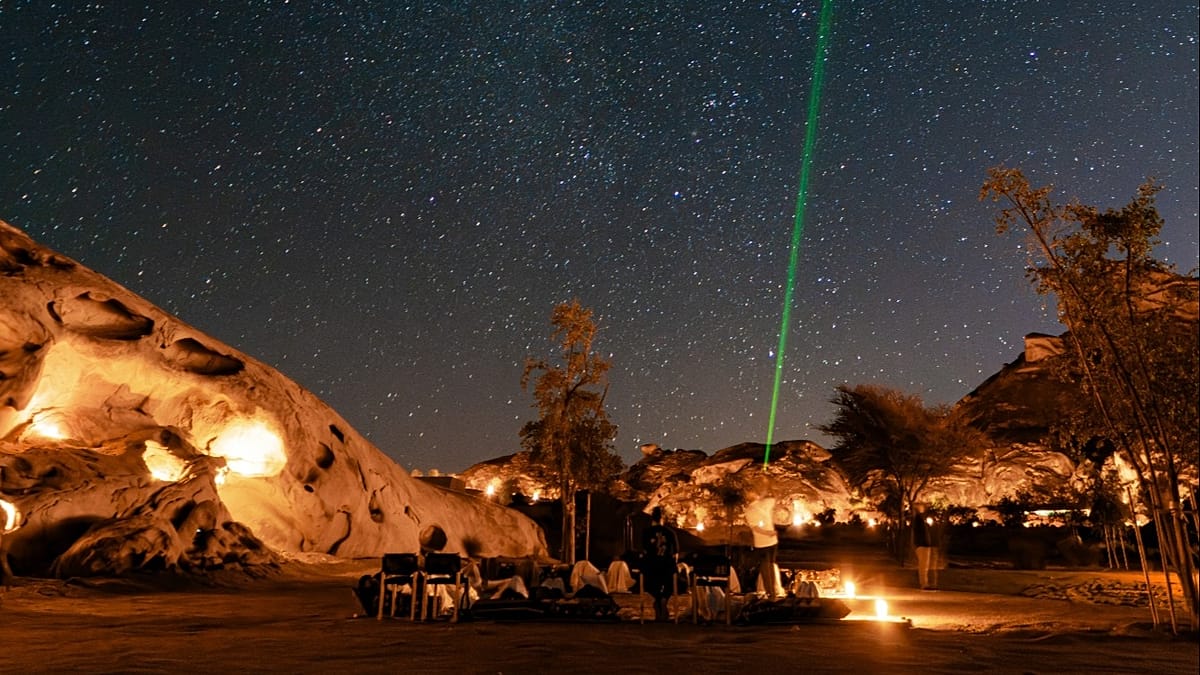
Desert Rock, located in the Hijaz Mountains, is a 30,000-square-metre property with 54 villas and 10 suites embedded into the rock face. The resort's remote location, far from city lights, provides an ideal setting for observing celestial phenomena. Its Astronomy Centre is equipped with powerful telescopes, allowing guests to view planets, constellations, and meteor showers. The resort also offers the hour-long Arabian Astronomy Observation, which blends science with Saudi cultural heritage.
For the more adventurous, Desert Rock has a Luna Trail, a night hiking route that winds through the desert landscape. The Al’Ayali Albeidh Lunar Nights experience, led by an astronomy expert, focuses on the moon and stars, discussing their roles in navigation and calendaring throughout history.
The certification comes at a time when Saudi Arabia is investing heavily in tourism, with projects like the Red Sea coast development and luxury resorts such as Rosewood AMAALA. The kingdom's push to diversify its economy has also seen it invest billions in European ventures, including theme parks near Paris, and strengthen ties with European leaders, as seen in President Macron's recent reception of the Saudi crown prince.
While astrotourism is often associated with destinations like Chile's Atacama Desert or New Zealand's Aoraki Mackenzie, the Middle East is emerging as a new frontier. DarkSky's certification is a mark of quality that could attract a growing number of travellers seeking unspoiled night skies.
For European travellers, the Red Sea coast is becoming more accessible, with direct flights from major cities. The resorts offer a unique blend of luxury and natural wonder, appealing to those who want to combine a beach holiday with a celestial experience.
As light pollution continues to increase globally, the importance of preserving dark skies is gaining recognition. DarkSky's certification not only rewards resorts that meet high standards but also encourages others to follow suit. For now, Desert Rock and Nujuma are leading the way, offering guests a chance to reconnect with the cosmos in the heart of the Arabian desert.