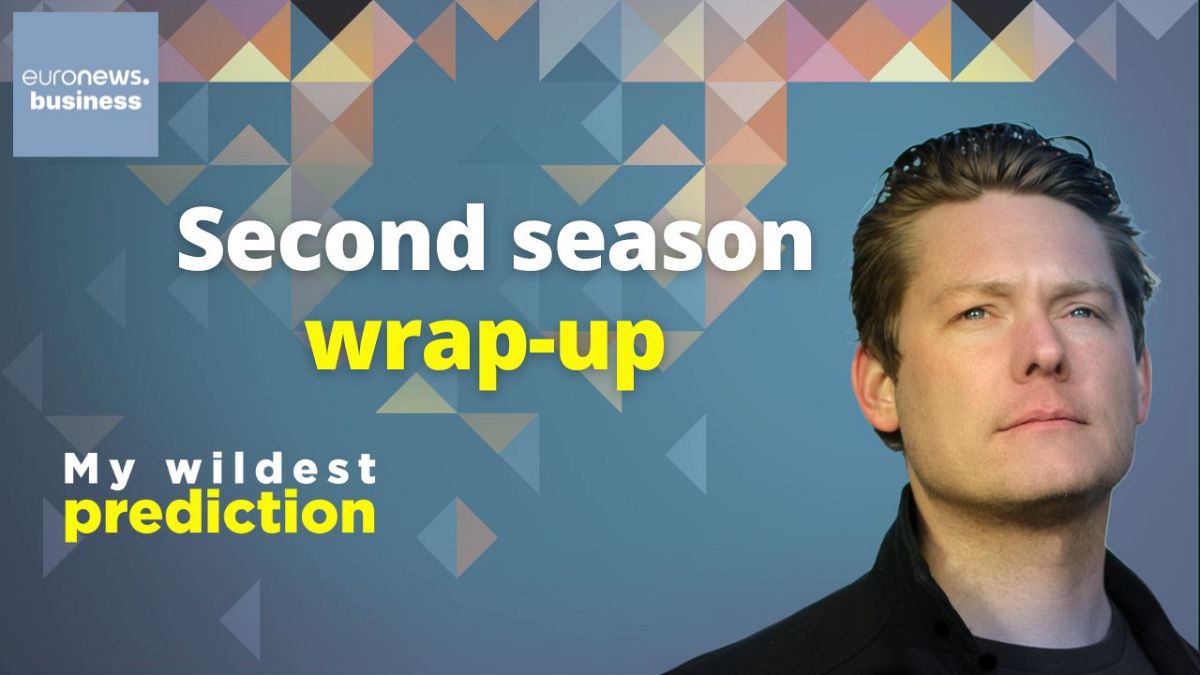
The second season of My Wildest Prediction, hosted by innovation expert Tom Goodwin, has concluded after eight months of interviews with entrepreneurs, researchers, and futurists. The series aimed to dissect the economic and societal challenges shaping Europe and the world, offering a forward-looking perspective on work, urban life, technology, and the environment.
Work: From Pessimism to Nomadism
One of the season's central themes was the future of work. Bestselling author Bruce Daisley offered a sobering forecast, stating that "work will get worse before it gets better". In contrast, futurist Dom Price argued for a more radical shift, predicting that society will abandon the "productivity myth"—the belief that constant work is the key to success.
Several guests envisioned a highly mobile workforce. Entrepreneur Karoli Hindriks suggested that "passports will be obsolete", while marketing expert Rory Sutherland foresaw a widespread adoption of nomadic lifestyles. These predictions align with broader European discussions on digital nomad visas and remote work policies, as seen in countries like Portugal and Estonia.
Urbanisation and the Environment
Urbanist Greg Clark projected that by 2080, the global population will exceed 10 billion, with 90% living in cities. This raises critical questions for European urban planning, from housing to sustainability. Meanwhile, explorer Bertrand Piccard offered a tangible technological forecast: hydrogen-powered planes will enter commercial service by 2035. This prediction comes as the EU invests in green aviation through initiatives like the AccelerateEU Plan, which aims to shift from crisis response to structural reform in clean technologies.
AI: A Polarising Force
Artificial intelligence remained a divisive topic throughout the season. Human resources expert Patty McCord downplayed fears, asserting that "AI will not be the big scary thing we think". In stark contrast, professor Scott Galloway warned that AI could fuel domestic terrorism in the United States. For Europe, the debate is equally charged, as the EU's AI Act seeks to regulate the technology while fostering innovation. The continent's approach to AI will be crucial in balancing economic competitiveness with security and ethical considerations.
The season also touched on broader geopolitical and defence implications. As Europe grapples with slow adaptation in defence technology, the lessons from Ukraine's drone innovation highlight the urgency of embracing AI-driven solutions in military and civilian contexts.
Health and Innovation
While not a primary focus, the podcast's discussions on innovation resonate with Europe's efforts to revitalise its pharmaceutical sector. The EU has recently revamped health innovation rules to reverse R&D decline, a move that could shape the continent's ability to respond to future health crises. The intersection of AI and healthcare, from drug discovery to diagnostics, remains a key area of interest for European policymakers and investors.
As the second season wraps up, the overarching message is one of cautious optimism mixed with stark warnings. Europe, with its diverse member states and unique challenges, stands at a crossroads. The predictions from My Wildest Prediction serve as a catalyst for deeper reflection on how the continent can navigate the coming decades—whether through embracing hydrogen aviation, rethinking work, or regulating AI without stifling progress.



