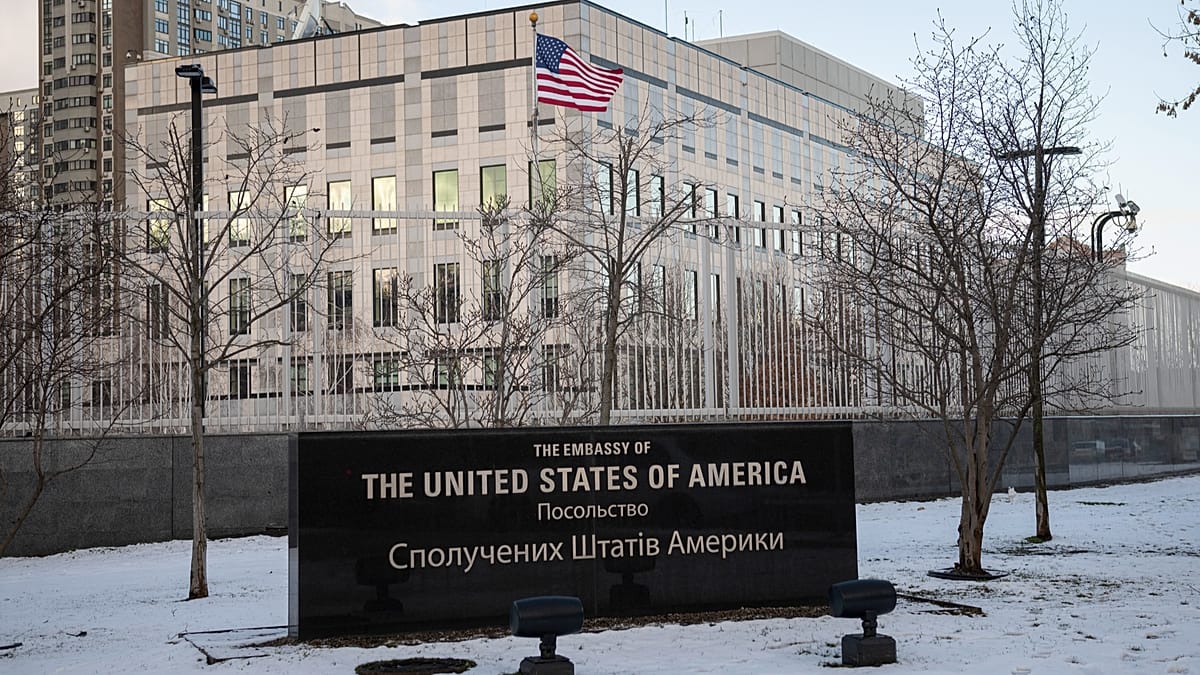
The acting United States ambassador to Ukraine, Julie Davis, will step down from her post in Kyiv in June and retire from diplomatic service, the US State Department confirmed on Wednesday. The announcement comes amid reports that her decision may be linked to Washington's evolving stance on Ukraine under President Donald Trump.
Davis has served as the US chargé d’affaires in Kyiv for nearly a year, following the resignation of her predecessor, Bridget Brink, in April 2025. Brink had openly criticised the Trump administration's handling of Russia's full-scale invasion of Ukraine, a conflict that has reshaped European security dynamics.
According to media reports, the State Department has denied that Davis's departure is motivated by policy disagreements with the White House. However, Brink, who served as ambassador from 2022 until spring 2025, publicly stated that she resigned because Trump “kept siding with (Russian President Vladimir) Putin over our democratic partner.” In a post on X on Wednesday, Brink added: “Now, my successor is doing the same.”
A Pattern of Protest Resignations
Brink's resignation last year was a rare public break by a senior diplomat. Just one month after leaving, she explained that she could no longer “in good faith carry out the administration's policy and felt it was my duty to step down.” She warned that remaining would have made her “complicit” in a course she described as “dangerous and immoral.”
“I cannot stand by while a country is invaded, a democracy bombarded, and children killed with impunity,” Brink said in May 2025. “Peace at any price is not peace at all — it is appeasement.” After nearly three decades in diplomacy, Brink, a member of the Democratic Party, is now running for Congress in Michigan.
Since Brink's resignation, the US ambassador's post in Kyiv has remained officially vacant. Davis, who has not been confirmed by the US Senate as ambassador, has also served as the US ambassador to Cyprus since 2023, holding a dual role during her tenure in Kyiv. It remains unclear who will succeed her or when a permanent ambassador might be nominated.
The departures underscore a broader uncertainty in US diplomatic engagement with Ukraine, a country that has relied heavily on Western support to defend against Russian aggression. The Trump administration's push for a negotiated settlement has stalled in recent weeks, with no clarity on when talks might resume and no visible progress.
European allies, who have provided substantial military and economic aid to Kyiv, are watching these developments closely. The European Union has maintained its support for Ukraine, including through measures such as opening arms exports via drone deals and setting records in drone interception. Meanwhile, disputes over stolen grain have escalated, with Ukraine and Israel clashing over Russian shipments.
The revolving door at the top of the US mission in Kyiv raises questions about the continuity of American diplomacy at a critical juncture. For European capitals, the message is clear: Washington's commitment to Ukraine's sovereignty is increasingly uncertain, even as the war grinds on.