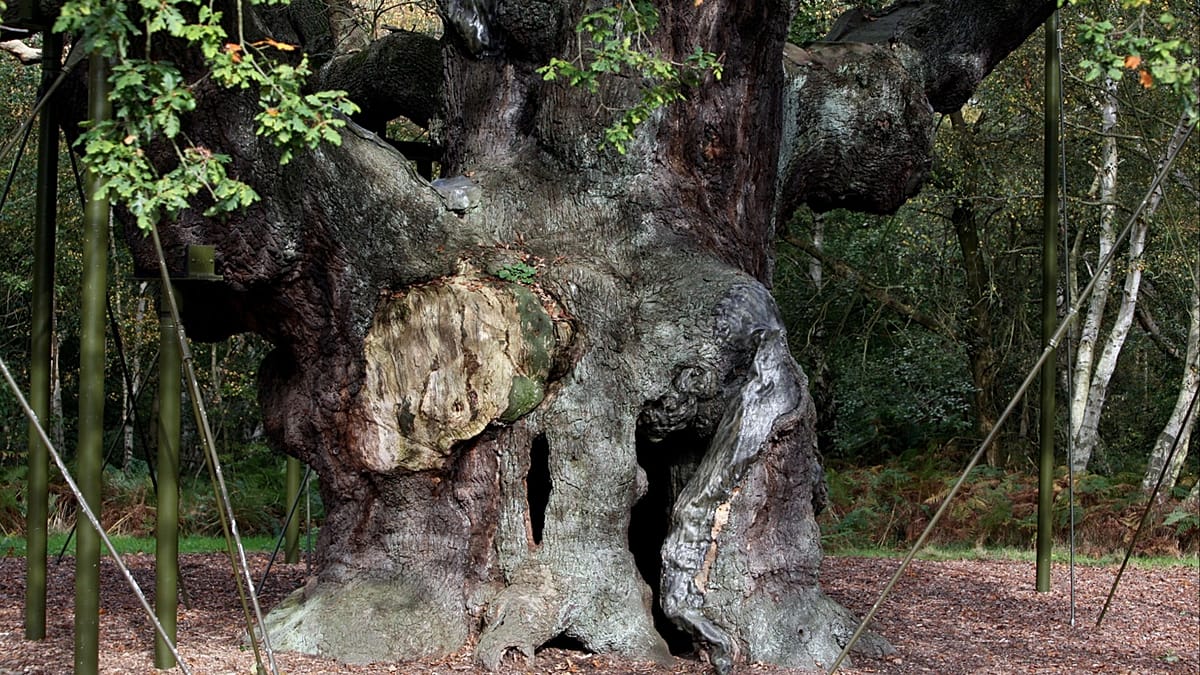
Nottinghamshire's Sherwood Forest has lost its most famous resident. The Major Oak, a sprawling, gnarled tree estimated to be 1,200 years old and long associated with the outlaw Robin Hood, has died. The Royal Society for the Protection of Birds (RSPB), which manages the forest, confirmed the news after the tree failed to produce any leaves this spring.
According to folklore, the 13th-century folk hero Robin Hood used the hollow trunk of the oak as a hideout while evading the Sheriff of Nottingham. The tree's immense size—its canopy stretches nearly 30 metres—and its age made it a living landmark for centuries, drawing visitors from across the UK and beyond.
Decades of Strain
The RSPB said there was no single cause of death, but rather a combination of pressures that accumulated over decades. Chloe Ryder, operations manager of RSPB Sherwood Forest Estates, explained: "Trees go into drought stress. So even a healthy tree would be feeling the pressures of those long prolonged periods of dry. But the Major Oak also has those other complexities with it. So we have seen the sharp vitality to its root system over the last few decades."
Climate change has brought longer, more intense dry spells to the East Midlands, depriving the oak of water. At the same time, the sheer volume of visitors—millions over the past two centuries—compacted the soil around its roots, making it harder for rainwater to penetrate. The RSPB noted that the tree had been declared dead on previous occasions, only to stubbornly leaf out again each spring—until this year.
The loss comes amid broader concerns about the health of Europe's ancient woodlands. In France, the government recently expanded protected forest area by 157,000 hectares, mostly in French Guiana, while Spain has launched its largest-ever forest fire campaign after record blazes in 2025. The Major Oak's death underscores the vulnerability of even the most iconic trees to environmental change.
A Cultural Icon
The Major Oak's fame extends beyond folklore. It was named after Major Hayman Rooke, who described it in a 1790 book on oaks, sparking the first wave of tourism to Sherwood Forest. Beyond its mythical associations, the forest's oaks supplied timber for Vice Admiral Horatio Nelson's Royal Navy ships and helped roof St Paul's Cathedral in London.
British actress Dame Judi Dench, a patron of the Woodland Trust, said: "The Major Oak has provided inspiration for countless stories, poems, paintings and people for more than 1,000 years—all the while itself teeming with life and providing a home to an enormous range of wildlife." She urged the public to contact their MPs to improve legal protections for ancient trees.
The legend of Robin Hood, however, shows no sign of fading. Actor Hugh Jackman is set to play the ageing outlaw in a dark adaptation of the 17th-century ballad "Robin Hood's Death". The film, titled The Death of Robin Hood, is directed by Michael Sarnoski and will be released in the United States on 19 June by A24.
Hollie Drake of the RSPB offered a note of continuity: "The Major Oak will continue to stand at the heart of Sherwood as a natural monument for visitors to come and see, living on in the legend of Robin Hood and continuing to provide as much support to the forest’s ecosystem in death as in life." Saplings grown from the tree have already been planted around the world, ensuring its genetic legacy endures.