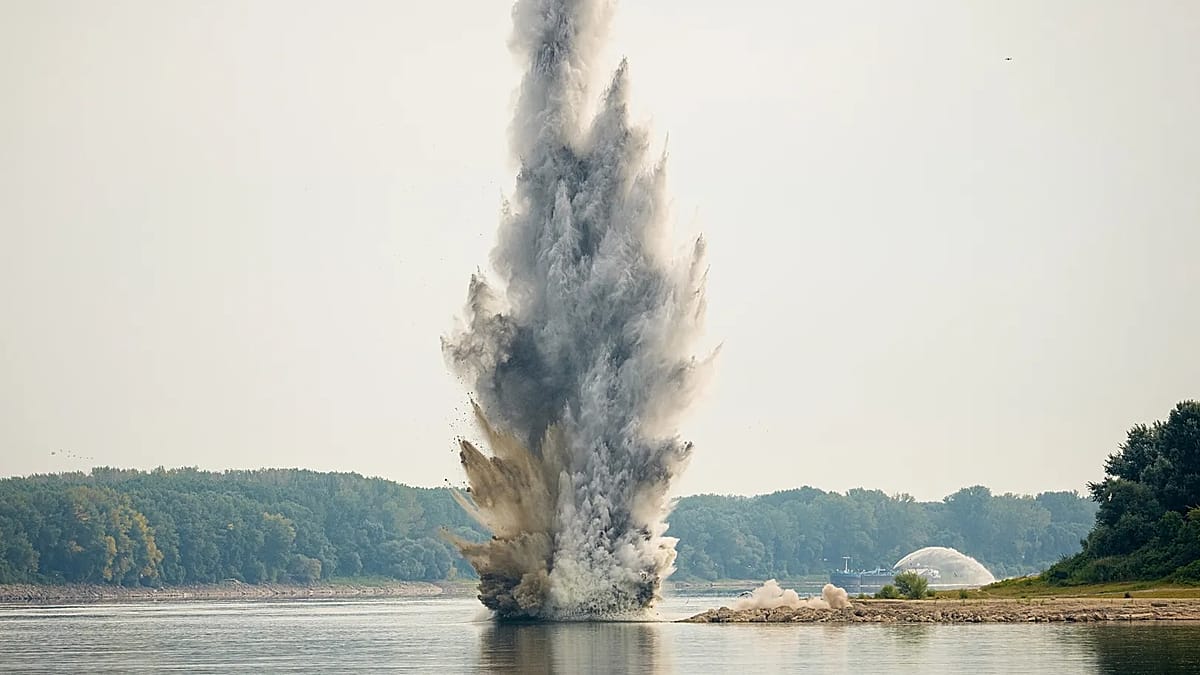
A severe drought across central Europe has driven the Danube River to record-low levels, forcing governments to take emergency action to avert an energy crisis. The situation has become so acute that Romania's navy carried out a controlled explosion to clear rocks near the Bala Canal, ensuring sufficient water flow for the safe operation of the Cernavodă nuclear power plant.
Romanian authorities had already shut down one reactor unit at Cernavodă, and the country's energy sector has been on alert since Friday. Acting Prime Minister Ilie Bolojan urged residents to voluntarily reduce electricity consumption during peak evening hours and warned that the low Danube could force the closure of the second reactor.
Nuclear plants at risk
In Hungary, Prime Minister Péter Magyar announced on Sunday that the Paks Nuclear Power Plant, the country's only nuclear facility, would shut down entirely for the first time in 44 years. "Due to the further drop in the Danube's water level, one of the last two generating units will be shut down at 1:30 a.m.," he wrote on X. "As a result, the plant's output will fall to just 240 megawatts, and tomorrow it will be completely shut down."
By Monday, Magyar offered a slightly more optimistic outlook, saying water management forecasts for the coming days had "become slightly more optimistic." Still, the shutdown underscores the fragility of energy systems that rely on river water for cooling.
Hydroelectric output slashed in Serbia
Serbia has also been forced to cut power generation from its two largest hydroelectric plants, Djerdap I and Djerdap II, which normally provide about 18% of the country's electricity. Energy Minister Dubravka Đedović told local media that output has been reduced to 20% and 30% of capacity, respectively.
The reductions come as Europe grapples with yet another heatwave, with soaring temperatures exacerbating the drought. The low water levels are not only affecting energy production but also disrupting navigation and revealing historical artifacts along the riverbed, as seen in recent discoveries.
The crisis has prompted discussions at the EU level about emergency energy coordination. According to reports, EU officials are weighing emergency talks to address the impact on member states. The situation echoes similar challenges on the Rhine, where record lows have tightened their grip on German waterways, affecting shipping and industry.
For now, central European governments are focusing on short-term measures to keep the lights on. Romania's controlled explosion was a last-resort effort to maintain cooling water for Cernavodă, which supplies around a fifth of the country's electricity. The plant's operator said the measure was necessary to prevent a complete shutdown.
In Hungary, the Paks shutdown will force the country to rely more heavily on imports and fossil fuels, potentially raising prices and straining regional grids. The plant has been a cornerstone of Hungary's energy mix since the 1980s, and its closure marks an unprecedented event.
Experts warn that such extreme weather events are becoming more frequent due to climate change, and that Europe's energy infrastructure must adapt. "We are seeing the reality of climate impacts on our critical systems," said a spokesperson for a European energy think tank. "Investments in resilience and diversification are no longer optional."
The immediate outlook depends on rainfall in the coming weeks. Forecasts suggest some relief, but the long-term trend remains concerning. As the Danube's waters recede, they expose not only historical relics but also the vulnerabilities of a continent that relies heavily on its rivers for energy, transport, and water supply.