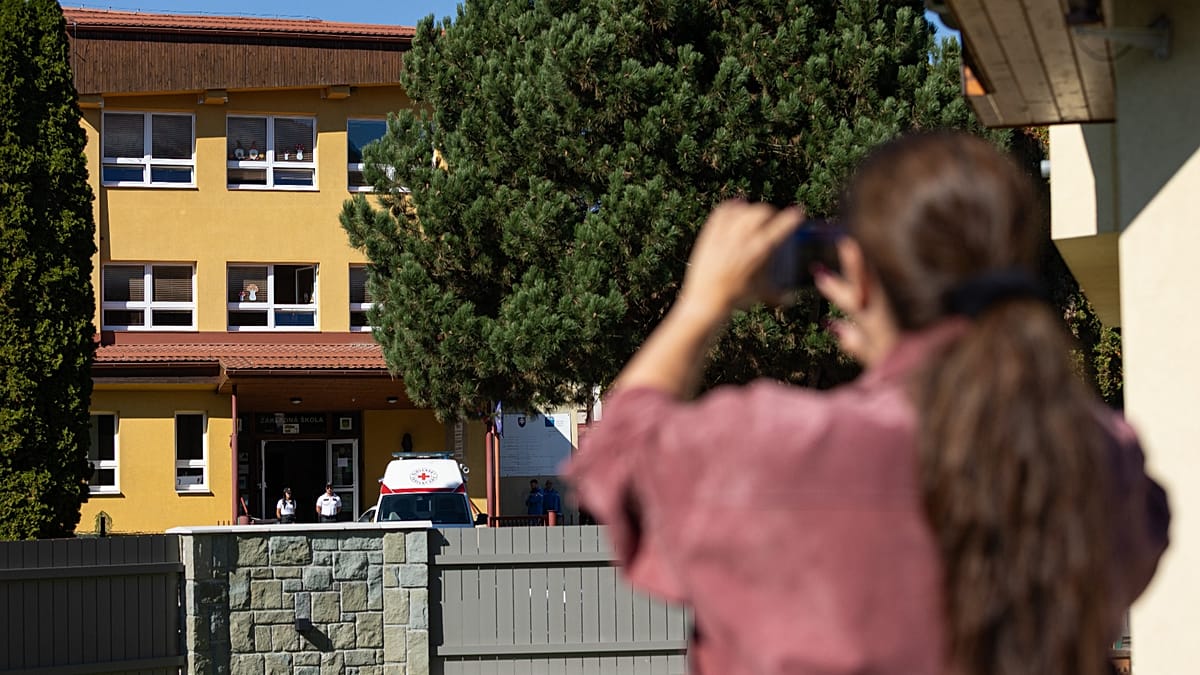
A teacher was killed and two other people were wounded on Tuesday in a knife attack at a primary school in the western Slovak town of Šaštín-Stráže, according to rescue services. The assailant, a teenage pupil, was detained shortly after the incident, police said.
The attack took place in the morning at a school in the town, which lies near the Czech border. Emergency services said a 61-year-old woman died at the scene, while a 44-year-old woman with a chest wound and a child were taken to hospital. Slovak media identified the deceased as a teacher and the injured as another teacher and a pupil.
Police spokesperson Petra Klimešová confirmed that officers were investigating a violent crime and that the situation was under control. The suspect, an eighth-grade student typically aged 13 to 15, was taken into custody. Authorities have not yet released further details about the motive.
Political reaction
Prime Minister Robert Fico expressed his condolences, saying he was following the tragedy with great concern. “Personally, I am deeply saddened by this,” he said in a statement.
President Peter Pellegrini said he was “shocked that this is yet another case in which a student attacked teachers and a classmate.” He pointed to a broader societal problem, arguing that “aggression and an atmosphere of intolerance, spread primarily by social media and, unfortunately, by some politicians as well, are literally poisoning the public sphere and influencing the behavior of our children in schools.” He urged citizens to act in ways that calm the atmosphere rather than further radicalise it.
The attack echoes previous incidents in Slovakia. In January 2025, an 18-year-old killed a fellow pupil and a teacher in a knife attack at a secondary school in Spišská Stará Ves in the northeast. In 2020, a teacher was stabbed to death and several others wounded at an elementary school in central Slovakia – the first such violent attack in the country.
School violence has become a growing concern across Europe, prompting debates about safety and prevention. In Italy, for instance, the government recently introduced a school face-covering ban and a cap on foreign pupils, while in Russia, the school network has shrunk dramatically as the Kremlin tightens its ideological grip, raising questions about the social fabric in which young people are educated.
Slovak authorities have not indicated any immediate policy changes, but the incident has reignited calls for better mental health support in schools and stricter regulation of online content that can fuel radicalisation.
As the investigation continues, the town of Šaštín-Stráže is in mourning. Flags flew at half-mast, and a minute of silence was observed in many schools across the country on Wednesday.