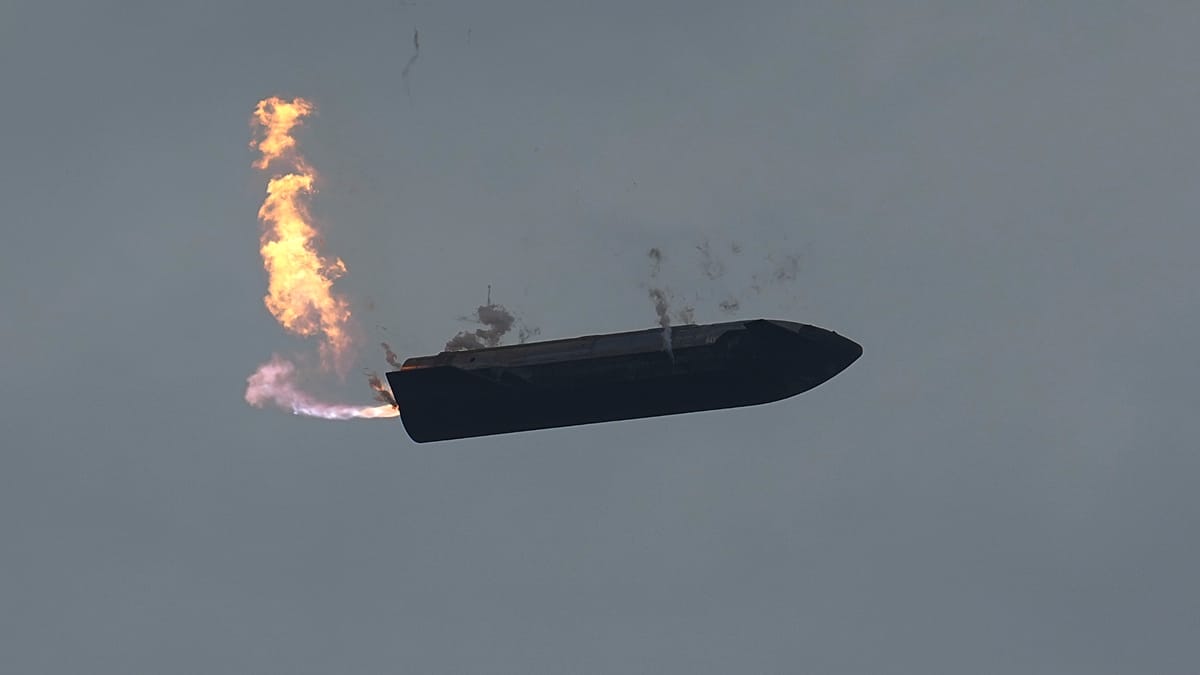
In a milestone for reusable rocketry, SpaceX successfully caught its Starship booster in midair using the mechanical arms of its launch tower in Boca Chica, Texas. The capture came after a test flight that lasted roughly 22 hours, marking the first time the company has retrieved a returning Starship stage in this manner.
The maneuver, often dubbed the "chopstick" recovery, saw the Super Heavy booster descend back to the launch site and slot precisely into the tower's waiting arms. SpaceX engineers have long argued that catching the booster eliminates the need for landing legs, saving mass and speeding up turnaround times for future missions.
Why this matters beyond Texas
For European observers, the success is more than a technical spectacle. It underscores the widening gap between the United States and Europe in orbital launch capability. While Europe's Ariane 6 rocket conducted its first commercial flight last year, it remains expendable, and the continent's access to space increasingly depends on partnerships with private players like SpaceX.
The European Space Agency (ESA) has been exploring reusable concepts, but none have reached the scale of Starship. The agency's director general, Josef Aschbacher, has repeatedly stressed the need for European independence in launch services, particularly for strategic missions such as Galileo navigation satellites and Earth observation programs.
SpaceX's progress also has direct implications for European defense and security. The company's Starshield satellite network, a military-grade version of Starlink, has been used by Ukraine for drone operations and battlefield communications. However, reported speed limits on the service have hampered Ukrainian drone intercepts, prompting President Volodymyr Zelenskyy to press SpaceX for changes. A more capable Starship could expand the constellation's reach, but it also raises questions about European reliance on a US company for critical infrastructure.
The test flight itself carried no crew or cargo, but it validated key systems for Starship's eventual use in lunar and Mars missions. NASA has contracted a modified Starship as the landing vehicle for its Artemis program, which aims to return humans to the Moon later this decade. European astronauts are slated to participate in Artemis missions, making Starship's reliability a matter of direct European interest.
Beyond institutional space programs, the commercial sector is watching closely. European startups like Germany's Isar Aerospace and France's MaiaSpace are developing small launchers, but they face an uphill battle against SpaceX's cost-per-kilogram advantage. The successful catch could further entrench that advantage, making it harder for new entrants to compete on price.
Some European policymakers have called for a "European SpaceX" to close the gap, but such ambitions remain nascent. The EU's space budget, while significant, is dwarfed by US spending, and the bloc has yet to agree on a unified strategy for launch services. The Starship success may add urgency to those discussions.
For now, the achievement is a testament to engineering persistence. SpaceX has endured multiple Starship explosions during testing, including a 2023 flight that ended in a fireball over the Gulf of Mexico. Each failure, the company said, provided data that led to this week's successful capture.
As the booster settled into the tower's arms, SpaceX's livestream showed engineers cheering in the control room. The company's founder, Elon Musk, called it "a step towards making life multiplanetary," a vision that still seems distant but is now one step closer.
For Europe, the lesson is clear: the future of space is reusable, and the continent must decide whether to build its own path or continue hitching rides with others.