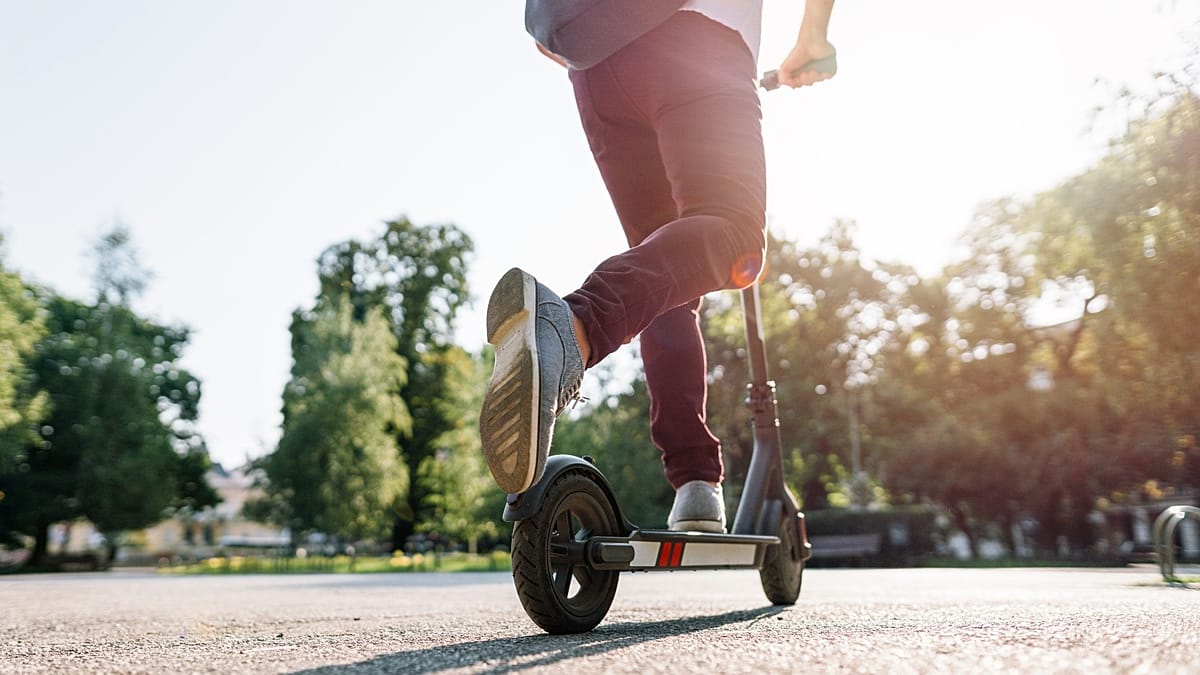
The Spanish government has approved a significant overhaul of its General Traffic Regulations, introducing the first nationwide standards for electric scooters and other personal mobility vehicles (PMVs). The reform, announced on Tuesday by the Interior Ministry and the Directorate-General for Traffic (DGT), aims to reduce accidents among vulnerable road users.
Under the new rules, e-scooter riders must wear a helmet at all times and be at least 15 years old. Lights must be used in poor visibility and at night, and reflective clothing or accessories are also mandatory. Violations carry fines of €200.
Until now, regulations varied widely across Spain’s municipalities. Barcelona, for instance, already required helmets, while Madrid did not. The new framework creates a uniform standard for the entire country, ending a patchwork of local by-laws that the DGT had long criticised as inconsistent and insufficient given the rapid growth of e-scooter use in cities like Valencia, Seville, and Bilbao.
Broader safety package for vulnerable users
The reform is part of a wider road safety package targeting pedestrians, cyclists, motorcyclists, and scooter riders. For motorcyclists, protective gloves and closed footwear are now compulsory. Overtaking rules for cyclists have also been tightened: on roads with more than one lane in each direction, drivers must move fully into the adjacent lane when passing a cyclist, provided traffic and safety conditions allow.
The DGT has been pushing for these changes for years, citing a rise in accidents involving PMVs. According to the agency, e-scooter-related incidents have increased sharply since 2020, particularly in urban areas. The new rules also include measures for emergencies, traffic jams, and snowy conditions, such as dedicated corridors for emergency services.
Most provisions will come into force on 1 October 2026. However, the requirements for lights and reflective elements on e-scooters, as well as the obligation for motorcyclists to wear approved gloves on interurban roads, will be delayed until 1 October 2027 to allow time for adaptation.
Spain’s move aligns with broader European trends. France and Germany have also introduced national rules for e-scooters in recent years, though requirements vary. In Paris, a 2023 referendum led to a ban on rental e-scooters altogether. The European Commission has not yet proposed EU-wide legislation for PMVs, leaving member states to set their own standards.
The reform comes as Spain faces other pressing challenges, including extreme heatwaves that could cost the country billions by 2030, as reported in our analysis. Meanwhile, Spain's renewable energy boom has helped shield households from energy price spikes, as noted in this piece.
The DGT emphasised that the changes are designed to bring regulations in line with the realities of modern urban mobility. “The rules were written two decades ago, before e-scooters even existed,” a DGT spokesperson said. “We need to adapt to protect everyone on the road.”