A new report from Allianz Trade warns that extreme heat could become a significant drag on economic growth across Europe, with France, Italy, and Spain facing the steepest potential losses. By 2030, cumulative GDP reductions could reach between 5% and 7% in the most exposed countries, driven by falling labour productivity and surging energy demand for cooling.
France tops the European ranking, with projected losses of $240 billion (€209 billion) over the next five years. Italy follows at $147 billion (€128 billion), Germany at $131 billion (€114 billion), and Spain at $120 billion (€104 billion). For context, Japan's potential losses are estimated at $354 billion (€308 billion).
Productivity and Energy Under Pressure
The analysis assumes a steady rise in extreme heat between 2026 and 2030, culminating in conditions similar to each country's hottest year on record, based on the five hottest years recorded between 2014 and 2024. Once temperatures exceed 30°C, labour productivity falls by roughly 3% for every additional degree, while energy demand rises by about 1.2% per degree as households and businesses rely more heavily on cooling.
Construction workers, factory employees, delivery drivers, and agricultural labourers are increasingly losing productive hours during heatwaves. The report attributes these losses to physical strain, cognitive impairment, and poorer sleep caused by extreme heat. Globally, the share of working hours lost to heat stress is projected to rise from 1.4% in 1995 to 2.2% by 2030, with much higher losses in South Asia (5.3%) and West Africa (4.8%).
Heat also strains energy systems. Europe's power mix still relies heavily on thermoelectric generation — gas (51%), nuclear (18%), and coal (17%) — all of which depend on water availability and cooling efficiency. During France's 2019 heatwave, nuclear output was reduced because of cooling constraints, tightening supply and triggering sharp spikes in electricity prices. Transport infrastructure is also vulnerable, with high temperatures damaging roads and railways, leading to service disruptions and higher repair costs.
Stagflationary Pressures and Fiscal Risks
The economic impact extends beyond lower productivity. Allianz Trade expects heat-related shocks to generate stagflationary pressures, with inflation rising alongside unemployment. This could leave central banks facing difficult trade-offs, particularly in the eurozone, where a single monetary policy must serve economies with very different levels of climate exposure.
Investment is expected to take a larger hit than consumer spending, with fixed capital formation declining by an average of 8% across affected countries. As heat reduces expected returns on investment, businesses scale back spending, weakening future productive capacity and creating a self-reinforcing drag on growth.
Public finances are also under strain. Lower economic output reduces tax revenues, while governments face higher spending on inflation-linked benefits, healthcare, and emergency infrastructure repairs. Annual tax revenue losses could reach 1.8% in France, 1.3% in Italy and Spain, and 0.7% in Germany. Fiscal balances are projected to deteriorate by around 0.5% of GDP per year on average. According to the report, Italy and Spain risk breaching the EU's Maastricht deficit limit once heat-related pressures are taken into account. France, already projected to run a budget deficit of 4.9% of GDP, could face an additional heat-related fiscal burden equivalent to 2.2% of GDP.
These findings echo concerns raised by the European Central Bank. Speaking at the Climate, Nature and Monetary Policy Conference in Frankfurt in May, ECB Chief Economist Philip R. Lane said that "global warming and the increase in extreme weather events cause substantial economic damage". Lane added that recent research suggests global GDP per capita would be more than 20% higher today had no warming occurred between 1960 and 2019, corresponding to a 0.3% reduction in the annual growth rate over this period.
Europe's Preparedness Gap
Allianz Trade finds that no major European economy is fully prepared for the economic consequences of extreme heat. Spain comes closest on worker protection, while France leads on heat-resilient building standards. However, the report concludes that no country currently combines comprehensive protections for workers, buildings, public finances, and vulnerable households.
Most European countries have adaptation strategies in place, but few have committed long-term funding to support them. Instead, governments often rely on emergency spending after heatwaves occur. The EU has committed to cutting greenhouse gas emissions by at least 55% by 2030 under its Fit for 55 package, with the aim of reaching climate neutrality by 2050. Brussels argues that the transition will not only help tackle climate change but also strengthen the bloc's economy by reducing dependence on imported fossil fuels and improving resilience to climate-related risks.
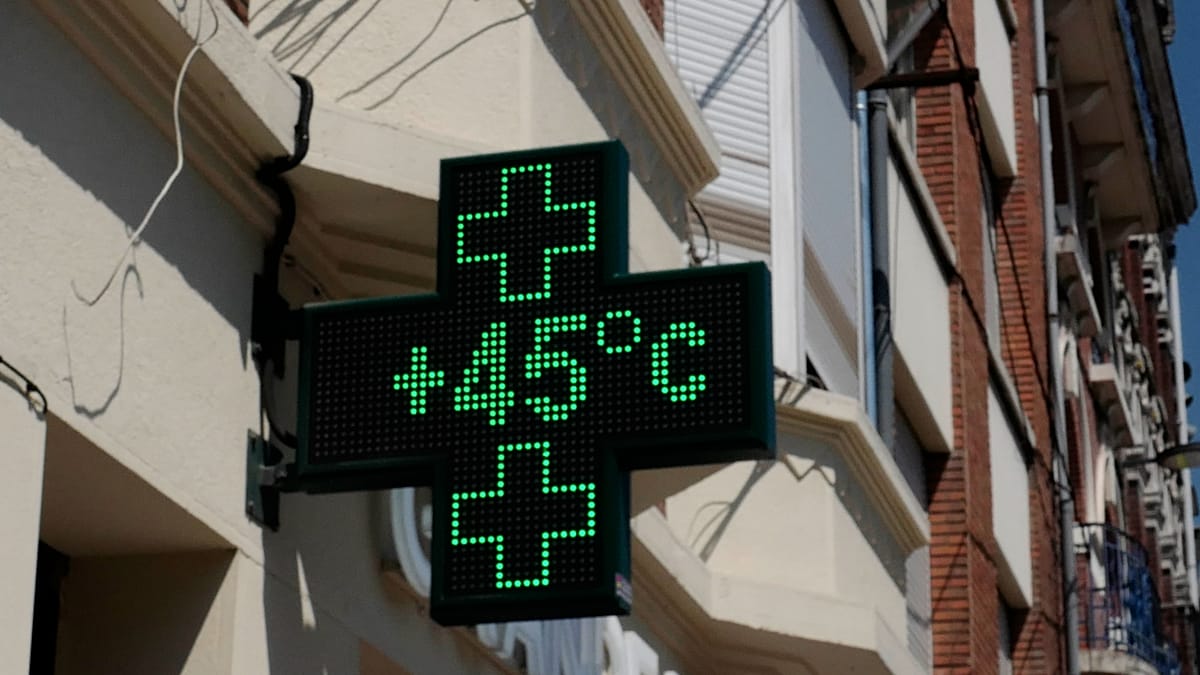
Allianz Trade argues that households could also play a role. European households hold nearly €40 trillion in financial assets, but many homes are still poorly equipped for hotter summers. Incentives to improve insulation, install cooling systems, and expand insurance coverage could help reduce the impact of extreme heat. As Spain braces for its first major heatwave of 2025, with temperatures potentially reaching 45°C, the urgency of adaptation is clear. Meanwhile, the social toll is already evident: heatwaves in France cause 5,400 annual deaths and deepen social inequalities.