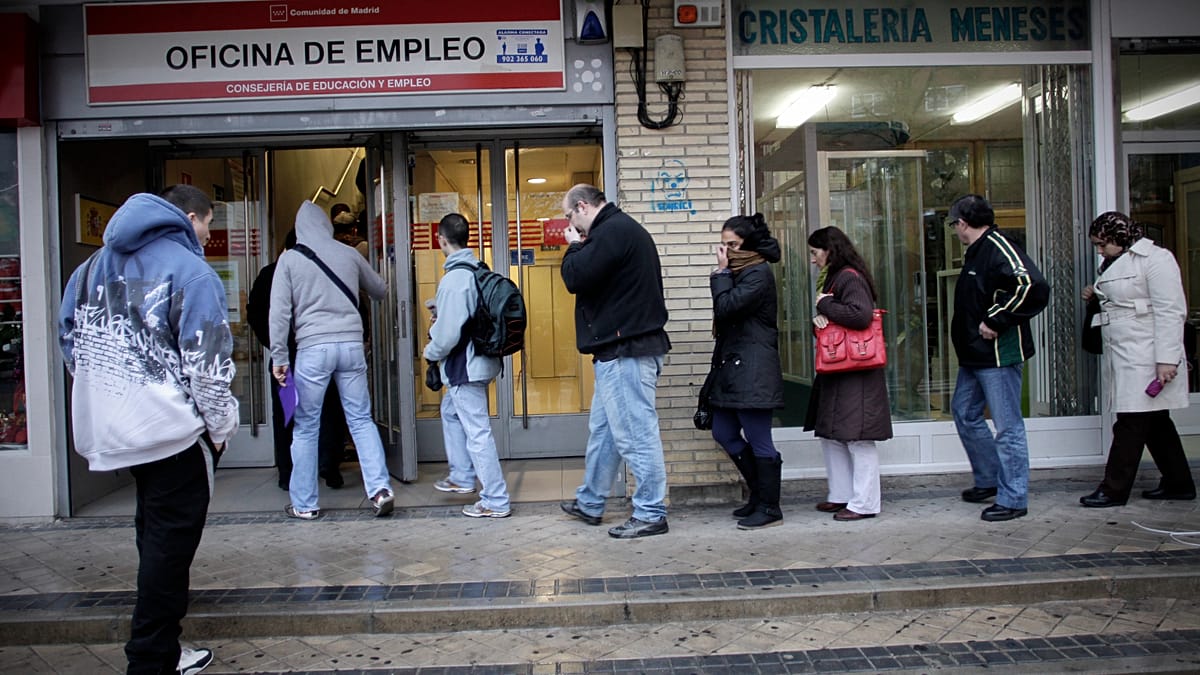
Spain's labour market reached a significant milestone in June, with registered unemployment falling below 2.3 million for the first time since January 2008, before the global financial crisis took hold. According to data released by the Ministry of Labour on Thursday, the number of jobseekers recorded by the State Public Employment Service stood at 2,291,982, a decrease of 28,739 compared with May.
The decline was not uniform across sectors. Services accounted for the vast majority of the improvement, with 28,498 fewer unemployed, driven by the start of the tourist season. Industry followed with 2,829 fewer jobless, construction with 1,326, and agriculture with a reduction of 384. However, the number of people with no previous employment history rose by 4,298, indicating that first-time jobseekers and those re-entering the labour market after a break continue to face difficulties.
Youth and Female Unemployment Trends
Youth unemployment continued its downward trajectory, with 5,155 fewer young people out of work than in May and 6,907 fewer than a year ago, bringing the total to 159,800 — the lowest figure on record for this age group. The year-on-year decline was more pronounced among young women, who saw a reduction of 4,090, compared with 2,817 for young men.
Female unemployment fell below 1.4 million for the first time since August 2008, reaching 1.39 million, while male unemployment stood at 903,673. Over the past month, the number of unemployed women dropped by nearly 16,000, compared with 13,000 men; over the past year, the reductions were 72,000 and 41,000 respectively.
Second Deputy Prime Minister and Minister of Labour Yolanda Díaz attributed part of this improvement to the ongoing process of regularising workers' status, which she said has brought previously informal jobs into the official economy. “These jobs have come to light,” she said, noting that they are now counted both in affiliation figures and in the recognition of labour rights. The number of female contributors has increased by around 300,000 over the past year, reaching 10.6 million — the highest ever recorded in Spain. This regularisation process has drawn nearly 1.2 million applications, as reported in Spain's Migrant Regularisation Draws Nearly 1.2 Million Applications.
Social Security Hits Record High
Social Security registrations averaged 22.47 million in June, an all-time high, after adding 128,533 contributors compared with May. Even after adjusting for seasonal effects, the figure set a record at over 22.2 million. Over the past 12 months, the system gained 600,595 contributors and shed 113,981 unemployed people.
Wholesale and retail trade led monthly growth with 39,325 new registrations, followed by hospitality with 37,696, and administrative and support service activities with 29,316. Over the full year, health and social services added 78,373 members, and construction added 66,280. The number of self-employed workers continued to rise, reaching 3.47 million after adding 12,000 in the month and 50,800 over the year.
Affiliation of foreign workers reached 3.45 million, more than half a million of them self-employed, with an increase of 86,630 in June and 350,163 over the past 12 months. Foreign workers now account for more than 15% of all contributors. Minister for Social Security Elma Saiz highlighted that Spain has provided 54.5% of all jobs created in the European Union during this period.
The data underscores Spain's ongoing recovery from the pandemic and the financial crisis, though challenges remain for first-time jobseekers and those re-entering the workforce. The broader European context, including debates over EU budget priorities and migration policy, continues to shape the labour market landscape. For instance, EU Institutions Push for Ambitious Budget with New Own Resources as Member States Remain Divided and EPP's Weber Slams Spain's Migrant Regularisation, Calls for Tougher EU Asylum Rules highlight ongoing political tensions that could influence future labour policies.