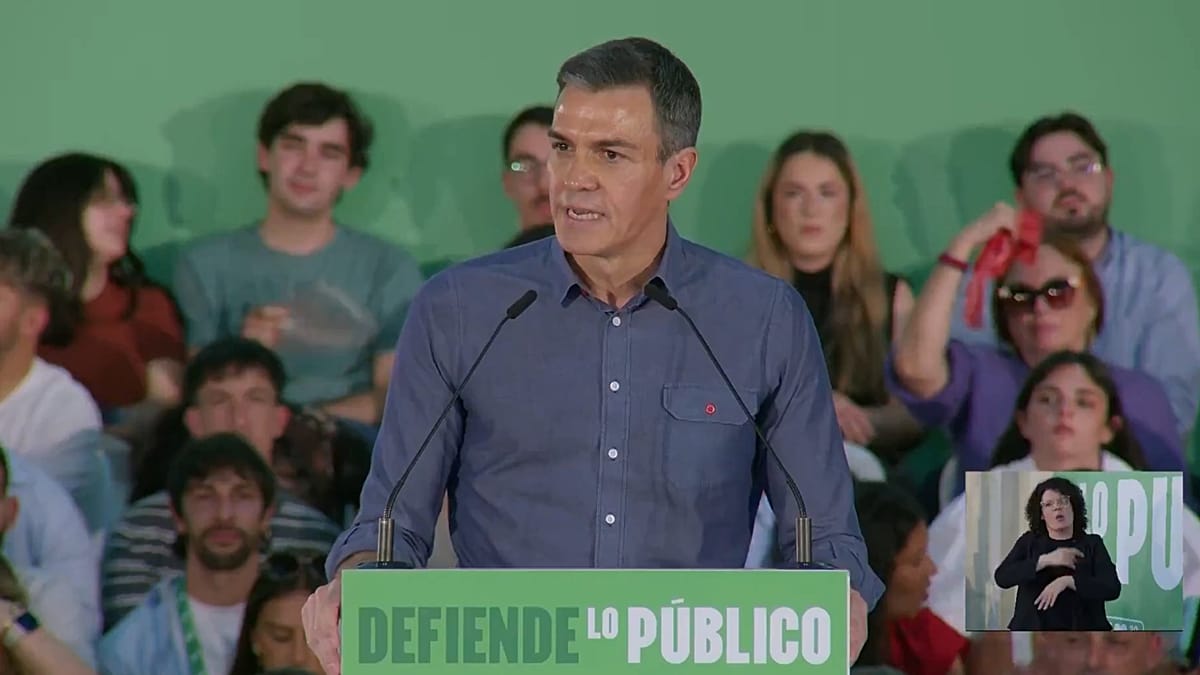
Spanish Prime Minister Pedro Sánchez used a campaign event in the Andalusian town of Gibraleón on Sunday to deliver a pointed foreign policy ultimatum: within 48 hours, Madrid will formally ask the European Union to sever its Association Agreement with Israel. Speaking at a rally for the Socialist Workers' Party under the slogan 'Defend Public Services', Sánchez declared that 'this Tuesday, the Government of Spain will take to Europe the proposal that the EU sever its association with Israel.'
Sánchez, who described Spain as 'a friend of Israel' but sharply criticised the actions of Prime Minister Benjamin Netanyahu's government, urged other European capitals to join the initiative. The announcement marks a significant escalation in Spain's diplomatic posture toward Israel, which has been hardening for months.
A deepening rift over human rights
The Spanish leader's call is not without precedent. Alongside Ireland, Sánchez had previously demanded an urgent review of the EU–Israel Association Agreement, arguing that respect for human rights and democratic principles is an 'essential element' of the relationship. At the European Pulse Forum 2026 in Barcelona, he accused Israel of 'trampling on and violating' several articles of the accord. Netanyahu responded by accusing Spain of waging a 'diplomatic war'.
The EU is Israel's largest trading partner, with bilateral trade exceeding €45 billion annually. Any suspension or rupture of the agreement would carry substantial economic and political consequences. A recent review of the agreement found 'indications' that Israel has failed to comply with its human rights obligations, though diplomats caution that this may not be enough to force a suspension.
Support for the Spanish proposal is far from unanimous. Countries including Belgium, Slovenia, Finland, France, Ireland, Luxembourg, Portugal, and Sweden have backed similar initiatives. In contrast, Bulgaria, Croatia, Cyprus, Germany, Greece, Hungary, Italy, and Lithuania have opposed them. The divide reflects broader tensions within the EU over how to balance trade relations with human rights concerns, particularly in the context of the ongoing conflict in Gaza and escalating violence in Lebanon.
Sánchez's choice of a campaign rally to deliver this message is strategic. The prime minister is seeking to differentiate Spain on the European stage while reinforcing his progressive credentials among Andalusian voters ahead of regional elections. He also addressed 'those who started this war,' urging them to stop it and to 'rein in' Netanyahu.
The proposal has grassroots momentum. A citizens' initiative, Justice for Palestine, has collected over one million signatures calling on EU member states to break the agreement, surpassing the threshold that obliges the European Commission to examine the issue. Yet the path in Brussels remains tortuous, with many diplomats skeptical that the treaty will be suspended despite the findings of the review.
Spain's move comes amid a broader reassessment of European security and foreign policy. As former NATO chief Jens Stoltenberg recently urged Europe to cut ties with US defense amid strains in the transatlantic alliance, Sánchez's initiative underscores a growing willingness among some member states to take independent stances on international issues. The outcome of this diplomatic push will be closely watched in capitals from Berlin to Brussels, and beyond.