At least 68 people have died and more than 100 were injured when two high-speed trains collided south of Madrid on Wednesday, according to the regional government of Castilla-La Mancha. The crash, near the town of Toledo, is already being described as one of Spain's worst rail disasters in decades.
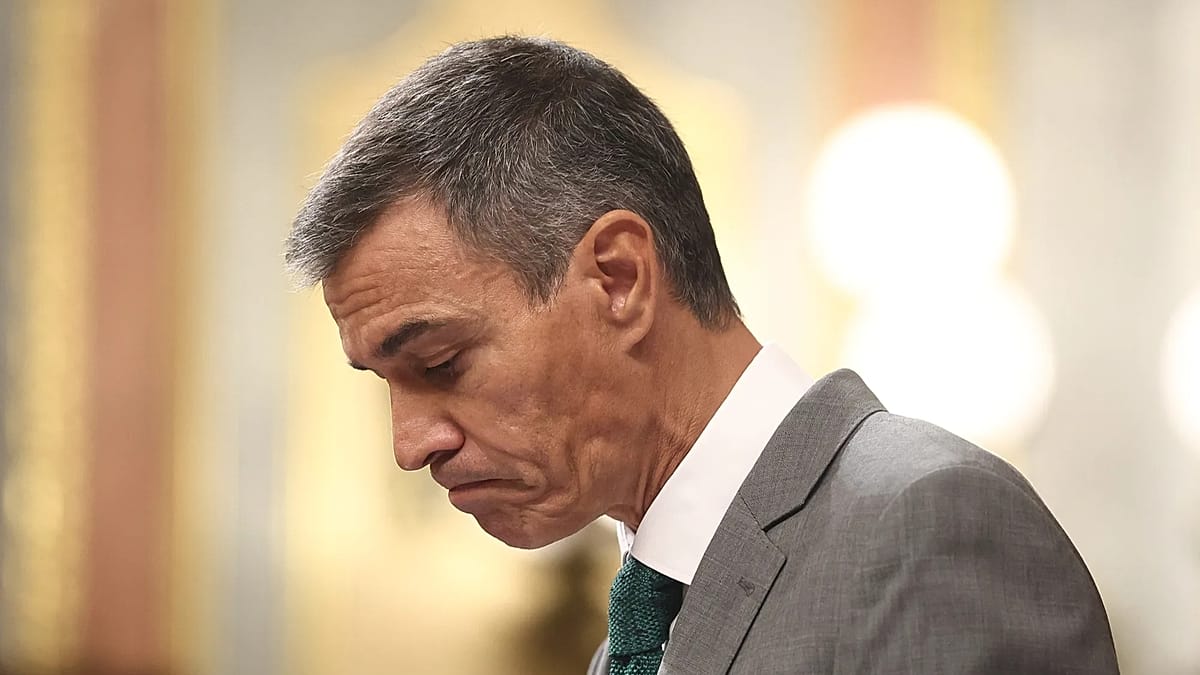
Prime Minister Pedro Sánchez said he was "shocked" by the accident and has been in contact with the transport minister and the president of the Castilla-La Mancha autonomous community. He promised a full investigation, insisting that "it is unacceptable for Spain to suffer two such accidents in the same year." The remark refers to a similar collision near Adamuz in southern Spain in February, which killed 46 people and raised serious questions about the safety of the country's high-speed network.
"It is clear that, if we need to further strengthen safety to rebuild confidence in our rail system, we will do so," Sánchez added. The European Commission president, Ursula von der Leyen, offered condolences on behalf of the continent, writing: "Europe mourns with you."
A political crisis on top of a national tragedy
The disaster lands at a particularly delicate moment for Sánchez. He called a snap election for late November, following the Ceuta migration scandal and a housing crisis that has left many Spaniards unable to afford a home. The train crash now adds a fresh layer of instability, with opposition parties likely to seize on any perceived mishandling of the response or the investigation.
Spain's rail safety record had already been under scrutiny. The February crash near Adamuz prompted calls for an independent review, but little has been publicly disclosed about its findings. Wednesday's collision will inevitably intensify those demands, and the Madrid control centre is already facing questions about how two trains could end up on the same track.
For Sánchez, the political calculus is brutal. He must balance a credible, transparent investigation with the need to reassure the public that Spain's high-speed rail—a source of national pride—is safe. His government has promised to do "whatever it takes" to restore confidence, but with an election looming, the margin for error is thin.
The crash also resonates beyond Spain. It comes as the EU is pushing for greater rail connectivity across the continent, and any systemic failure in one member state can undermine trust in the broader network. Spain's second high-speed disaster in nine months will be watched closely in Brussels, where rail safety standards are a recurring topic.
EU-Canada summit overshadowed by terminology
Meanwhile, in Montreal, a two-day EU-Canada summit got underway on Thursday, but the agenda has been overshadowed by a dispute over what exactly the relationship should be called. Ursula von der Leyen had floated the idea of Canada becoming an "associate member" of the EU in her State of the Union speech in September, but the term has now been dropped from the draft joint declaration, according to reporting by my colleague Luca Bertuzzi.
Germany, France, Italy and Greece all raised objections to the phrase, and it has been replaced by a vaguer commitment to "ever closer association." Von der Leyen, however, appeared to push back on Wednesday night, posting on X that she had landed in Canada with "ambitions: bringing Canada closer to the us than ever before, as Associate Member of the EU."
EU officials at a briefing in Brussels were visibly exasperated when pressed on what "associate membership" would actually mean. "We are on the start of a journey," one senior insider said, prompting laughter from the room. He added that leaders would launch "a new alliance for the future," but it remains unclear whether that will satisfy Canadian Prime Minister Mark Carney or the 27 member states.
Ten European Commissioners are attending the summit, with discussions expected on defence, energy and trade. But the 10-year-old EU-Canada free trade agreement (CETA) has yet to be fully implemented, and that could prove a sticking point.
Ukraine's Patriot missiles still in limbo
In other news, Ukrainian President Volodymyr Zelenskyy has again complained that the US has not signed off on Patriot interceptor missiles that Kyiv has been waiting for over a month. Russia continues to strike Kyiv with ballistic missiles, and Ukraine's air defences are running low.
The delay is puzzling. Ukraine receives some Patriot systems through NATO's Prioritised Ukraine Requirements List (PURL), where allies pay for US-made weapons to be transferred. But as my colleague Shona Murray reports, confusion reigns over the holdup. Some speculate that Washington is using the Patriots as leverage to push Ukraine into a peace settlement, or to stop Kyiv from attacking Russian oil refineries ahead of the US midterms. NATO sources describe the situation as "unpredictable."
Commission rules out Nord Stream revival
The European Commission has also pushed back against any idea of reviving the Nord Stream pipeline after the war in Ukraine ends. "We know far too well the hidden costs of being dependent on Russia for the purchase of fossil fuels," said Paula Pinho, the Commission's chief spokesperson. "They have been weaponised and we have been paying the price."
The Commission points to binding legislation that requires all EU member states to phase out Russian gas imports by the end of 2027. That commitment, they say, applies regardless of the war's outcome.
EU's China diversification plan faces business pushback
Finally, the EU is preparing a plan to reduce its reliance on China, but it may come at a cost. The European Commission is set to present its strategy in early December, ahead of a leaders' summit on EU-China trade. The aim is to encourage European companies to diversify suppliers for strategic products, after China blocked exports of rare earths and certain chips in 2025, exposing vulnerabilities.
European businesses, however, have raised concerns about the potential impact on their competitiveness. The plan will need to strike a delicate balance between security and economic pragmatism.