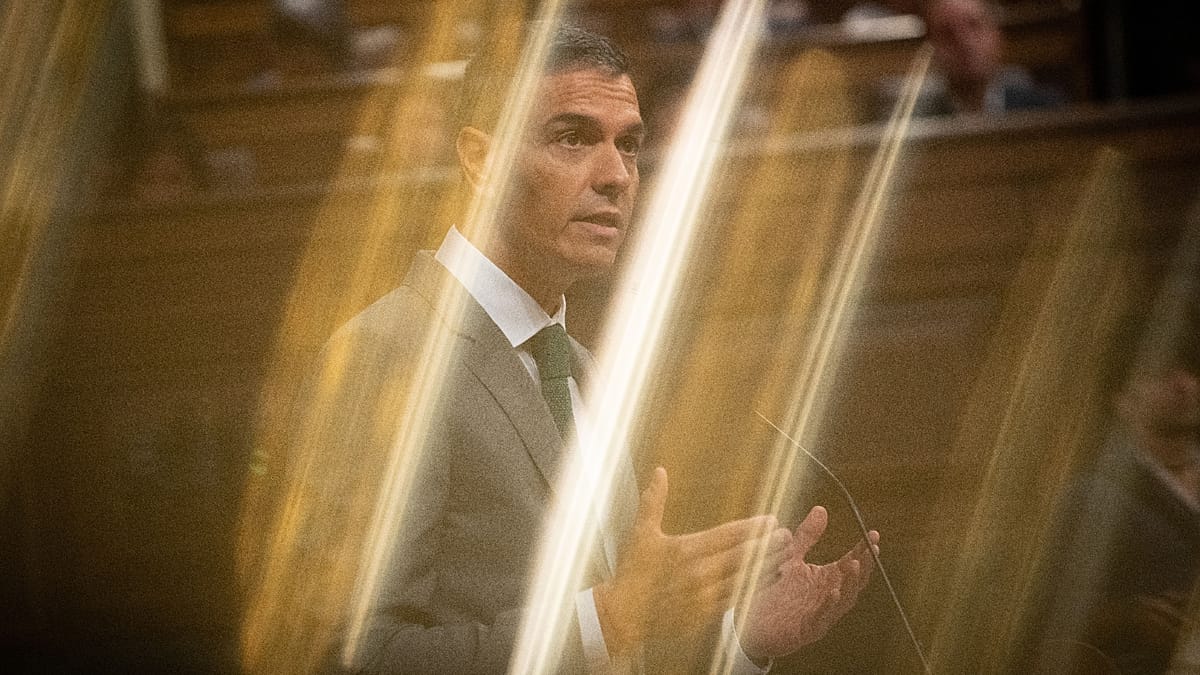
Spain's Congress of Deputies on Friday rejected two housing decree-laws promoted by the government of Prime Minister Pedro Sánchez, a significant parliamentary defeat that underscores the fragility of his minority coalition. The votes came after a tense session marked by last-minute negotiations and uncertainty over the support of smaller parliamentary groups.
The first decree was defeated by 172 votes in favour to 178 against, and the second was also voted down. The outcome followed a morning of debate in which Housing Minister Isabel Rodríguez urged parties to back the measures, explicitly appealing to Junts per Catalunya to vote in favour or abstain. The pro-independence Catalan party had announced on Thursday night that it would oppose both texts and instead submit its own proposal to the government. In the end, the Socialist Party (PSOE) refused to withdraw the decrees, as Junts had demanded.
Rodríguez told the chamber that one of the decrees incorporated many of the proposals put forward by Junts. "Ninety per cent of what they handed to the prime minister is now set out in the Official State Gazette," she said, pledging to process the decrees as a bill so that "clarifications or technical corrections" requested by the groups could be added later. She also warned of the consequences of the vote, appealing to MPs' sense of responsibility: "With this vote, we are deciding whether we do not want another eviction or are willing to face the next one."
The session began at 11:00, with Sánchez receiving an ovation from Socialist benches on his arrival. During the debate, parties largely stuck to their previously stated positions, though with nuances. The Basque Nationalist Party (PNV) said it would support one of the decrees "with many doubts," with spokesperson Maribel Vaquero lamenting the lack of a minimum agreement. Coalición Canaria confirmed its favourable vote on the first decree, calling it "a starting point." Podemos backed both texts with its four votes, though its secretary-general, Ione Belarra, criticised the government for having "chopped up" the measures. "It's just another excuse. People don't want excuses, they want solutions," she argued. EH Bildu's Oskar Matute expressed "deep anger" at the prospect of particular interests prevailing over measures aimed at tackling the housing crisis.
The rejection came against the backdrop of widespread public anger over housing, intensified by the eviction of a woman known as Maricarmen, which sparked protests and a camp in Madrid's Puerta del Sol square. The government had framed the vote as a test of the chamber's ability to address one of Spain's most pressing social problems. Sánchez had urged parliamentary groups to show "a sense of perspective" and keep housing out of "partisan confrontations."
Political fallout and possible early election
The defeat has reignited speculation about a possible early election. La Moncloa insists no decision has been taken, but government and PSOE figures have floated the possibility of Sánchez calling a snap vote if the decrees were rejected. Other Socialist leaders have urged caution, arguing that the consequences of such a move need careful consideration.
The housing crisis is not unique to Spain. Across Europe, rising rents and property prices have become a flashpoint, with MEPs confronting the tourism surge and the housing squeeze it fuels. In Spain, the government's inability to pass housing legislation highlights the challenges of governing without a clear majority in a fragmented parliament.
Friday's vote also exposed the limits of Sánchez's coalition strategy, which relies on a patchwork of regional and smaller parties. The rejection of the decrees, after a session of intense lobbying, suggests that the government's legislative agenda could face further obstacles in the coming months.
Outside Congress, hundreds of demonstrators gathered to demand action on housing, chanting "General strike!" The protests reflect a broader public frustration that has been building for months, as housing costs continue to outpace wages in many Spanish cities.
The government now faces the challenge of finding alternative ways to address the housing crisis, possibly by reintroducing the measures as a bill or seeking new alliances. But with the political landscape increasingly polarised, the path forward remains uncertain.