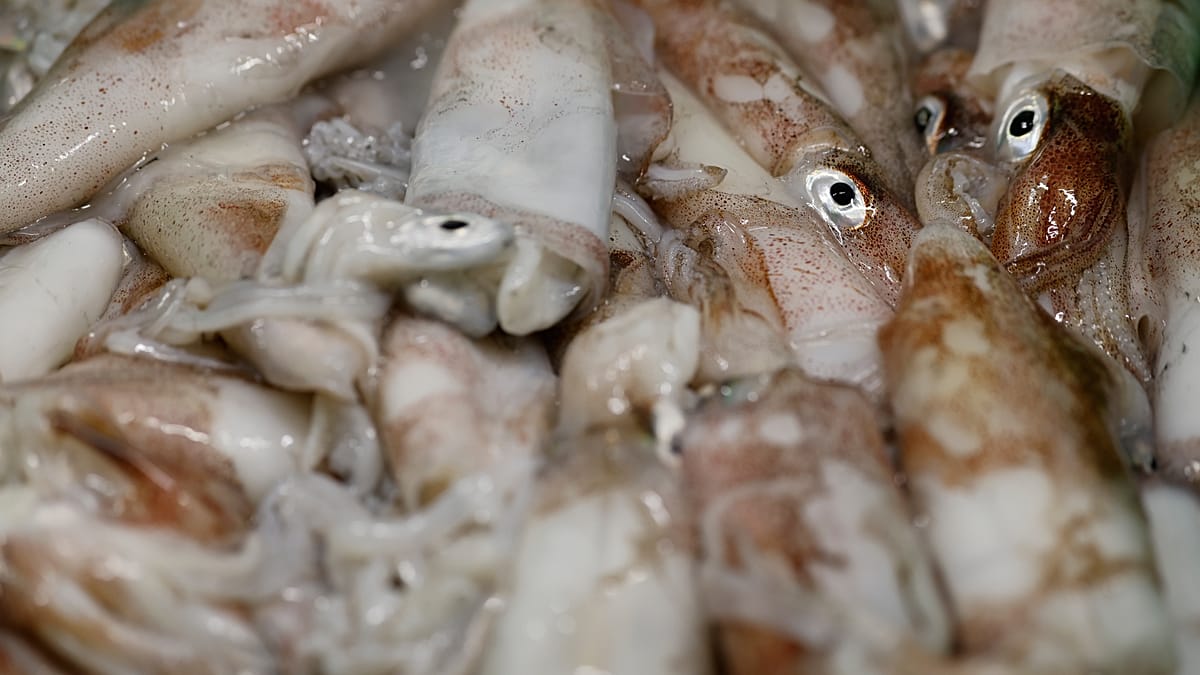
The North Sea has long been associated with plaice, cod, and prawns, but its waters are now hosting a growing number of cephalopods. Squid and octopus, once rare visitors, are increasingly being caught by fishermen from the Netherlands, Denmark, and Germany. This shift is not a temporary anomaly but part of a broader ecological transformation driven by rising sea temperatures.
A warming sea, a changing cast
According to the Thünen Institute, Germany's federal research body for fisheries and marine science, several cephalopod species have expanded their range over the past decades. The short-finned squid Illex coindetii, for example, was a rare vagrant around a century ago. Today, it reproduces in the North Sea and maintains its own stocks.
The warming trend is unmistakable. The Federal Maritime and Hydrographic Agency (BSH) recorded 2025 as the warmest year since measurements began in 1969, with an average surface temperature of 11.6°C—0.9°C above the long-term mean. The summer of 2025 was also exceptional, averaging 15.7°C, the warmest on record. In parts of the western and south-western North Sea, temperatures at times exceeded the long-term average by more than two degrees.
These conditions favor cephalopods, which have short life cycles and can adapt quickly to environmental changes. As the water warms, cold-loving species like cod are shifting their distribution, while squid are becoming more abundant. Their voracious appetite for herring, sprat, whiting, and even juvenile cod is altering the food web, prompting researchers to investigate the impact on commercially important fish stocks.
Octopus on the rise
It is not just squid that are thriving. Octopus sightings and catches are increasing, particularly in the southern North Sea. Fishermen off the Belgian coast have reported large catches in 2026. In the German Wadden Sea, a live curled octopus (Eledone cirrhosa) was a rarity in 2017; now, the species is described as "widespread in the North Sea" by BeachExplorer, a scientifically curated online database documenting coastal finds.
The distinction between squid and octopus is simple: squid have ten arms, an elongated body with fins, and an internal gladius, while octopus have eight arms, a rounded body, and no gladius. The gladius, a hard supporting structure, helps squid maintain their shape.
Fishermen find a new line of business
As traditional fish stocks decline and quotas for other species tighten, fishermen are turning to squid. Landings in the North Sea have roughly tripled over the past 40 years, reaching up to 3,000 tonnes annually. This has made squid one of the most important cephalopod fisheries in the North-East Atlantic.
However, there are no specific catch quotas for North Sea squid, and the scientific basis for such regulation is still being developed. Researchers are working on sustainable management options, including catch limits adjusted to stock trends, closed seasons, and protected areas for spawning grounds. But data on stocks and the ecological impact of fishing remain incomplete.
Even the spawning grounds are not fully mapped. On a recent research cruise, egg masses were found, but the exact locations and importance of these areas for reproduction are still unclear.
Not an invasion, but a new normal
Describing the cephalopod boom as an "invasion" would be misleading. It is part of a broader ecological shift, with cephalopods among the winners of a warming North Sea. What seems unusual today may soon become a common sight in Germany's coastal waters.
This transformation is not isolated. Across Europe, climate change is reshaping marine ecosystems, from the Mediterranean to the Atlantic. As the North Sea warms, the species that define it are changing, and with them, the livelihoods of those who fish its waters. The challenge for policymakers is to adapt management practices to this new reality before the ecological and economic consequences become irreversible.