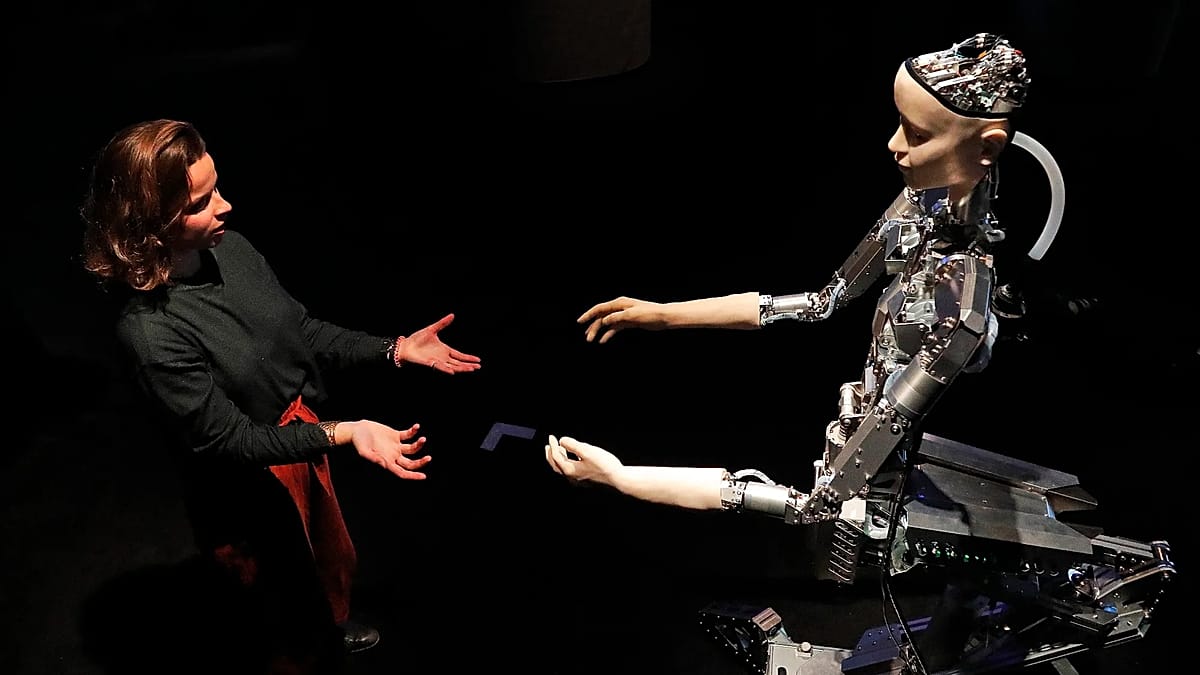
A new study from the University of Limerick has found that humans tend to pay female-presenting AI agents less than their male counterparts for identical work, even when both are equally capable. The research, which placed 189 participants in a virtual reality office, reveals that gender bias extends into how we interact with artificial intelligence.
The study, titled 'Human-Like and Male? How AI Assistant Design Relates to Trust and Monetary Reward at Work in VR', asked participants to complete workplace tasks alongside four different AI assistants: a text-based chatbot, a desk robot, and two human-like agents named Johan and Johanna. All assistants ran on the same underlying model, OpenAI's gpt-4-1106-preview, and had identical functionality.
Participants were given real money to pay the AI agents for their work, simulating a real-world employment scenario. The results were striking: both men and women paid Johanna, the female-presenting agent, 10% less than Johan, despite rating their work quality similarly. Johan was also perceived as more human-like, and while he was trusted marginally more, the difference was not statistically significant.
Interestingly, most participants told researchers they would not treat male and female-presenting AI agents differently. Yet their actions told a different story, echoing broader societal patterns of unconscious bias. The study's authors note that this bias could have significant implications as AI agents become more integrated into workplaces across Europe and beyond.
AI agents are entering the mainstream
The findings come at a time when AI agents are rapidly becoming commonplace. According to IT consulting firm Accelirate, nearly 79% of companies report using AI agents this year, and 40% of applications now incorporate them. This means that many Europeans will soon be working alongside AI colleagues, making the question of how we treat them increasingly relevant.
The study also found that participants preferred AI agents that were either clearly human-like or clearly non-human, rejecting the desk robot that fell in between. Both human-presenting agents were rated as more human-like and were trusted and credited more than the chatbot or robot, with women particularly favoring them.
One participant explained, "Having Johanna next to me made me more prone to credit her more again because I felt there was a person, a colleague sitting next to me that I had a conversation with and that was giving me her own input."
These findings raise important questions about how we design and deploy AI in the workplace. As Nvidia unveils platforms to manage rogue AI agents, and as AI agents test security boundaries, the human tendency to apply gender stereotypes to machines could have real economic consequences.
The study's authors suggest that companies and policymakers should be aware of these biases when implementing AI systems. If humans consistently undervalue female-presenting AI, it could perpetuate wage gaps in new and unexpected ways. The research also highlights the need for careful design choices, as the appearance and presentation of AI agents can significantly influence user trust and behavior.
As Europe continues to lead in AI regulation and ethics, this study serves as a reminder that the challenges of bias are not limited to human interactions. The way we treat our digital colleagues may reflect and reinforce the inequalities we seek to eliminate in society.