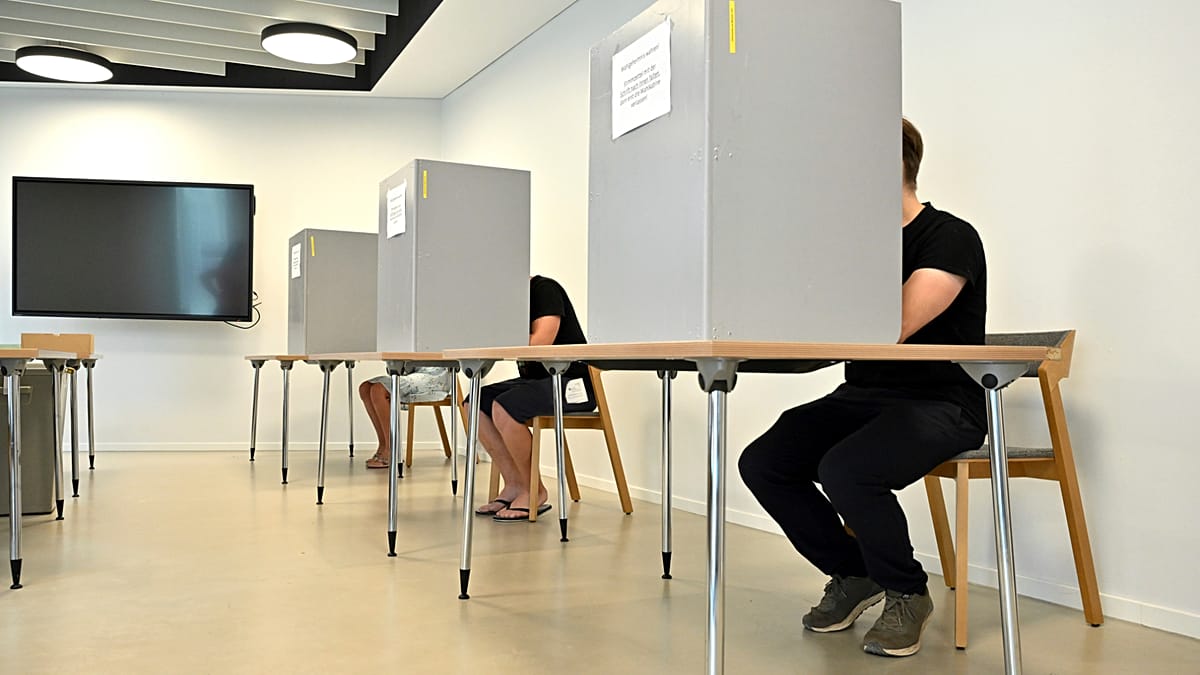
The state election campaign in Saxony-Anhalt has entered its final stretch, with posters blanketing towns from Magdeburg to Halle and social media dominated by the contest. At the centre of the debate is a tactical voting initiative, Taktisch Wählen, which urges voters to cast their ballots for the SPD and the Greens to prevent the far-right AfD from forming a government.
The organisers argue that the SPD and Greens are polling dangerously close to the 5% threshold needed to enter the state parliament. If either party falls short, they warn, many votes from the democratic spectrum would be wasted in seat allocation, potentially handing the AfD an absolute majority. Current polls put the AfD at around 43%, with the CDU on 23% and the Left Party on 13%. The SPD (6-7%), Greens (4-5%), FDP (2-4%), and BSW (4-5%) are all battling to clear the hurdle.
Who is behind the campaign?
The initiative is run by The Goodforces, a political communications agency that describes itself as a group of 'discourse-makers'. The agency has spent €14,300 on the campaign and, according to Bundestag records, made direct donations of €38,150 each to the Greens and the SPD in late July. This financial backing has fuelled accusations of partisanship.
The AfD has been the most vocal critic. Co-leader Alice Weidel called the campaign 'a scandal for democracy' and questioned whether such targeted election advertising falls within legal limits of party financing. 'We will drain this NGO swamp,' she said. The AfD's lead candidate in Saxony-Anhalt, Ulrich Siegmund, has also condemned the initiative.
The CDU, Left Party, and SPD have all distanced themselves from the tactical voting appeal. Philipp Amthor, a CDU minister of state, urged voters to give both votes to the CDU, insisting that 'it is about policy, not tactics'. The Left Party said it does not believe in advising people to vote for parties whose policies do not convince them, while the SPD said every voter should decide for themselves.
The FDP and BSW, both excluded from the campaign's recommendations, have also criticised it. FDP leader Wolfgang Kubicki has repeatedly rejected the idea of a 'firewall' against the AfD, saying he would not vote for AfD motions but would not make his own proposals dependent on AfD support. BSW founder Sahra Wagenknecht told Bild that her party's goal is to replace the CDU minister-president with a non-partisan leader who could govern with changing majorities, 'also with the AfD'.
Thomas Gürke, the FDP candidate in Magdeburg, questioned the independence of the campaign, noting that his party has categorically rejected any cooperation with the AfD. The BSW called the voting recommendation 'a political campaign rather than neutral election information'.
The Greens are the only party to back the initiative. They argue that the election outcome will hinge on the 5% threshold, and that with the Greens in parliament, an AfD government can be prevented.
Similar tactical voting appeals were made during the 2024 state elections in Brandenburg, Saxony, and Thuringia, where the goal was to stop the AfD from winning a blocking minority. The current campaign in Saxony-Anhalt, however, has intensified the debate over how far voters should go to keep the far right from power.
As the election approaches, the question of tactical voting has become a proxy for deeper anxieties about the stability of Germany's party system and the strength of the democratic centre. The outcome in Saxony-Anhalt could have broader implications for the 2026 federal elections, making this regional contest a closely watched test of political strategy.