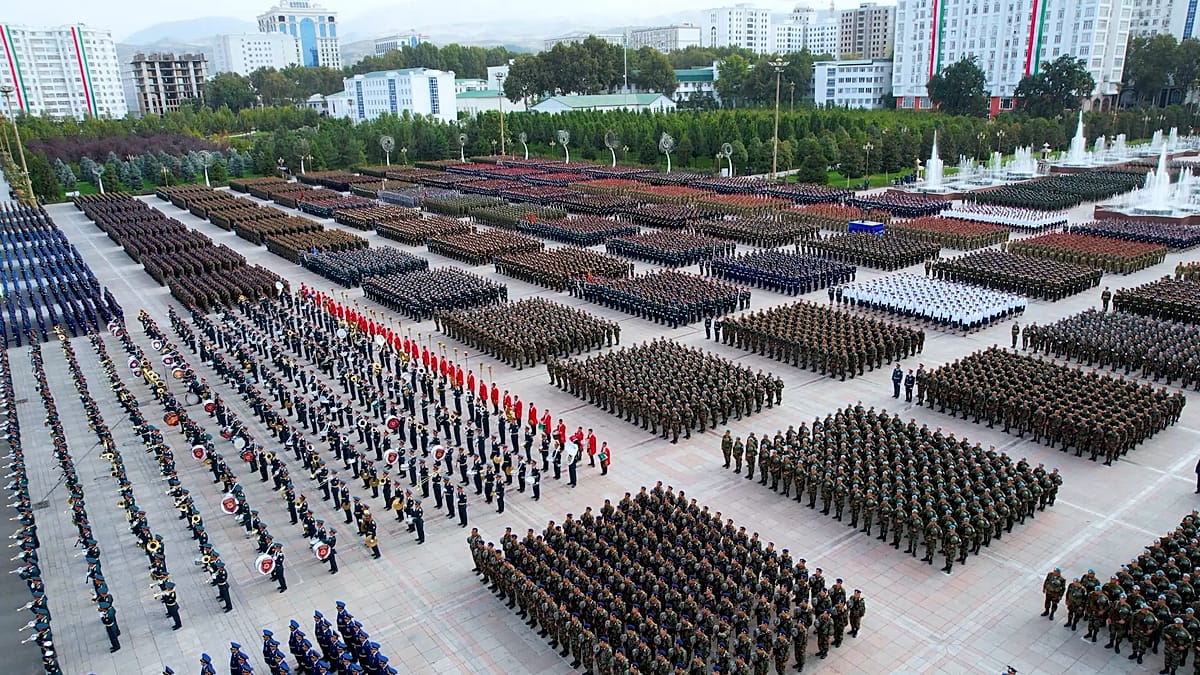
Dushanbe was the scene of vibrant festivities on Wednesday as Tajikistan marked the 35th anniversary of its independence from the Soviet Union. The capital’s central avenues filled with marching troops, colorful floats, and performers in traditional dress, culminating in an evening fireworks display that lit up the sky above the city.
The anniversary, which falls on September 9, is a significant moment for a nation that has navigated a complex path since 1991. After a devastating civil war in the 1990s, Tajikistan has slowly rebuilt its economy and infrastructure, though it remains one of the poorest former Soviet republics. The celebrations served as a display of national unity and pride, with President Emomali Rahmon, who has been in power since 1992, leading the official ceremonies.
A showcase of culture and statehood
The parade featured thousands of soldiers, as well as contingents from various government ministries and regions. Cultural performances highlighted the country’s rich Persian-influenced heritage, with music, dance, and poetry recitals. The event also included a display of military hardware, underscoring the government’s focus on security in a region that borders Afghanistan and has faced threats from extremist groups.
In his address, President Rahmon emphasized the achievements of the past three and a half decades, including improvements in education, healthcare, and infrastructure. He also called for continued unity and stability, echoing themes that have defined his long tenure. The celebrations were attended by foreign dignitaries, including representatives from Russia, China, and neighboring Central Asian states, reflecting Tajikistan’s strategic alliances.
The anniversary comes at a time when Central Asia is gaining increased international attention, with European and other Western powers seeking to diversify energy and trade routes. Tajikistan, with its abundant water resources and potential for hydropower, is seen as a key player in regional energy security. However, the country also faces challenges such as corruption, limited economic diversification, and reliance on remittances from migrant workers abroad.
For Europeans, the event is a reminder of the broader post-Soviet space and its evolving dynamics. While Tajikistan is geographically distant, its stability has implications for migration patterns, security cooperation, and energy markets that resonate in Brussels and other European capitals. The European Union has maintained diplomatic relations with Tajikistan since 1992, focusing on development aid and political dialogue.
The festivities in Dushanbe were not just a local affair; they were broadcast across the region, with many Tajiks abroad tuning in to celebrate their homeland. The diaspora, particularly in Russia, plays a significant role in the country’s economy, and the anniversary served as a moment of connection for those far from home.
As the fireworks faded, the message from the government was clear: Tajikistan is proud of its past and optimistic about its future. Yet, the coming years will test whether the country can translate such celebrations into tangible progress for its citizens, many of whom still struggle with poverty and unemployment.
In the wider context, the anniversary also highlights the delicate balance of power in Central Asia, where Russia, China, and the West are all vying for influence. Tajikistan’s leadership has managed to maintain close ties with Moscow while also welcoming Chinese investment, a pragmatic approach that has kept the country afloat but also raises questions about long-term sovereignty.
For now, the people of Tajikistan have reason to celebrate, and the world has a chance to reflect on a nation that has endured much and achieved a measure of stability. As the country looks ahead, the hope is that the next 35 years will bring greater prosperity and a stronger voice on the global stage.