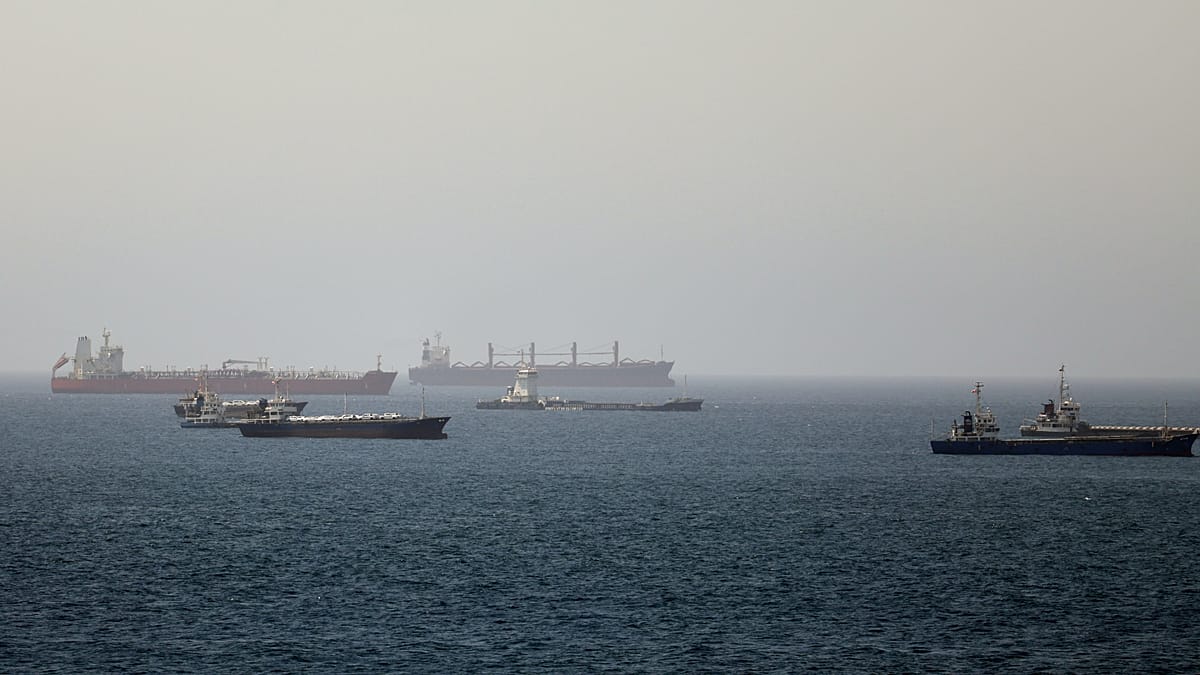
London's maritime security monitor, the United Kingdom Maritime Trade Operations (UKMTO), reported on Sunday evening that a tanker was involved in an incident with military forces in the Gulf of Oman, east of the Strait of Hormuz and near the southern Iranian city of Chabahar. The wording, which explicitly identifies "military forces," suggests a possible confrontation with the US Navy, which has been enforcing a blockade on Iranian oil exports.
The location and timing of the incident align with the expected route of an Iranian tanker that reportedly departed Kharg Island on Sunday morning in an attempt to breach the blockade. Iran has repeatedly warned that any US attempt to stop its tankers would trigger an immediate military response, including strikes on energy infrastructure across the Gulf.
"A company security officer alerted UKMTO to the incident. Authorities are aware and investigations are ongoing," the UKMTO bulletin stated, without providing further details.
Conflicting reports and escalating rhetoric
Earlier on Sunday, Iranian media, citing the navy, reported that two supertankers had caught fire after hitting mines in a "restricted area" east of the Strait of Hormuz and north of Ghanam Island. It remains unclear whether these two incidents are connected to the one reported by UKMTO.
The developments come amid heightened tensions in the region. On Saturday, Iran's deputy foreign minister, Kazem Gharibabadi, told Iranian media that the US blockade of Iranian ports "is an act of war and we will take any necessary measures to break this economic siege." Reports indicate that more than 14 Iranian tankers were being prepared off Kharg Island to run the blockade.
Iranian President Masoud Pezeshkian described the situation as a "silent economic war" that is "tougher than a war with missiles," but insisted that Iran has the capability to withstand it.
The incident has drawn international attention, particularly in Europe, where concerns about energy security and regional stability are mounting. The EU has been rethinking its oil security strategy in light of such disruptions, and the bloc's dependence on Gulf oil remains a strategic vulnerability.
Earlier reports of a tanker named Khat-Shekan being flagged as a spoof have added to the confusion, with analysts suggesting that Iran may be using deceptive tactics to complicate any US interdiction efforts. The spoofing incident highlights the cat-and-mouse nature of the standoff.
Meanwhile, the US has not officially commented on the latest incident, but its naval presence in the region remains significant. Any direct clash could have far-reaching consequences for global oil markets and maritime security, a scenario that European capitals are watching with unease.
The Strait of Hormuz is a critical chokepoint for global oil shipments, and any disruption there would have immediate economic repercussions worldwide. European nations, which rely heavily on imported energy, are particularly exposed to such volatility.
As investigations continue, the international community awaits further clarity on the nature of the incident and whether it marks a new phase in the confrontation between Iran and the United States. For now, the region remains on edge, with the threat of escalation looming large.