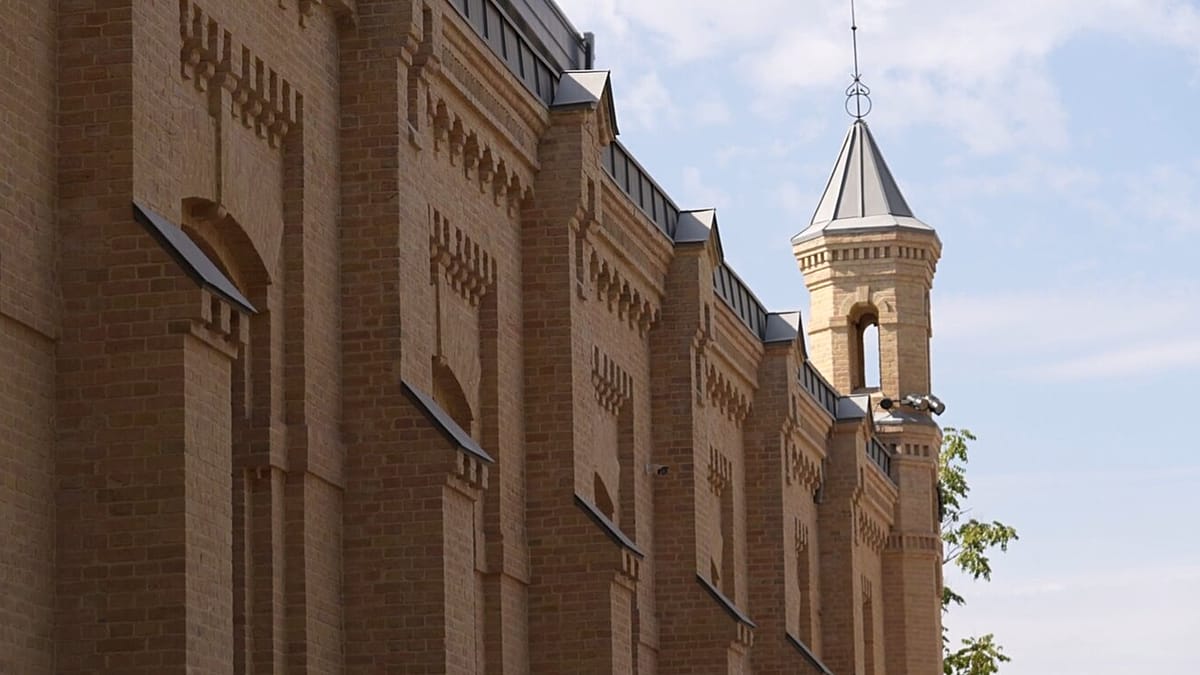
In Tashkent, a city long celebrated for the turquoise domes of Samarkand and the medieval minarets of Bukhara, a new kind of landmark has emerged. The Centre for Contemporary Arts (CCA) Tashkent, housed in a former tram depot and diesel station dating from 1912, opened its doors this month as Uzbekistan's first permanent venue dedicated to contemporary art. Designed by the Paris-based architecture firm Studio KO, the restored complex blends industrial heritage with modern galleries, a library, educational spaces, a concept store, and a restaurant.
The centre's significance, however, extends far beyond its architectural appeal. It represents a deliberate effort to place Uzbek artists within the global contemporary art conversation, while also introducing international audiences to a side of the country that has little to do with the Silk Road. As President Shavkat Mirziyoyev put it during a pre-opening visit, promoting contemporary history is both a responsibility and a duty, not just preserving the great heritage of the past.
From depot to cultural crossroads
The opening exhibition, titled Hikmah—Arabic for wisdom—brings together eleven works by artists from Uzbekistan and abroad, including several new commissions created specifically for the Tashkent space. Among the international pieces is Flying Carpets (2011) by Berlin-based Tunisian-Ukrainian artist Nadia Kaabi-Linke, on loan from the Solomon R. Guggenheim Museum in New York. The installation, inspired by street vendors in Venice who display goods on rugs that can be quickly rolled up, transforms those rugs into suspended metal grids. It contrasts the romantic notion of a flying carpet with the precarious realities of migration and displacement.
Jamaican-American artist Nari Ward contributes a work that draws on everyday objects, incorporating the traditional wooden stamp used to imprint patterns onto Uzbek bread. By placing this familiar domestic tool in a new artistic context, Ward explores how memory and identity are embedded in the mundane.
Uzbek artist Shokhrukh Rakhimov, a seventh-generation ceramicist, offers a site-specific installation titled The Colour of Silence, In Search of Truth (2026). Using ceramic forms and seven colours inspired by the teachings of the Central Asian Sufi scholar Najmiddin Kubro, Rakhimov's work bridges contemporary practice and inherited craft. “It's a very nice stage where I can show my work to the world audience,” he said, adding that the centre also provides opportunities to collaborate with artists from other countries.
The exhibition also reaches back into the region's modern art history, with works such as Vladimir Pan's Untitled (1981), drawn from the collection of the State Museum of Arts of Karakalpakstan, better known as the Savitsky Museum. This inclusion underscores the CCA's ambition to connect the present with a broader Central Asian artistic lineage.
Building international bridges
The CCA is the flagship project of Uzbekistan's Art and Culture Development Foundation, which has made it a priority to give local artists greater access to international networks. Deputy director Azizbek Mannopov explained that the centre is intended to be a platform where young artists and the wider creative community can display their work, conduct research, exchange ideas, and take part in programmes ranging from film screenings to workshops.
The opening week featured a packed programme of panel discussions, poetry readings, performances, and screenings, alongside performances of Shashmaqom, the classical musical tradition of Central Asia. The presence of Mariet Westermann, Director and CEO of the Guggenheim Museum and Foundation, underscored the international interest. “Any serious city for art around the world has both historic art and cultural heritage, but also very much the latest art, the art of our own time,” she said.
For European observers, the CCA Tashkent offers a fresh lens on a region often viewed through the prism of geopolitics or energy routes. It also echoes a broader trend across the continent, where former industrial sites are being repurposed as cultural hubs—from the Tate Modern in London to the Hamburger Bahnhof in Berlin. The Tashkent project, however, carries a distinct local resonance, as it seeks to redefine what Uzbek culture can mean in the twenty-first century.
As Uzbekistan continues to open up after decades of relative isolation, the CCA stands as a symbol of that transformation. Whether it will succeed in drawing sustained international attention remains to be seen, but the initial signs are promising. For a country that has long been defined by its ancient monuments, the new centre offers a bold statement: the Silk Road may be history, but the creative road ahead is just being paved.