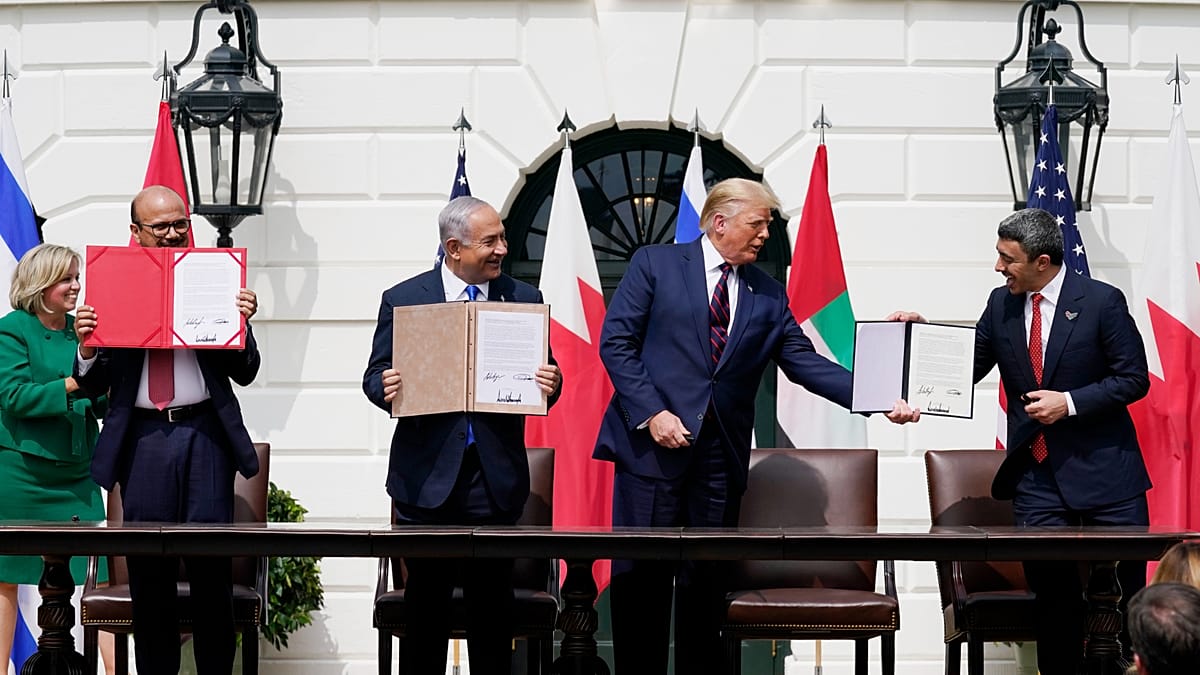
The Abraham Accords, a series of diplomatic agreements brokered by the United States in 2020, established formal ties between Israel and several Arab states. Signed during Donald Trump's first presidency, the accords saw the United Arab Emirates, Bahrain, and Morocco normalise relations with Israel, while Sudan later joined the framework. Supporters hailed the move as a breakthrough for regional trade and security cooperation, but critics argue it sidestepped the core Palestinian issue.
Now, as Trump campaigns for a return to the White House, he is pushing to expand the accords to include more Muslim-majority nations. His recent suggestions that Saudi Arabia, Qatar, and even Pakistan should recognise Israel have met with scepticism from analysts, who point to the ongoing war in Gaza and widespread public sympathy for Palestinians across the Muslim world as major obstacles.
Why Trump Is Reviving the Accords
Trump's renewed focus on the Abraham Accords is part of a broader strategy to reduce tensions in the Middle East, particularly as his administration engages in negotiations with Iran. The US and Iran have been exploring a framework deal to end hostilities, with Trump claiming a deal is "largely negotiated" and that Pakistan has played a mediating role. Expanding the accords, Trump argues, would isolate Iran and create a unified front of moderate Arab states aligned with Israel and the US.
However, the geopolitical landscape has shifted significantly since 2020. The war in Gaza, which erupted after Hamas's attack on Israel in October 2023, has inflamed public opinion across the Arab world and made normalisation with Israel politically toxic for many leaders. Saudi Arabia, which was reportedly close to joining the accords before the war, has since conditioned any normalisation on the establishment of a Palestinian state — a demand Israel's current government rejects.
European policymakers are watching these developments closely. The EU has long advocated for a two-state solution and has expressed concern that the accords, by bypassing the Palestinian question, could undermine long-term stability. Brussels has also been wary of US-led initiatives that exclude European diplomatic channels, particularly as the bloc seeks a more coherent foreign policy in the Middle East.
What the Accords Have Achieved
Proponents of the Abraham Accords point to tangible benefits: increased trade between Israel and the UAE, which reached $2.5 billion in 2022; joint security exercises; and tourism exchanges. The accords also opened the door for Israeli companies to operate in Gulf markets, particularly in technology and renewable energy. For Morocco, the agreement included US recognition of its sovereignty over Western Sahara, a significant diplomatic win.
Yet critics argue that the accords have done little to address the root causes of the Israeli-Palestinian conflict. The Palestinian Authority was excluded from the negotiations, and the accords did not require Israel to halt settlement expansion in the occupied West Bank. As a result, many in the region view the agreements as a normalisation of occupation rather than a genuine peace initiative.
European capitals, particularly Paris and Berlin, have maintained that any lasting peace must involve a credible pathway to Palestinian statehood. The EU remains the largest donor to the Palestinian Authority and has consistently called for a return to meaningful negotiations. The Abraham Accords, from this perspective, are a useful but incomplete step.
The Challenges Ahead
Trump's push to expand the accords faces formidable hurdles. Saudi Arabia, the most coveted prize, has made clear that normalisation with Israel is off the table without progress on Palestinian rights. Qatar, which hosts Hamas's political leadership, is unlikely to recognise Israel while the war in Gaza continues. Pakistan, though not an Arab state, has strong ties to the Muslim world and has historically not recognised Israel; any move to do so would be deeply controversial domestically.
Moreover, the US administration's focus on the accords may be complicated by other priorities. Trump has also been involved in Pakistan-brokered talks with Iran, and his administration is reportedly pushing for a ceasefire extension. Balancing these competing diplomatic tracks will require careful calibration.
For Europe, the Abraham Accords represent both an opportunity and a challenge. The EU has supported normalisation in principle but insists it must be part of a broader peace framework. As the US pushes ahead with its own agenda, European leaders will need to decide whether to engage or risk being sidelined in a region that remains critical for European security and energy supplies.