When the European Central Bank unveiled the first series of euro banknotes in 2002, the bridges on the reverse side were deliberately generic—architectural archetypes meant to evoke Europe's shared heritage without depicting any real monument. That was the official line, at least. But a small town in the Netherlands decided to take the concept literally.
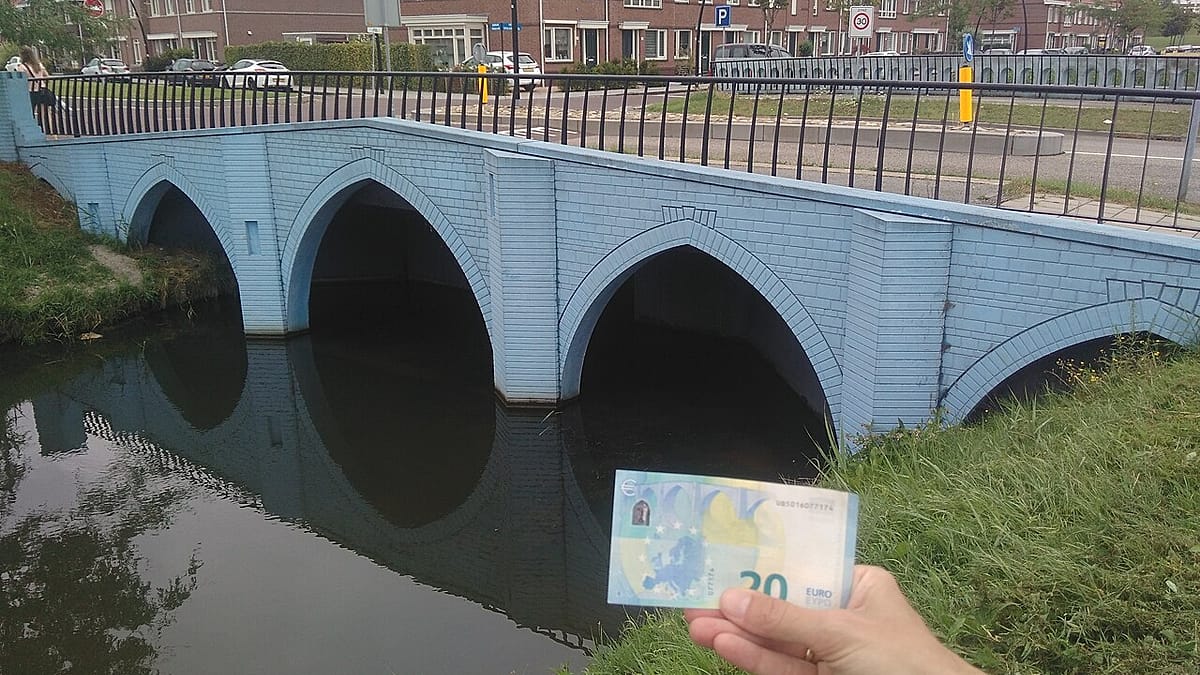
Spijkenisse, a municipality in the province of South Holland, commissioned the construction of all seven bridges featured on the €5, €10, €20, €50, €100, €200, and €500 notes. The result is a unique open-air museum where visitors can walk from a Classical-style arch to a modern cable-stayed span in a matter of minutes.
From Symbol to Substance
The original banknote designs, created by Austrian designer Robert Kalina, were intended to represent architectural styles from different periods of European history—Classical, Romanesque, Gothic, Renaissance, Baroque and Rococo, Iron and Glass, and Modern 20th-century. The front of each note features a window or doorway, symbolising openness and cooperation, while the bridges on the back represent communication between peoples. The ECB has always stressed that these were not copies of existing structures.
Spijkenisse's city council saw an opportunity. Working with architect Robin Stam, they translated the two-dimensional designs into functional pedestrian and cycle bridges, all located in a newly developed residential area called De Elementen. The bridges opened to the public between 2011 and 2013 and are now a fixture of the local landscape.
Each bridge is painted in the same colour scheme as its corresponding banknote—the €5 bridge in grey, the €10 in red, the €20 in blue, and so on. The attention to detail extends to the railings and paving, which mirror the patterns on the notes. For visitors familiar with the currency, the effect is uncanny: a walk through Spijkenisse feels like stepping into a wallet.
Practical Information for Visitors
Spijkenisse is easily reached from Rotterdam via the metro's C and D lines, making it a convenient day trip for anyone staying in the city. The bridges are clustered in the De Elementen district, all within walking distance of each other. The town itself is unremarkable—a typical postwar Dutch suburb—but the bridge collection has turned it into a minor tourist attraction for design and architecture enthusiasts.
The project also ties into broader European themes of identity and representation. The euro is one of the continent's most tangible symbols of integration, and Spijkenisse's bridges offer a rare chance to engage with that symbolism in physical space. For those interested in the ongoing redesign of euro banknotes, the Spijkenisse bridges serve as a reminder of how design can shape our relationship with money.
Not everyone is charmed by the idea. Critics argue that building literal copies of fictional bridges misses the point of the original abstraction—that the notes were meant to represent a shared European heritage, not a specific location. But for the residents of Spijkenisse, the bridges are a source of local pride and a conversation starter. They also provide a practical function, connecting parts of the neighbourhood that would otherwise be separated by canals.
The bridges have also sparked broader discussions about the relationship between currency and place. In an era of digital payments, physical cash is becoming less common, but the euro's design remains one of the most widely circulated images in Europe. Spijkenisse's experiment shows that even a functional object like a banknote can inspire real-world creativity.
For travellers looking for an offbeat European destination, Spijkenisse offers something genuinely unusual: a chance to see the euro's abstract symbols made concrete. The bridges are free to visit, open year-round, and require no special planning—just a metro ticket and a willingness to explore a Dutch suburb.