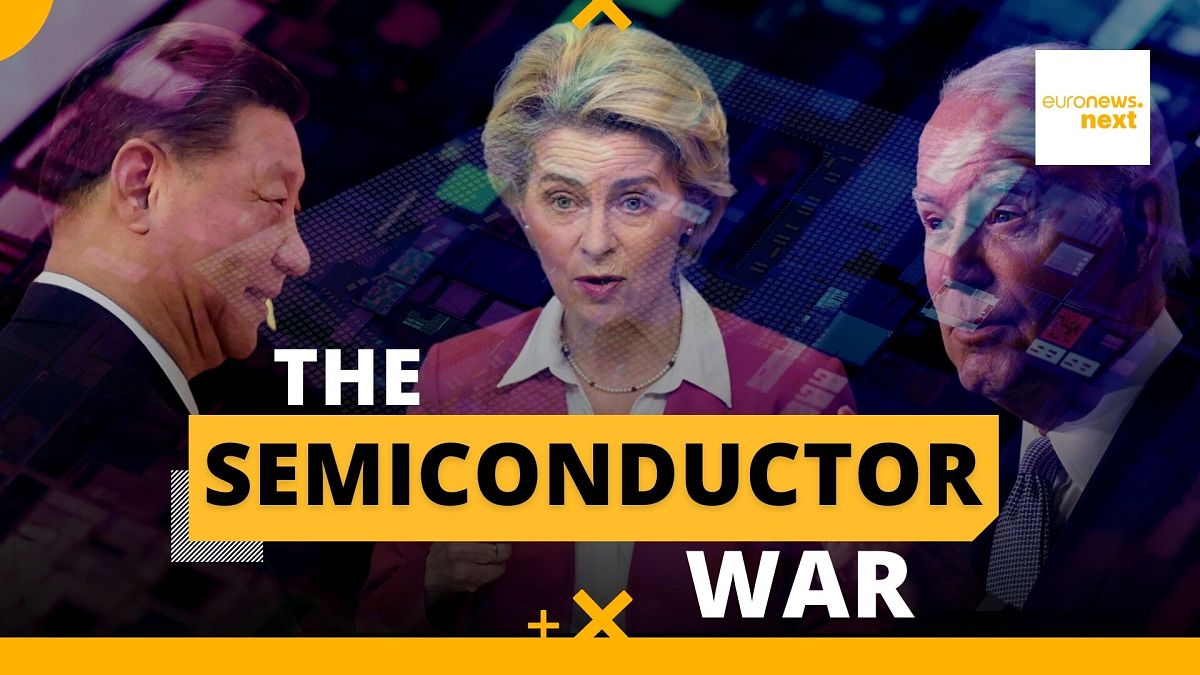
They are the hidden engines of the modern world: microscopic pieces of silicon, etched with billions of circuits, that power everything from a Parisian metro card reader to a Berlin hospital's MRI machine. Semiconductors, or chips, are the indispensable brains inside any device with an on-off switch. Their strategic importance has catapulted them to the centre of a global contest for technological and military supremacy, often described as a new cold war.
The Trillion-Dollar Foundation of Power
The semiconductor market, valued at over $580 billion in 2022, is projected to reach a trillion dollars this decade. This explosive growth is driven by our deepening reliance on digital technology. However, as Chris Miller, author of Chip War: The Fight for the World's Most Critical Technology, notes, the value extends far beyond commerce. "There's a direct relationship between computing power and military power," Miller states, drawing a line from Allied code-breaking at Britain's Bletchley Park to today's AI-driven weapons systems.
This link has transformed chip policy into a core instrument of statecraft. The United States' $280 billion CHIPS and Science Act is a clear example, designed to reshore advanced chip manufacturing while deliberately restricting China's access to the same technology. "We see now policies not just pursuing industrial policy goals but really also geopolitical goals," explains Niclas Poitiers, a research fellow at the Brussels-based think tank Bruegel.
Europe's Ambiguous Play for Sovereignty
Caught between these superpowers, the European Union is attempting to carve out its own path. The European Commission's €43 billion Chips Act, unveiled in 2022, aims to double the EU's global market share to 20% by 2030. The goal is digital sovereignty—reducing dependency on foreign suppliers for a component deemed as critical as energy.
Yet, critics within Europe argue the response is underwhelming. "This is far too weak a reaction compared to the reactions of other countries," says Jean-Pierre Raskin, a semiconductor specialist at the Catholic University of Louvain in Belgium. He points out that only €15 billion of the EU's pledged investment is new money. The scale of the challenge is immense: as Miller observes, "there is not a single semiconductor facility in the world able to self-sufficiently produce chips."
Europe's strength lies in specific, vital niches. The Netherlands' ASML is the only company in the world that produces the extreme ultraviolet lithography machines required to manufacture the most advanced chips. "You can't make advanced chips anywhere in the world without machines from the Netherlands," Miller emphasises. This gives the EU, and particularly The Hague, significant leverage in the global supply chain.
A Fragile, Interconnected Web
The semiconductor supply chain is a monument to globalised specialisation, and its fragility was exposed by the pandemic. The US dominates chip design, while manufacturing is concentrated in East Asia. Taiwan alone accounts for over 65% of global chip manufacturing, with South Korea, home to giants like Samsung, contributing over 15%. China plays a major role in the final assembly and packaging.
This interdependence means disruption in one region cascades globally. The recent chip shortage crippled automotive plants from Wolfsburg to Turin, causing over $200 billion in losses worldwide. "The devices that rely on chips constitute most manufacturing output," Miller adds. The geopolitical stakes are now terrifyingly clear. A conflict or blockade in the Taiwan Strait would, in Miller's view, trigger "the greatest manufacturing crisis since the Great Depression of the 1920s."
The race is not just about economic primacy but security resilience. As companies like Apple navigate this new landscape, and nations like South Korea balance alliances, Europe's strategy will be tested. Can the EU's collective action, through the Chips Act, secure its technological future, or will it remain a critical but vulnerable node in a network of rivals? The answer will define Europe's place in the coming decade.