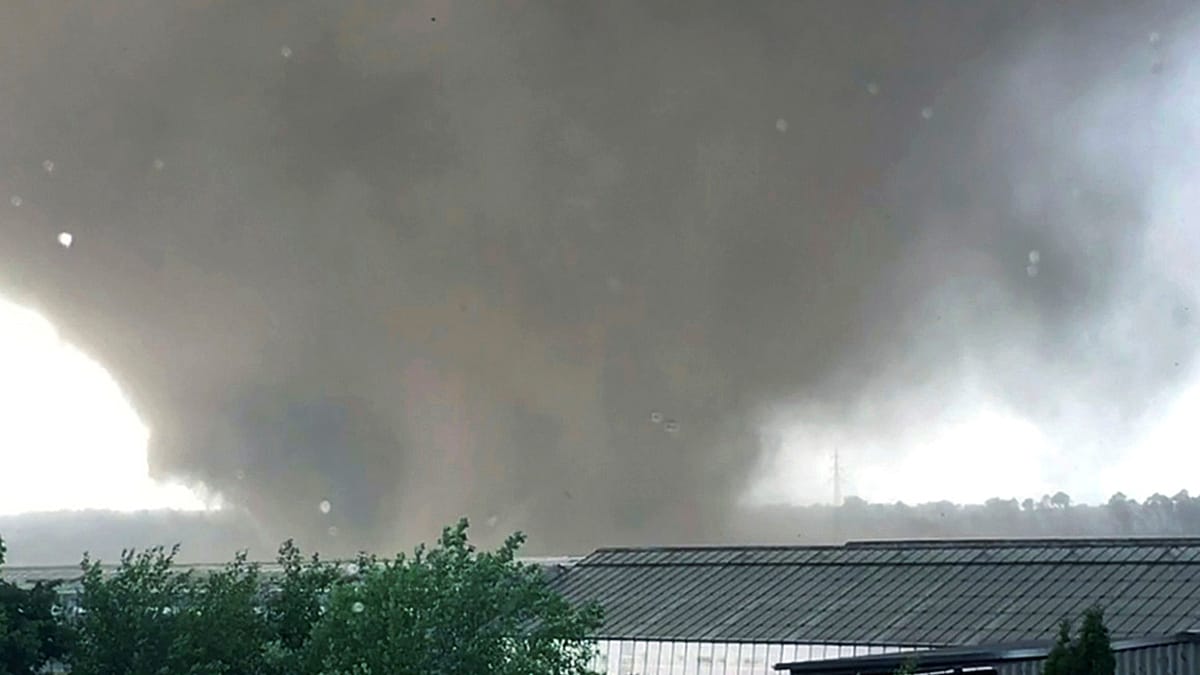
A tornado swept through the town of Gronau in North Rhine-Westphalia on Thursday, causing damage but no immediate reports of casualties. The German Weather Service (DWD) classified the event as an IF1 tornado, with wind speeds reaching up to 150 kilometres per hour.
As the weekend approaches, the DWD is forecasting a volatile mix of weather across Germany. Friday is expected to bring a blend of sunshine, cloud cover, and scattered showers, with isolated thunderstorms likely in the north. These storms may bring heavy rain and small hail, accompanied by gusts of around 65 km/h.
Weekend Forecast: From Showers to Sunshine
Daytime highs on Friday will range between 18 and 22 degrees Celsius, dropping to around 16 degrees along the coast. Showers are expected to persist into the night, leading into a Saturday that will see further instability.
On Saturday, western Germany, including cities like Cologne and Düsseldorf, can expect showers and isolated thunderstorms. Further east, conditions will remain sunnier for longer, though the occasional shower cannot be ruled out. Temperatures in the east could climb as high as 28 degrees Celsius, offering a stark contrast to the cooler west.
Sunday will bring cloudy skies across much of the country, with showers in various regions. Isolated thunderstorms are possible in the northeast, including areas around Berlin. Highs will reach about 19 degrees in the northwest, while the southeast could see temperatures up to 26 degrees.
This weather pattern is typical for late spring in Germany, but the tornado in Gronau underscores the potential for severe localised events. The DWD continues to monitor conditions and advises residents to stay alert for updates, especially in areas prone to sudden storms.
For those planning travel or outdoor activities, it is worth checking regional forecasts. The variability across Germany—from the cooler coast to the warmer southeast—means that conditions can change rapidly. As Europe grapples with broader climate trends, such events highlight the need for preparedness. For more on how European cities are adapting, see our coverage of Northern European Cities Join Global Effort to Combat Extreme Heat.
In related news, Germany's recent naturalisation record of 332,500 in 2025, led by Syrians, reflects broader demographic shifts. Read more in Germany Hits Record 332,500 Naturalizations in 2025, Syrians Lead.