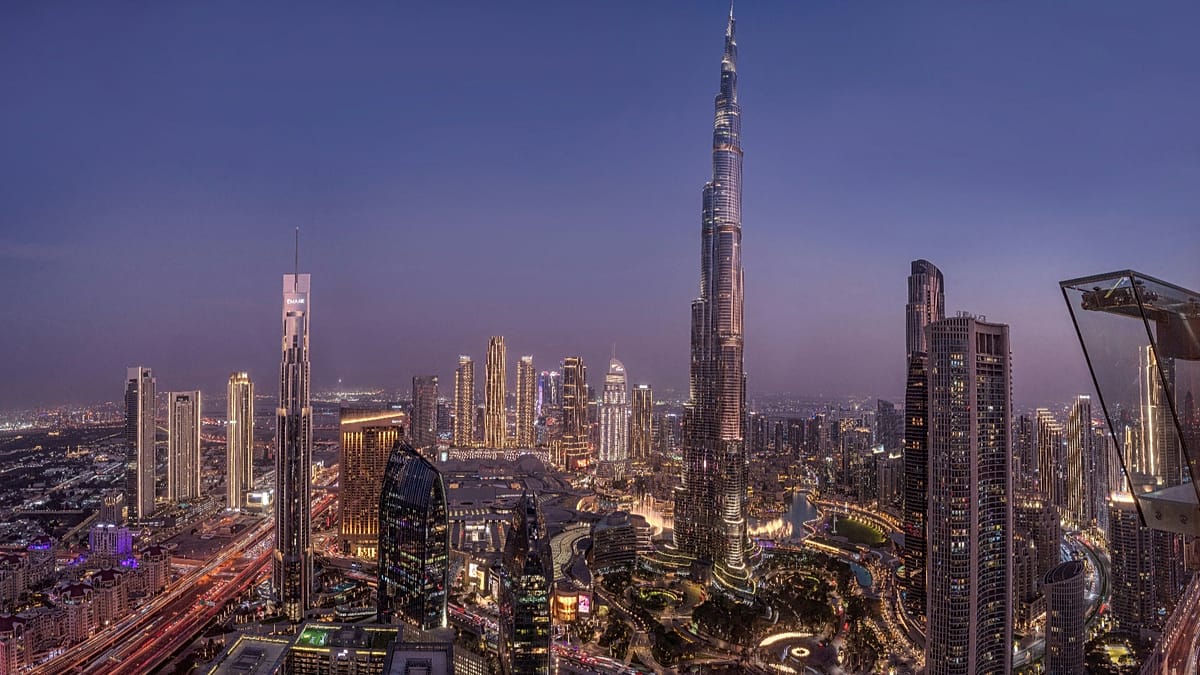
DUBAI — The past year has been brutal for tourism in the Middle East. Regional conflict and its ripple effects have slashed visitor numbers, air capacity, and hotel bookings across the Gulf. Yet at the Arabian Travel Market (ATM) in Dubai this week, the mood was cautiously optimistic, with industry leaders pointing to recovery and a wave of new trends that could define the next era of travel.
The ATM Travel Trends Report 2026, produced with Tourism Economics, forecasts that international travel across the Middle East, North Africa, and South Asia (MENASA) will rebound by 17% in 2027 — more than double the projected global growth rate of 8%. International visitor spending in the Middle East is expected to jump by $116 billion (€100.58 billion), a 57% increase between 2025 and 2030.
Dave Goodger, Managing Director EMEA of Tourism Economics, told attendees he was “optimistic” about the numbers. “Over the next five years we see travel expanding on a structural basis rather than just a cyclical rebound,” he said. “International travel has never mattered more. This year is disrupted by an uncertain economic and geopolitical backdrop, but consumers are treating travel as essential.”
Premiumisation: spending on what matters
Luxury remains a cornerstone of Middle East travel, with nearly 80% of prospective visitors to the region prioritising luxury, according to Goodger. But “premiumisation” is no longer just about five-star hotels. Travellers are increasingly willing to splurge on specific elements of a trip — an upgraded cabin, a once-in-a-lifetime excursion — while cutting costs elsewhere.
“People want those luxury experiences, they want those premium experiences, but they will save money where they can,” Goodger said. The report found that 35% of travellers are more interested in premium experiences than they were two years ago.
This trend runs parallel to a growing price-consciousness. In a separate interview with Euronews Travel, Goodger described value-seeking as a “global challenge” visible across Europe, North America, and Asia. “People are price conscious, they’re looking for value, but they are looking for valuable experiences,” he explained. “They’re not just saying… ‘I’m going to find the cheapest package holiday I can do.’ They are saying, ‘I will downgrade on the hotel, but I still really want to do that experience that I’m doing while I’m there.’”
Beyond the Eiffel Tower: lesser-known destinations rise
More than half of surveyed travellers (56%) say they are more interested in exploring new destinations than two years ago, a figure that jumps to 68% among those planning to visit MENASA. This opens doors for secondary cities and regions that have long been overshadowed by tourism giants like Paris or London.
But the classics aren’t losing their pull. Goodger noted that first-time international travellers still want to “stand in front of the Eiffel Tower” or “see Buckingham Palace.” It’s repeat visitors who are venturing further afield. “They’re the ones that are going to the new destinations, the new regions, the secondary destinations,” he said.
This shift is partly driven by overtourism concerns. Three in ten travellers now actively avoid destinations they perceive as overcrowded. Goodger said the effect is “very subtle” but particularly significant in Europe, where destinations like Barcelona, Amsterdam, and Venice have struggled with mass tourism. One emerging response is a flattening of seasonality. “People are looking outside of peak season for travel, just so they can have that experience without the crowds,” he said.
Experience-first travel and event tourism
Travellers are increasingly building trips around a passion — be it culture, food, sport, or a specific event. Three in ten say they are more interested in event-related travel than two years ago. Goodger highlighted “sporting, cultural [and] religious events” as powerful drivers, particularly in the Middle East, where major investments in sports and entertainment are paying off.
Business events also remain a strong draw, with association meeting attendance on the rise. The convergence of leisure and business travel is another trend to watch, as more travellers extend work trips for personal exploration.
AI: the new travel agent
Artificial intelligence is moving from novelty to necessity in travel planning. The ATM report highlights AI’s growing role in trip discovery, with travellers using chatbots and recommendation engines to find destinations, compare prices, and build itineraries. Goodger noted that AI is helping to personalise the travel experience at scale, making it easier for travellers to discover off-the-beaten-path options that match their interests.
This is a shift that European travel tech companies are watching closely, as they compete with US and Asian platforms. The rise of AI could also help smaller destinations market themselves more effectively, levelling the playing field against established hotspots.
As the industry looks to 2027 and beyond, the message from Dubai is clear: travel is resilient, but it’s changing. Travellers want more meaningful experiences, are willing to pay for what matters to them, and are increasingly turning to technology to find it. For Europe, which remains the world’s most-visited region, these trends pose both challenges and opportunities — from managing overtourism to embracing the potential of AI-driven discovery.