Senior officials in the Trump administration are intensifying pressure on Beijing to leverage its close ties with Tehran to restore maritime traffic through the Strait of Hormuz. The strategic waterway has been effectively closed since late February, when the United States and Israel launched military operations against Iran, triggering a blockade that has disrupted global energy supplies and trade routes.
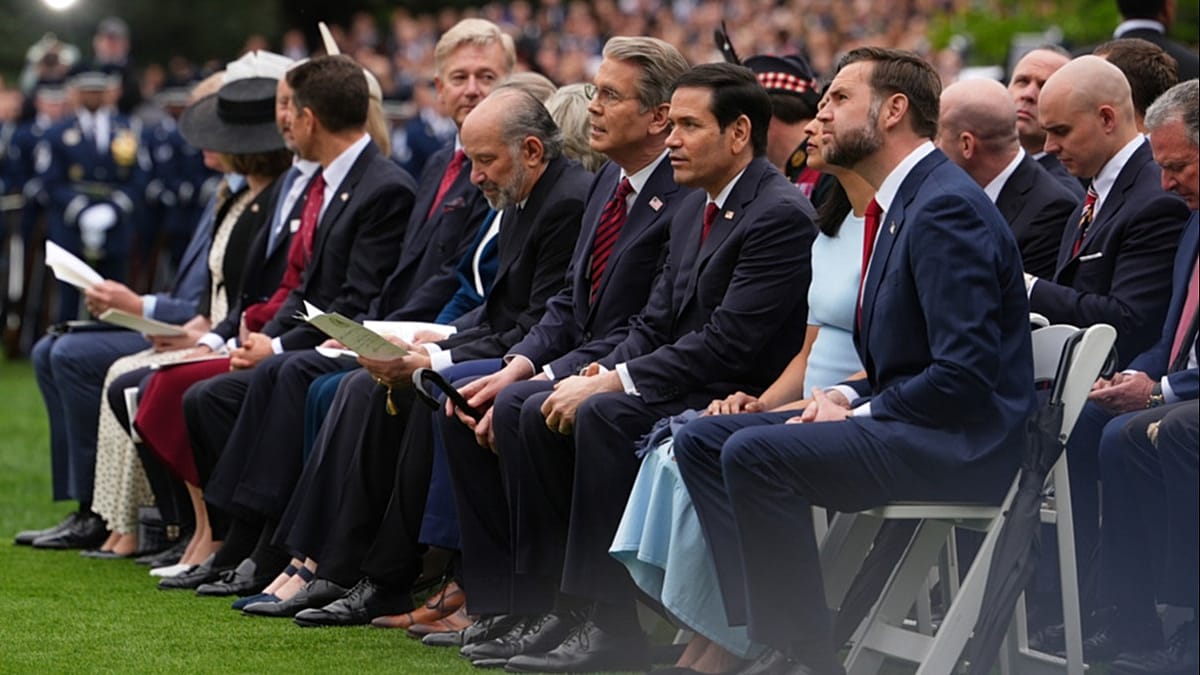
US Secretary of State Marco Rubio, during a White House briefing on Tuesday, explicitly called on Chinese officials to use the visit of Iranian Foreign Minister Abbas Araghchi to Beijing to urge Tehran to relent. “I hope the Chinese tell him what he needs to be told,” Rubio said. “And that is that what you are doing in the strait is causing you to be globally isolated. You’re the bad guy in this.”
Rubio’s remarks came as Chinese Foreign Minister Wang Yi met with Araghchi on Wednesday, according to the official Xinhua news agency. The top US diplomat argued that the closure hits China harder than the United States, given Beijing’s reliance on the strait for its export-driven economy. China imports roughly half of its crude oil and nearly one-third of its liquefied natural gas from the Middle East, according to China’s General Administration of Customs. “It is in China’s interest that Iran stop closing the strait,” Rubio added.
US Treasury Chief Echoes Call
Treasury Secretary Scott Bessent reinforced the message on Monday, stating that Iran would be a top agenda item when President Donald Trump meets Chinese President Xi Jinping in Beijing—the first US presidential visit to China since 2017. “The threat of attacks from Iran has closed the strait—we are reopening it,” Bessent said in an interview. “So I would urge the Chinese to join us in supporting this international operation.”
Bessent also noted that the war in Iran sits high on Trump’s agenda for the summit, alongside trade disputes, bilateral relations, and China’s demands that the US scale back arms sales to Taiwan, a self-ruled island Beijing considers a breakaway province.
The Strait of Hormuz, a narrow passage between the Persian Gulf and the Gulf of Oman, is a critical chokepoint for global oil and gas shipments. Its closure has sent energy prices soaring, affecting economies worldwide, including those in Europe. The European shares dip as oil prices stay elevated on Iran Strait tensions, reflecting the continent’s vulnerability to disruptions in Middle Eastern energy supplies.
Diplomatic sources told The Associated Press that the US has been engaging in serious efforts to persuade China not to veto a US-backed resolution at the United Nations Security Council aimed at condemning Iran’s actions and reopening the strait. China and Russia, Tehran’s allies on the council, vetoed an earlier resolution last month, arguing it failed to condemn the US and Israel for initiating the conflict.
The blockade has had a profound impact across Asia, prompting Beijing to consult with Pakistan to help mediate a two-week ceasefire. Trump has publicly stated his belief that China played a role in encouraging Iran to agree to that fragile truce, forged last month. Three diplomats familiar with China’s behind-the-scenes efforts confirmed that Beijing, the largest purchaser of Iranian oil, used its leverage to bring Tehran back to the negotiating table as talks teetered on collapse.
Despite these steps, the Republican administration believes China can do more. The US warns of 'devastating' force against Iranian attacks on Strait of Hormuz shipping, signaling a willingness to escalate if diplomatic efforts fail. Meanwhile, the crisis has broader implications for Europe, as Iran threatens European military bases as Hormuz crisis deepens, raising the stakes for EU member states that rely on the waterway for energy imports and trade.
The upcoming Trump-Xi summit in Beijing will be a critical test of whether Washington can persuade Beijing to use its unique influence over Tehran. For now, the Strait of Hormuz remains a flashpoint in a conflict that shows no signs of resolution, with global economic stability hanging in the balance.