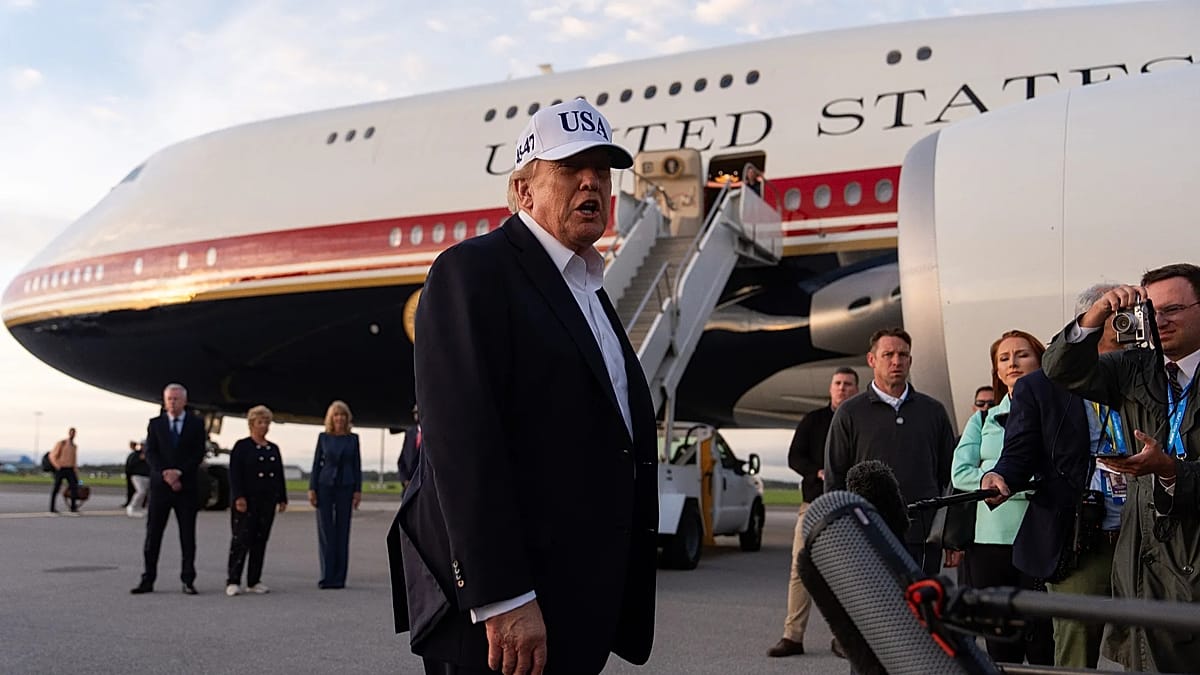
US President Donald Trump has launched a blistering attack on the Supreme Court after it refused to reinstate his administration's restrictions on mail-in voting, a decision that clears the way for expanded postal voting in November's midterm elections.
In a lengthy post on his Truth Social platform on Tuesday, Trump wrote that Republicans had received "another bad decision" from the court, describing the ruling as "horrible, highly political" and accusing certain justices of being "petrified of these crazed and depraved Democrats" and lacking the courage to "save our America."
The case stems from an executive order issued by Trump in March, which directed the United States Postal Service to implement new rules that would prevent it from delivering mail-in or absentee ballots unless voters appeared on state-specific lists. The president has repeatedly claimed, without providing evidence, that mail-in voting is susceptible to widespread fraud.
Twenty-three states, including several with large European-heritage populations such as Pennsylvania, Michigan, and Wisconsin, filed a lawsuit against the administration, arguing that the order was "as unprecedented as it is unconstitutional." The states contended that the rule would disenfranchise millions of voters and disrupt election administration.
On Monday, the Supreme Court declined to lift a lower court's injunction blocking the rule. In a concurring opinion, Justice Brett Kavanaugh noted that there was "at least a fair prospect that the final rule falls within the Postal Service's statutory authority," but added that "state and local election officials do not have sufficient time to reasonably implement the rule before the elections." Justices Samuel Alito and Clarence Thomas dissented.
European parallels and democratic norms
The ruling has drawn attention beyond the United States, as European democracies watch the legal battles over voting access with concern. In many European countries, including Germany, France, and the Nordic states, postal voting is a well-established and trusted practice, and the idea of restricting it based on unsubstantiated fraud claims is seen as an outlier.
Civil rights organisations, including the NAACP, have welcomed the Supreme Court's decision. "Big win for voters ahead of the midterm elections," the group wrote on X. "Our country works best when every eligible voter can make their voice heard."
Trump's opposition to mail-in voting has been a recurring theme since the 2020 election, when he lost to Joe Biden. Despite his stance, Trump himself used a mail-in ballot to vote in Florida's primary earlier this year. Explaining his decision to reporters, he said: "Because of the fact I'm president of the United States, I did a mail-in ballot for elections that took place in Florida."
The midterm elections will determine control of both chambers of Congress for the final two years of Trump's term. With the Supreme Court's ruling, states can now proceed with their existing mail-in voting procedures, which have been used by millions of Americans in recent elections.
The decision is a setback for Trump's broader efforts to tighten voting rules, which have been challenged in courts across the country. Legal experts note that the ruling is procedural rather than a final judgment on the constitutionality of the postal service rule, leaving the door open for future litigation.
For European observers, the episode underscores the fragility of electoral institutions even in established democracies. As Hungary revises its child protection law after an EU court ruling, and France adjusts its social media ban for minors, the US Supreme Court's intervention serves as a reminder that judicial oversight can be a crucial check on executive overreach.
The ruling also comes amid broader transatlantic tensions over democratic norms. While Trump has often criticised European allies for their policies, the mail-in ballot controversy highlights a divergence in how voting rights are treated on either side of the Atlantic.
As the midterm campaign heats up, the focus now shifts to voter turnout and the practical implementation of mail-in voting in the states. The Supreme Court's decision, while not a final word on the matter, has ensured that the November elections will proceed without the new restrictions that Trump had sought to impose.