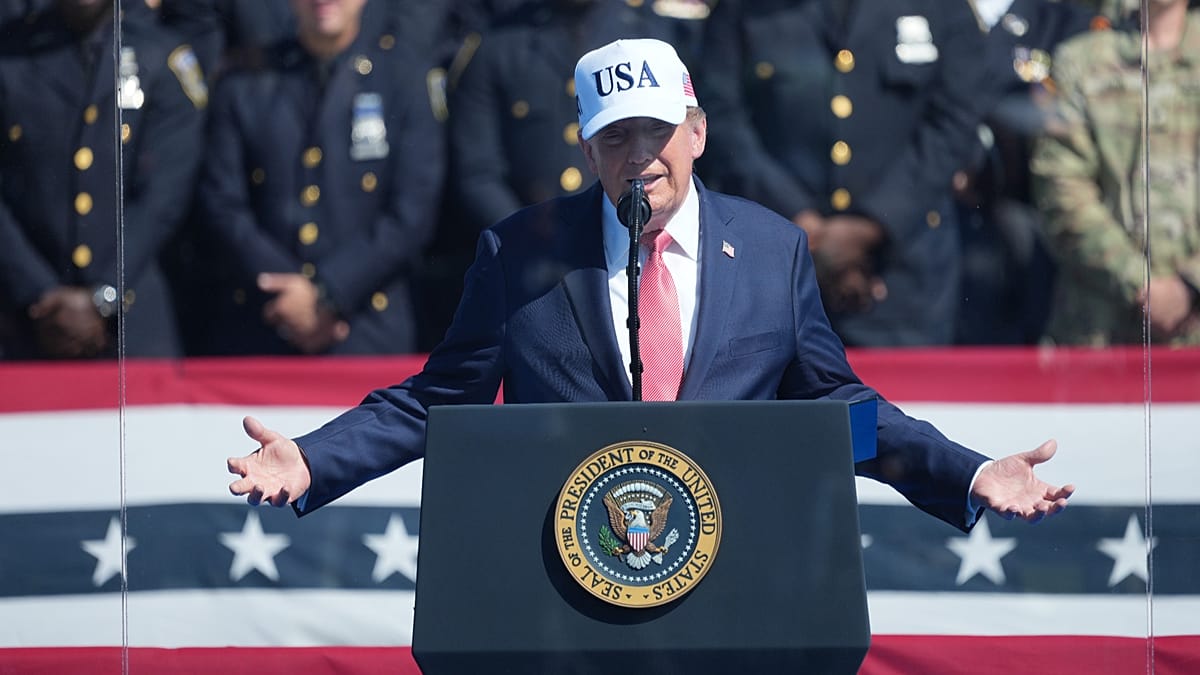
Donald Trump has opened a new front in his trade war with Canada, this time targeting the country's drinks cabinet. On Tuesday, the US president signed executive orders banning imports of alcohol and other goods, and hiking tariffs on a range of Canadian products, escalating a standoff that shows no sign of cooling.
Canadian Prime Minister Mark Carney responded firmly, acknowledging that loosening economic ties with the United States would come at a cost but insisting the benefits would outweigh the pain. "That pivot will come at a cost. There's always a cost to action. But it doesn't come close to the cost of standing still," Carney said in a video address.
New tariffs and bans
Under the executive orders issued late Tuesday, a 50% surcharge will apply from 15 September to a range of Canadian products, including mattresses, motorboats, and golf carts. A separate import ban targeting alcoholic beverages and dairy products such as whey will take effect on 29 September.
Canada's retaliatory tariffs came into effect earlier on Tuesday, applying to C$27.6bn (€17.1bn) in US imports, including steel, aluminium, and dairy goods like cheese. These measures were in response to duties Washington announced on 22 August.
Carney said Canada has "everything we need to pivot and prosper," but analysts note that US tariffs pose a modestly negative risk to Canada's overall economy, with a sharper impact on central Canada's manufacturing sector.
Contracts on the chopping block
Responding to the latest Canadian levies, Trump pledged to bar Canadian companies from securing US government contracts. In a social media post, he said he was directing officials to "REMOVE Canadian-origin products" from the General Services Administration's Multiple Award Schedules programme, which accounts for more than $50bn (€43bn) a year in contracts.
On Monday, Trump threatened to block sales of Canada's Bombardier Aviation unless the Quebec-based planemaker moves manufacturing to the United States. Bombardier responded by pointing to the tens of thousands of jobs it has created across the US, with direct employment in more than 20 states, including Kansas, Texas, Arizona, and California. The two Republican senators representing Kansas said they had conveyed their concerns to the White House.
"I'm going to fight to keep Bombardier's more than 1,200 Kansas jobs. I've already taken that concern inside the Oval Office," Senator Roger Marshall posted on X, with Senator Jerry Moran posting similar comments.
A war of memes and maps
"I don't believe in escalating the conflict. That's not constructive," Carney said in his video statement. "But our tariffs are necessary to protect our workers, protect our companies, and protect our communities. This is about who we are as Canadians."
Canada's minister in charge of trade with the United States, Dominic LeBlanc, said late on Tuesday that Ottawa was "assessing the latest tariff measures." Negotiations between the two sides broke down on 21 August after days of talks in Washington, with Carney saying US negotiators had introduced restrictions on Canadian trade deals with other countries at the eleventh hour, along with unacceptable "threats" to the French language and "Quebec culture."
Ottawa and Washington have not resumed talks since. On Sunday, Trump posted an illustration of himself towering over Carney as they played ice hockey, captioned "Get up, governor" — a nod to his ambition to turn Canada into another US state. In August, he also signed an order renaming Lake Ontario as "Lake America," sparking fury north of the border amid a broader wave of patriotism triggered by the US president's hostility.
Although Carney is backed by Canadian public opinion, his country remains reliant on its neighbour, with nearly 60% of Canada's imports coming from the United States and about 70% of its exports going to the US market.
This trade dispute is part of a broader pattern of US protectionism that has implications for Europe. As the EU faces similar pressures, MEPs are pushing for stricter investment rules to safeguard European interests. Meanwhile, Canada's retaliatory tariffs mirror the kind of measures the EU has considered in response to US actions. The situation also echoes Iceland's protests over Trump's map that placed it inside US borders, highlighting the broader disregard for sovereignty in Trump's approach.