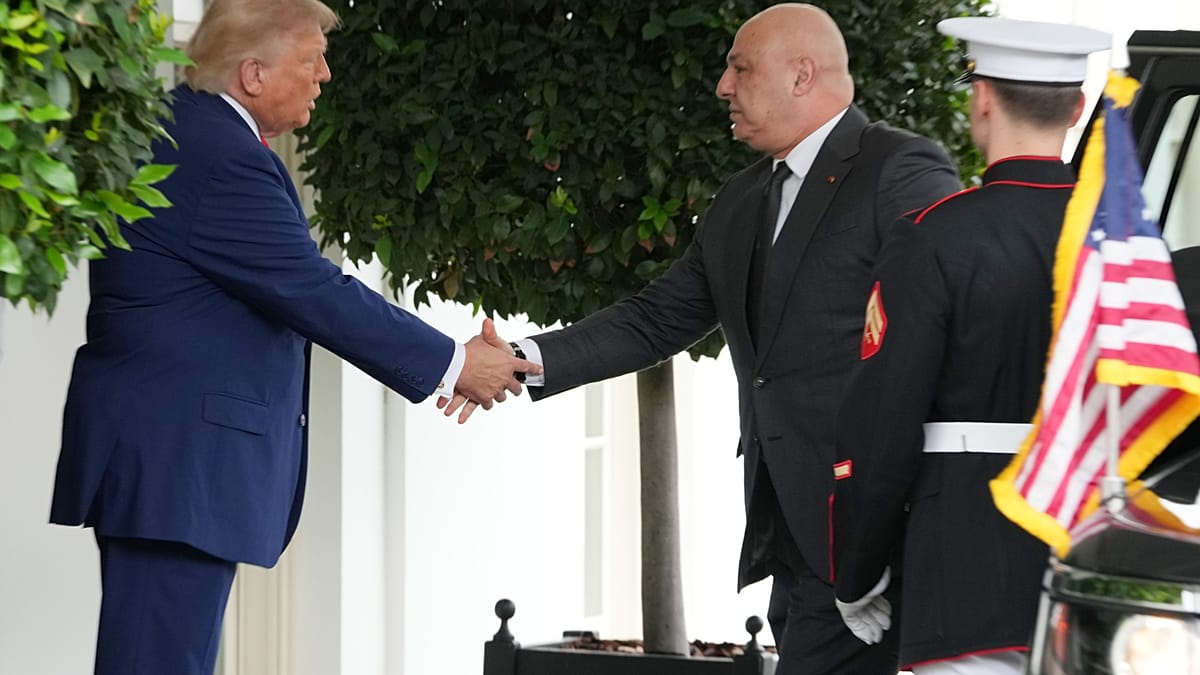
US President Donald Trump promised to support Lebanon “a lot” during a White House meeting on Tuesday with Lebanese President Joseph Aoun, who traveled to Washington seeking long-term stability after months of conflict between Israel and the Iran-backed Hezbollah militant group.
“It’s been a very badly treated place and country and we’re going to have it properly treated and treated with the respect it deserves,” Trump told Aoun in the Oval Office. “We’re gonna help it a lot,” he added, without offering concrete details.
Aoun thanked Trump for his friendship and support, writing in the White House guest book that he felt “deep appreciation for President Trump's friendship and for the support the United States of America provides to Lebanon, its sovereignty, its legitimate institutions, and the Lebanese Armed Forces.”
Lebanon’s Stability and Israeli Withdrawal
When asked about a full Israeli military withdrawal from southern Lebanon, Trump said, “They’re in the process of doing that. They’re in the process of redeploying,” but did not elaborate. Lebanon hopes the talks will lead to Israeli troops leaving large areas they currently occupy, and that the Lebanese military can assert full control in regions where Hezbollah once held sway. The Lebanese Army Deploys to Southern Pilot Zones as part of these efforts.
Aoun praised Trump’s approach, telling him, “Your vision is peace,” and describing it as his “legacy.” Trump joked, “I do agree with that,” then called Aoun handsome and said he “knows how to get to me,” adding, “Now he can have anything.”
The US has pushed for peace in Lebanon but is increasingly focused on a new escalation with Iran, which has further destabilized the Middle East. On Wednesday, Trump said he had little interest, at least for now, in holding talks with Iran’s leader to end the conflict.
Aoun’s visit was the first to the White House by a Lebanese president since 2009, and Lebanon and Israel have held rare direct talks mediated by Washington. The meeting underscores the delicate balance in the region, where European allies like France have also been involved in diplomatic efforts.
For European observers, the outcome of these talks could affect stability in the Eastern Mediterranean, a region of strategic interest for EU member states such as Cyprus, Greece, and Italy. The potential for renewed conflict between Israel and Hezbollah also has implications for energy security and migration flows in the area.