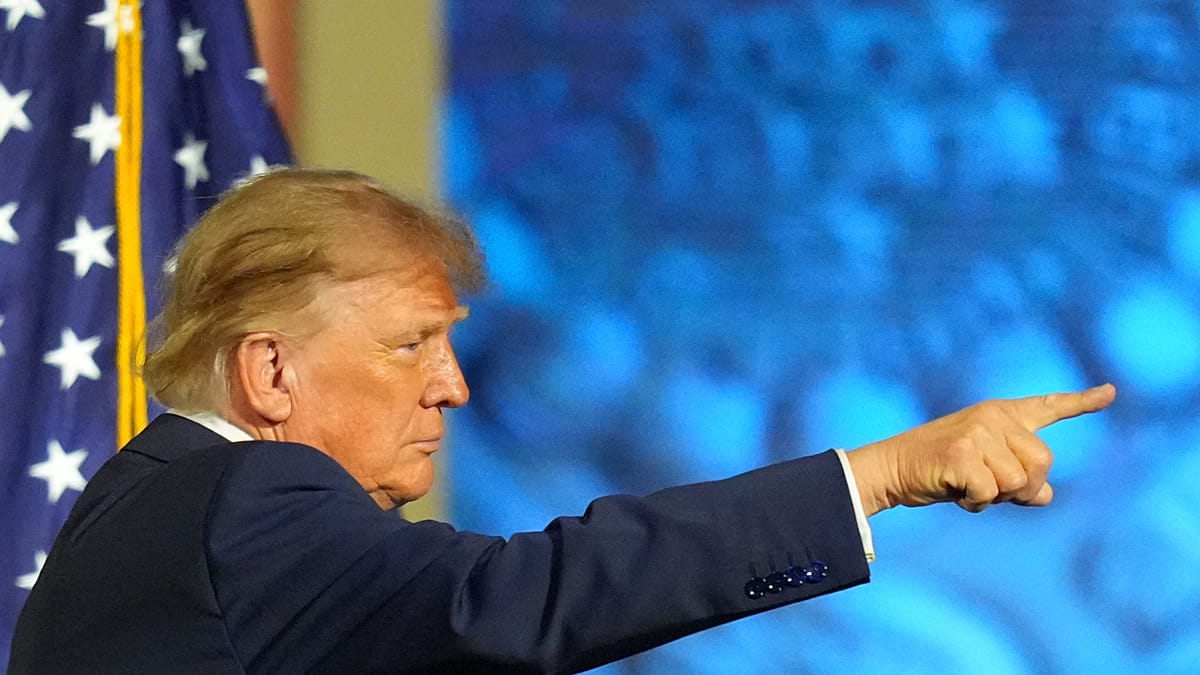
At a Republican midterm convention in Dallas, former President Donald Trump unveiled a proposal to give every adult American citizen a $5,000 (€4,290) payment, dubbed the “Trump dividend.” The plan, contingent on Republicans retaining control of both the House and Senate, would carry a price tag of nearly $1.2 trillion (€1.03 trillion)—more than the Pentagon’s entire 2026 budget request.
Trump framed the payments as a reward for the nation’s economic strength, comparing them to corporate dividends. “If the Republicans win, you win with us and you get $5,000,” he told the crowd. Within an hour, Vice President JD Vance appeared to walk back the proposal, suggesting that wealthy Americans might be excluded.
What would it cost?
The US has roughly 240 million adult citizens, according to the latest Census Bureau data. Paying every one of them $5,000 would total about $1.18 trillion—$220 billion more than the Pentagon’s $961 billion budget request for 2026. Limiting payments to the 174 million registered voters would still cost around $870 billion.
The proposal comes as the national debt has surpassed $40 trillion (€34.3 trillion) for the first time, and the annual budget deficit approaches $1.8 trillion (€1.54 trillion). “The idea that we’ve had fiscal success is backwards and bordering on laughable,” said Marc Goldwein, senior policy director at the Committee for a Responsible Federal Budget. “We don’t have surpluses to give away.”
Borrowing costs are also rising: the 10-year Treasury yield hit 4.85% on Wednesday, its highest in nearly three years, while the 30-year yield climbed to 5.29%, near an 18-year high. Sustained increases could make mortgages and business loans more expensive, slow growth, and weigh on stock prices.
How would it be funded?
Vance suggested that tariff revenue could finance the payments. The Treasury expects to collect about $406 billion in customs duties in fiscal 2026—enough to cover only about a third of the cost of paying all adult citizens. Even the voter-only version would cost more than twice the projected tariff revenue.
Trump has floated similar ideas before, including a $2,000 dividend earlier this year and a $1,776 “warrior dividend” for military members last year. Senator Bernie Moreno of Ohio wrote on X that he would introduce a bill to pass the Trump Dividend immediately after the November 3rd election. Congress would need to approve the payments, though Trump has suggested he might not require legislative approval.
Legal experts say the proposal would be lawful as long as payments are not tied to voting behavior. “This is a campaign promise,” said New Mexico-based lawyer John Day. “It’s not a payment to individuals to try to get them to vote in a particular way.”
What could $10,000 buy?
For a household with two adults, the combined $10,000 payment would cover roughly 11 months of average food spending, or about 18 months of grocery costs, based on 2024 expenditure data adjusted for inflation. Housing, the largest expense at 33.4% of the average budget, would be covered for just over four months. The payment could also cover about eight and a half months of transport costs or 18 months of healthcare spending.
While the sum might cover nearly six years of average education spending, that figure is skewed by households with little or no such expenditure.
The proposal arrives as Republicans defend their narrow House majority against strong headwinds. Trump remains unpopular, and most Americans oppose the war in Iran, making the Senate race more competitive than expected. The midterm stakes are high, and the dividend is a central part of the Republican pitch. However, the fiscal math and political reality suggest the promise may be more rhetoric than reality.