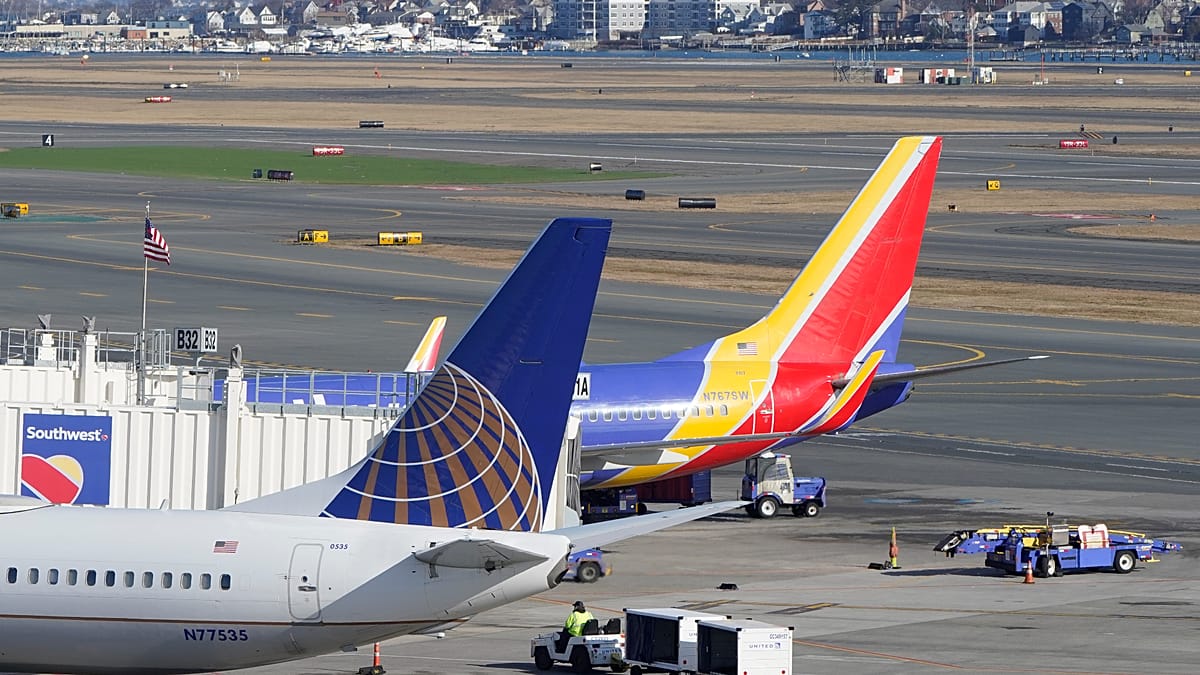
The Trump administration is asking Congress for $50 billion to rebuild the United States' ageing air traffic control network, following a system failure that triggered a rare nationwide grounding of all flights on Friday. Thousands of travellers were left stranded, and the knock-on effects are still being felt as airlines work through backlogs.
President Donald Trump broke his silence on Sunday, posting on Truth Social that the system is "RIDICULOUS" for being 50 years old and that the money is "desperately needed." The request comes just weeks before Democrats are set to take control of Congress in January, setting the stage for a contentious debate over spending priorities.
A costly upgrade
Transportation Secretary Sean Duffy said on Sunday that the administration wants $50 billion to build a "brand new architecture" for the Federal Aviation Administration (FAA)'s network. He appeared on five Sunday talk shows to make the case, arguing that telecoms firms such as AT&T, Verizon and Lumen could deploy the new system "tomorrow" if funding were in place.
Congress already approved $12.5 billion in 2025 to modernise FAA systems, some of which date back to the 1960s. The first phase of that work is not due for completion until December 2028. FAA Administrator Bryan Bedford told lawmakers in September that a second phase would cost at least $10 billion more, and a September bill from Republican Senator Eric Schmitt sought roughly $30 billion in new investment.
Democrats, however, are pushing back. They say they support modernisation but want to know why the price tag has grown so quickly and how existing funds have been spent. Representative Rick Larsen, the ranking Democrat on the House Transportation Committee, and Representative André Carson issued a joint statement asking the administration to "explain to Congress, again, why they need more money." Rosa DeLauro, the top Democrat on the House Appropriations Committee, noted that Congress has already shown its willingness to invest.
What caused the failure?
According to Duffy, the problem began when a federal contractor replaced a section of old copper wire with fibre cable at a site in El Dorado, Arkansas. When the router was switched on, a fault emerged at a facility in Amarillo, Texas, and the issue cascaded into a nationwide ground stop.
The FAA said "excessive data" flooded the system at a rate of 1,000 connection attempts every four to five seconds, destabilising aircraft communications and radar feeds. The network stabilised only after the contractor blocked the two locations.
Duffy said officials are "pretty good" that the outage was not a cyberattack, noting that intelligence agencies have not detected the "chatter or the footprints" they would expect to see. Still, the incident has raised fresh questions about the resilience of critical infrastructure in the United States.
For European readers, the episode is a reminder of how dependent modern air travel is on ageing systems. The FAA's troubles echo concerns raised by European air traffic control bodies, which have also grappled with outdated technology and capacity constraints. While the US system is separate, the global nature of aviation means that disruptions in one region can quickly ripple across the Atlantic, affecting flights to and from European hubs like London Heathrow, Frankfurt and Paris Charles de Gaulle.
Duffy said operations should be back to full capacity by Monday, but travellers heading to or connecting through the US should check with their airline for rebookings, as backlogs may take time to clear. The chaos at US airports has been a major story for international travellers, many of whom are still trying to reach their destinations.
The political battle over the $50 billion request is likely to intensify in the coming weeks. Democrats, who will control the House and Senate in January, have already signalled they will scrutinise the administration's spending plans. The outcome will have implications not just for US travellers, but for the global aviation industry, which relies on a stable and efficient US air traffic control system.