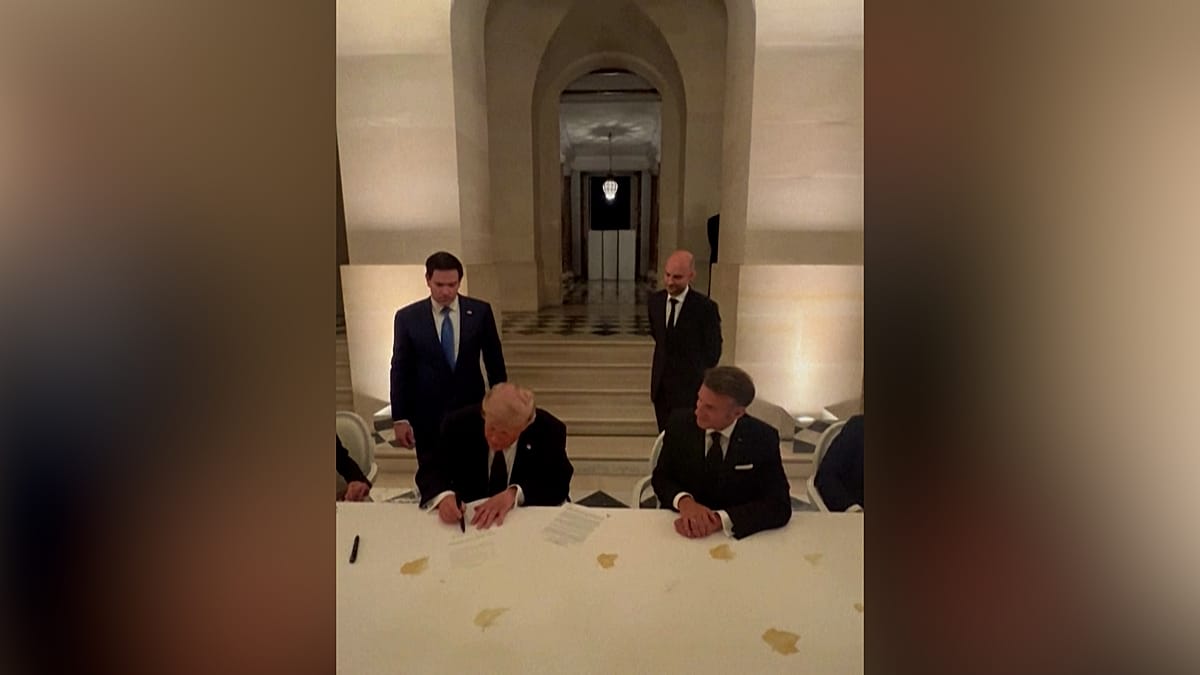
In a carefully choreographed moment at the Palace of Versailles, US President Donald Trump signed an interim agreement with Iran on Tuesday evening, with French President Emmanuel Macron seated beside him. The video, released by the Élysée, captures the signing during a formal dinner, underscoring the diplomatic weight France has lent to the process.
The deal, which aims to end the ongoing war between the United States and Iran, also seeks to reopen the Strait of Hormuz, a critical chokepoint for global oil shipments. European leaders have watched the conflict with growing concern, as disruptions in the strait have driven up energy prices across the continent and threatened supply chains from Rotterdam to Trieste.
European Stakes in the Iran Deal
For Europe, the implications are direct. The war has strained relations between Washington and Brussels, with EU capitals divided over how to respond. France, Germany, and the United Kingdom have all pushed for a diplomatic solution, while countries like Poland and the Baltic states have been more cautious, wary of any deal that might embolden Iran regionally.
Macron’s role as host at Versailles signals Paris’s ambition to act as a mediator, a position it has historically held in Iran nuclear talks. The choice of venue—the opulent palace built by Louis XIV—was deliberate, evoking centuries of French diplomatic tradition. Yet critics argue that the setting contrasts sharply with the grim realities of the war, which has displaced millions and destabilised the Middle East.
Former US General James Mattis has publicly stated that only Trump believes the deal will hold, given the rising risk of conflict between Israel and Hezbollah. European intelligence agencies have warned that the agreement may be fragile, with Iran’s proxies in Lebanon and Yemen potentially undermining its terms.
Reactions Across Europe
In Berlin, the Bundestag’s foreign affairs committee welcomed the move but called for robust verification mechanisms. In Rome, Prime Minister Giorgia Meloni—who recently rejected Trump's claims about a G7 encounter—has remained noncommittal, balancing her government’s Atlanticist leanings with domestic pressure to avoid further energy shocks.
The deal also comes amid a surge of misinformation targeting European leaders, as false narratives spread after the G7 summit. Analysts warn that disinformation campaigns could undermine public trust in the agreement, particularly in countries like France and Germany where anti-war sentiment is strong.
Meanwhile, French fishermen gathered in Cherbourg this week to protest fuel costs and competition, issues exacerbated by the war’s impact on global trade. The reopening of the Strait of Hormuz could ease some of these pressures, but the path forward remains uncertain.
The interim deal is expected to be followed by more comprehensive negotiations, though no timeline has been set. For now, the image of Trump and Macron side by side at Versailles offers a fleeting moment of unity—one that European policymakers hope will hold.