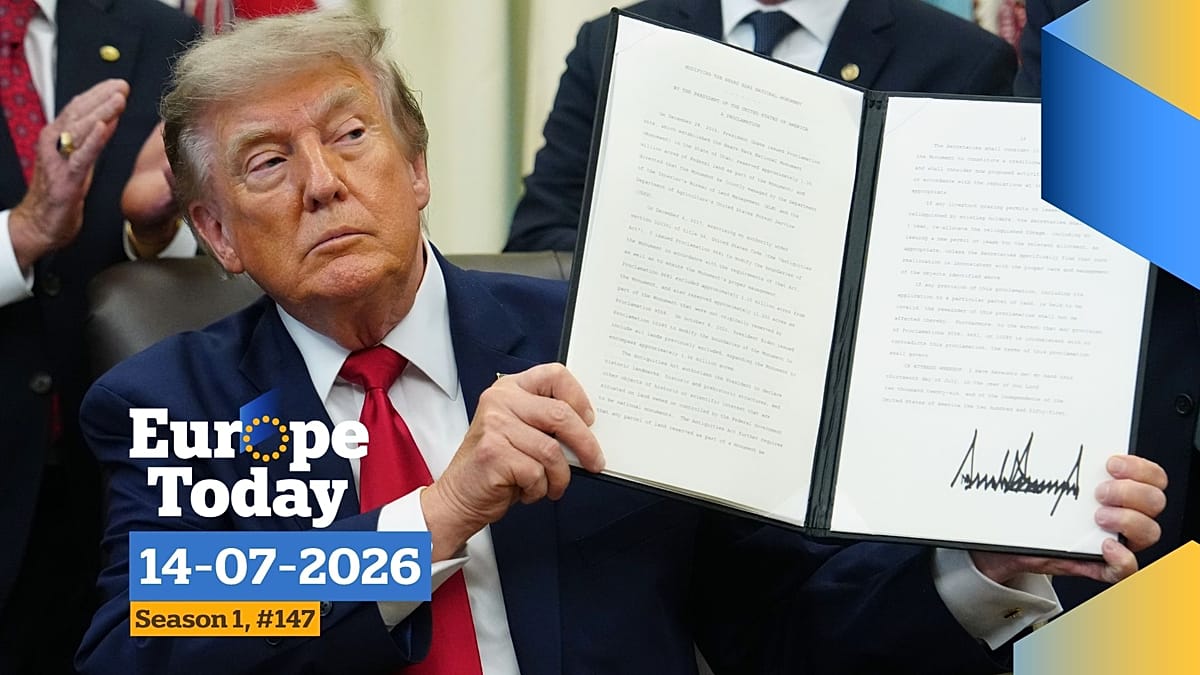
The United States is escalating its confrontation with Iran over the strategic Strait of Hormuz, with President Donald Trump vowing to impose a 20% fee on all cargo shipped through the waterway. Speaking from the White House, Trump declared that the strait would remain open 'with or without Iran,' signaling a unilateral US takeover of the maritime chokepoint through which roughly a fifth of the world's oil passes.
The announcement comes amid a series of deadly clashes between US and Iranian forces in the region, including a missile strike on oil tankers that left several crew members dead. European capitals are watching with alarm, as any disruption to Hormuz traffic would send oil prices soaring and hit European economies—already grappling with inflation and energy security concerns—particularly hard.
European Energy Security at Risk
For European Union member states, the Strait of Hormuz is a critical artery. While the EU has diversified its energy imports in recent years, many countries—including Italy, Spain, and Greece—still rely on Middle Eastern crude. A 20% surcharge would effectively raise the cost of every barrel passing through the strait, adding billions of euros to Europe's energy bill. The European Commission has yet to issue an official response, but diplomats in Brussels say the move could trigger emergency talks among EU energy ministers.
Meanwhile, the United Kingdom and Norway, both major oil producers, are assessing the impact on their own exports. Norway's Equinor has already warned of potential supply chain disruptions. The situation is further complicated by the fact that several European shipping companies operate tankers that regularly transit the strait.
Diplomatic Fallout and EU Reactions
In Brussels, EU foreign ministers held an emergency meeting to discuss the crisis. Bulgarian Foreign Affairs Minister Velislava Petrova-Chamova told reporters that the EU is 'deeply concerned' by the US threat and called for de-escalation. 'We cannot accept unilateral actions that undermine international law and the freedom of navigation,' she said. The EU has traditionally supported a diplomatic resolution to the Iran nuclear deal, from which the US withdrew in 2018.
The crisis also threatens to widen existing transatlantic rifts. Several European governments have criticized Trump's confrontational approach, while others—notably Hungary under Prime Minister Viktor Orbán—have been more cautious. The situation in the Persian Gulf comes as Hungary itself faces a constitutional crisis over the ouster of President Katalin Sulyok, further straining EU unity.
Global Market Turmoil
Financial markets have reacted sharply. Oil prices surged by more than 8% in early trading, with Brent crude topping $95 a barrel. The oil price surge has rattled stock exchanges from London to Frankfurt, as investors fear a prolonged conflict could tip the global economy into recession. The European Central Bank is monitoring the situation closely, though it has not yet signaled any policy response.
Analysts warn that a 20% fee on Hormuz shipping would be unprecedented. 'This is not a tariff; it's effectively a tax on global trade,' said Dr. Elena Marchetti, an energy economist at the University of Bologna. 'European consumers will feel this at the pump, but also in higher prices for goods transported by sea.'
The US has not provided details on how the fee would be collected or enforced. Iran, for its part, has threatened to block the strait entirely if the US proceeds. The Islamic Revolutionary Guard Corps has conducted naval exercises in the area, raising the risk of accidental clashes.
As the standoff continues, European leaders are scrambling to find a diplomatic off-ramp. French President Emmanuel Macron has offered to mediate, while German Chancellor Olaf Scholz has called for an emergency UN Security Council session. Whether these efforts can prevent a full-blown crisis remains uncertain.