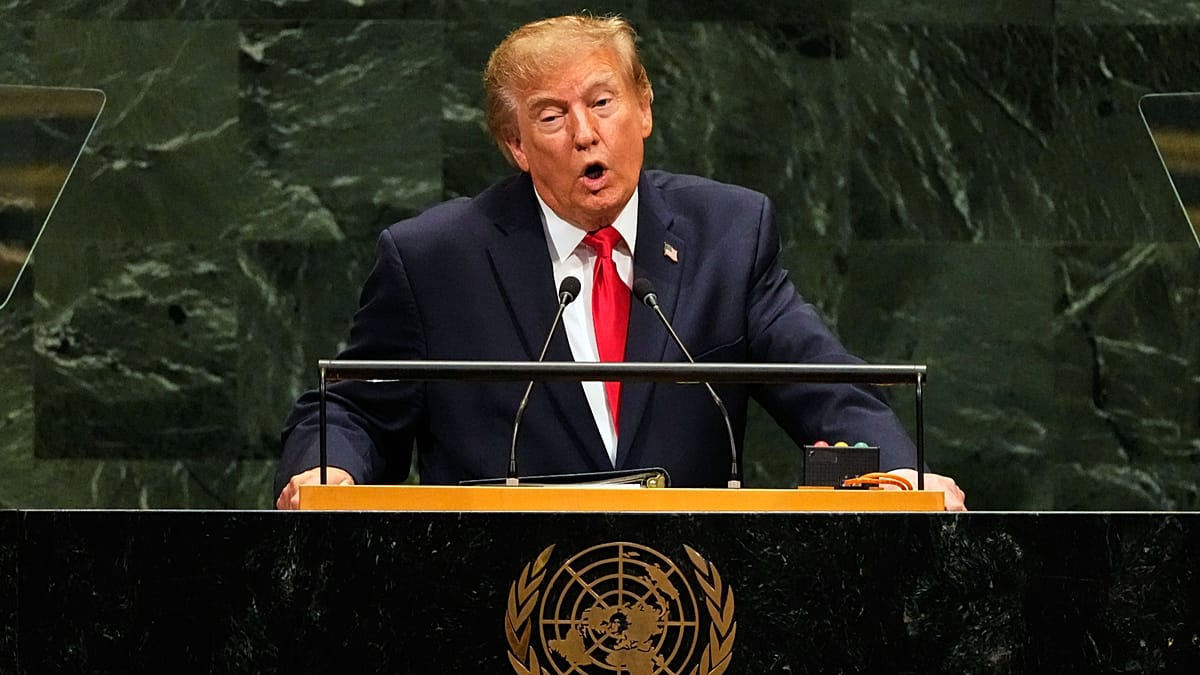
Donald Trump used his address to the UN General Assembly in New York on Tuesday to present Iran with a stark choice — destruction or a negotiated settlement — before revealing hours later that American and Iranian officials had held their first confirmed direct talks since the war began in February.
Speaking at the UN headquarters, the US president defended his decision to launch the conflict and cast himself as more resolute than other world leaders. He then framed the coming period as a fork in the road for Tehran.
"Will a deal be made with Iran that lets them rebuild and create a far greater country than it ever was before, maybe one of the greatest in the Middle East or even the world," Trump said. "Or do I annihilate the Islamic Republic and do it quickly, never giving them a chance to kill and destroy people and countries again?"
He dismissed suggestions that Iran had shown resilience, describing the government in Tehran as "weak and desperate" rather than strong and confident. He also accused Iranian leaders of deliberately stalling negotiations until after the US midterm elections, and insisted that any such tactic would not change his approach.
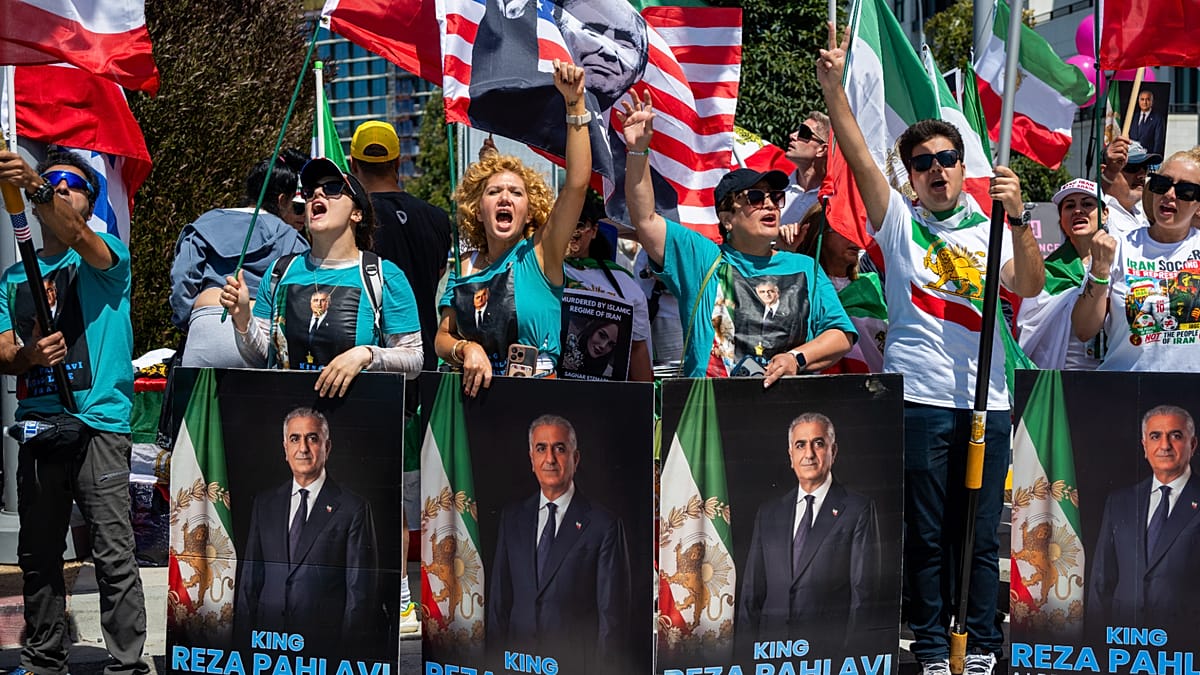
Most of Iran's delegation walked out of the chamber as Trump spoke.
Yet after the speech, Trump told reporters that the two sides had met on the sidelines. He offered few details, saying only: "It was a very good meeting." US Secretary of State Marco Rubio said Trump would be open to meeting Iranian President Masoud Pezeshkian while both are in New York, telling NBC that the president believes engagement is essential to solving problems even when agreement is unlikely.
Greenland deal signed on the margins
Trump's day in New York extended well beyond Iran. He appeared alongside Danish Prime Minister Mette Frederiksen and Greenlandic Prime Minister Jens-Frederik Nielsen to sign a new security agreement covering Greenland, a territory of NATO ally Denmark. The deal, announced last week, follows Trump's repeated threats to take over the island by military force if necessary.
Under the agreement, Greenland remains Danish territory. Trump said the US would immediately begin expanding its military footprint there, including "building two very major military bases."
He also held talks with new UK Prime Minister Andy Burnham, with the two leaders discussing migration, the Iran conflict and the Russia-Ukraine war, among other issues. Trump met Japanese Prime Minister Sanae Takaichi and Ukrainian President Volodymyr Zelenskyy, and was scheduled for a more informal encounter with Venezuela's acting President Delcy Rodríguez.
Further meetings were planned with leaders and senior officials from the Gulf Cooperation Council states — Bahrain, Kuwait, Oman, Qatar, the UAE and Saudi Arabia — to discuss the trajectory of the Iran war and growing alarm over Tehran-backed Houthi attacks on Saudi territory. Trump was also due to take part in an event on the Shield of the Americas, an initiative he launched with Latin American countries earlier this year to combat violent cartels.
War overshadows the General Assembly
The US president returned to the UN nearly seven months into a war he insists is necessary to neutralise a nuclear threat from Tehran. In his speech, he argued that the world was better off under his leadership.
"As president of the most extraordinary nation in history," he said, "I have no interest in leaving dangers to grow for another day. I do not believe in letting problems fester."
Despite US and Israeli strikes that have killed much of Iran's top leadership and destroyed its air force and navy, and a US blockade of Iranian oil that has left Tehran's economy in ruins, the conflict has grown more complex. Energy markets remain unsettled, and oil prices rose further after Saudi Arabia shut a key pipeline last week that had served as a relief valve for crude blocked in the Gulf. Riyadh acted after the pipeline was attacked by Iran-backed militants in Iraq while Saudi forces were engaged in exchanges with Yemen's Houthis.
Houthi territorial gains and their control of the Bab el-Mandeb strait have made the Red Sea shipping lane increasingly hazardous for oil carriers. Trump nonetheless maintained that elevated prices are temporary and will fall once the war ends.
"Oil prices will come plummeting down even lower than they were at the start of the conflict," he said. "And they were very low in the United States. They were really low."
For European governments, the day's developments carry direct consequences. The Greenland agreement reshapes the security architecture of the North Atlantic, while the Iran war continues to disrupt energy flows through the Gulf and the Red Sea — routes on which European economies depend. The prospect of direct US-Iran talks, however tentative, offers the first sign in months that the conflict could move from the battlefield to the negotiating table.