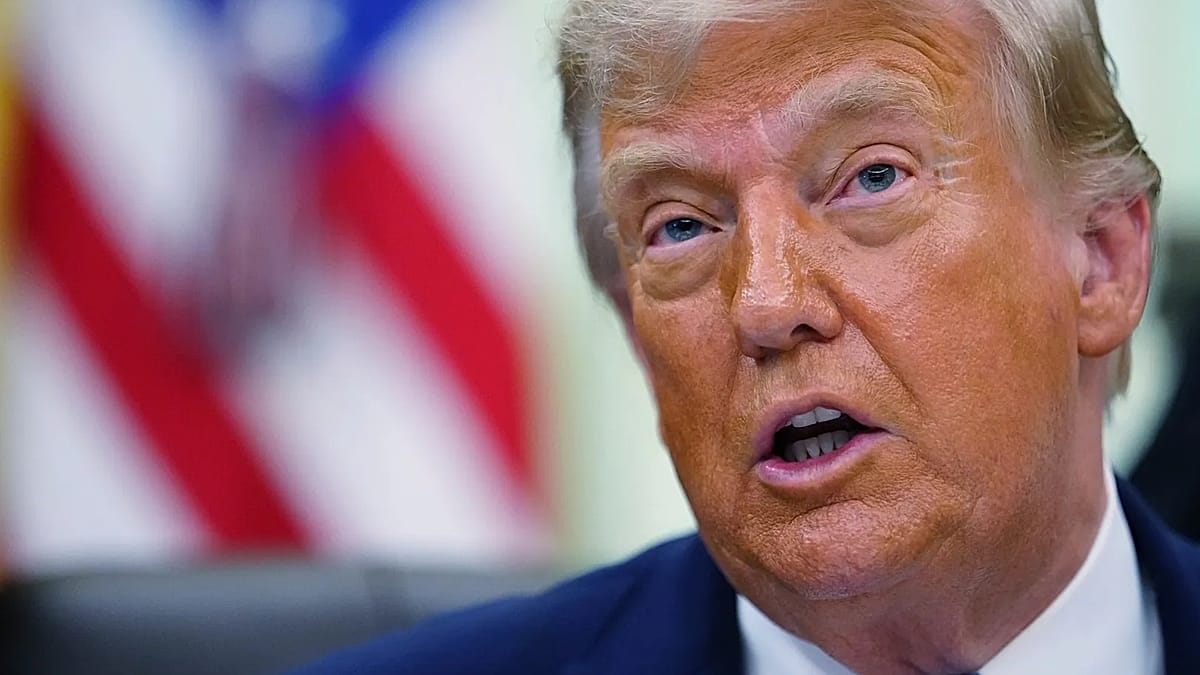
US President Donald Trump has escalated his military campaign against Iran, vowing to seize the country's critical oil infrastructure, including Kharg Island. In a post on Truth Social on Thursday, Trump declared that US forces would strike Iran "VERY HARD TONIGHT" and, in the near future, "take Kharg Island, and other oil infrastructure points, and assume total control of their Oil and Gas Markets, much like we have with Venezuela."
Kharg Island, located in the northern Persian Gulf, is the linchpin of Iran's oil export capacity. Roughly 8 kilometres long and 4–5 kilometres wide, the island hosts extensive storage tanks, pipelines, and offshore loading terminals. Pipelines from several of Iran's largest oil fields converge there before crude is loaded onto tankers. An estimated 90% of Iran's crude oil exports pass through Kharg Island, with much of it destined for China and other Asian markets. For Tehran, oil exports remain a primary source of government revenue, making the island a critical economic asset.
The threat comes as the United States and Iran have traded strikes for a third consecutive day, pushing the Middle East closer to a resumption of full-scale war. The American attacks, which continued into Thursday morning local time, appeared more intense and broader in scope than previous days. Iran has released little information on the extent of the damage but has retaliated by firing at Kuwait, Bahrain, and Jordan, mirroring its actions from the day before.
Blockade and Strait of Hormuz Tensions
The US military has maintained a blockade of Iranian ports, and on Thursday it reported firing missiles to disable a tanker attempting to transport Iranian oil. An Indian official confirmed that a US strike on a different merchant ship earlier this week killed three Indian sailors. These incidents underscore the widening human and economic toll of the conflict.
Central to the crisis is Iran's stranglehold on the Strait of Hormuz, a vital chokepoint for global energy supplies. Iran announced on Thursday that the strait was closed, though it has severely restricted traffic through the waterway since early in the war, allowing only a trickle of ships to pass. The disruption has driven up fuel prices and made food and other basics more expensive far beyond the region, including in Europe. The US military's Central Command disputed Iran's claim, and Trump said on Wednesday that the US had undertaken a secret mission in recent weeks to sneak ships through the passage.
Efforts to negotiate an end to the hostilities appear stalled. Trump warned that Tehran would "pay the price" for the lack of progress. Iran's Foreign Ministry responded on Thursday that the US attacks had "effectively rendered the ceasefire...meaningless," without explicitly abandoning it. The two sides remain deeply divided over Iran's nuclear programme, which Tehran insists is peaceful but which the US and Israel fear could be used to build an atomic weapon due to its stockpile of highly enriched uranium. The US and Israel have stated that a major reason for launching their campaign on 28 February was to ensure Iran could never develop such a weapon.
For European capitals, the conflict poses a direct threat to energy security and economic stability. The European Union has long sought to maintain the 2015 nuclear deal, from which the US withdrew in 2018, and has attempted to facilitate dialogue. However, the current escalation leaves Brussels with limited leverage. The disruption of oil flows through the Strait of Hormuz has already contributed to higher energy prices across the continent, and any seizure of Kharg Island could further destabilise global markets. The situation also strains transatlantic ties, as European leaders have urged restraint while Trump pursues a maximalist approach. For more on the diplomatic fallout, see Trump's NATO Grievance Over Iran Strains Transatlantic Ties.
As the conflict enters its third day, the risk of a broader regional war remains high. The US and Iran have both signalled a willingness to escalate, and the international community watches with growing alarm. For now, the fate of Kharg Island—and the stability of global oil markets—hangs in the balance.