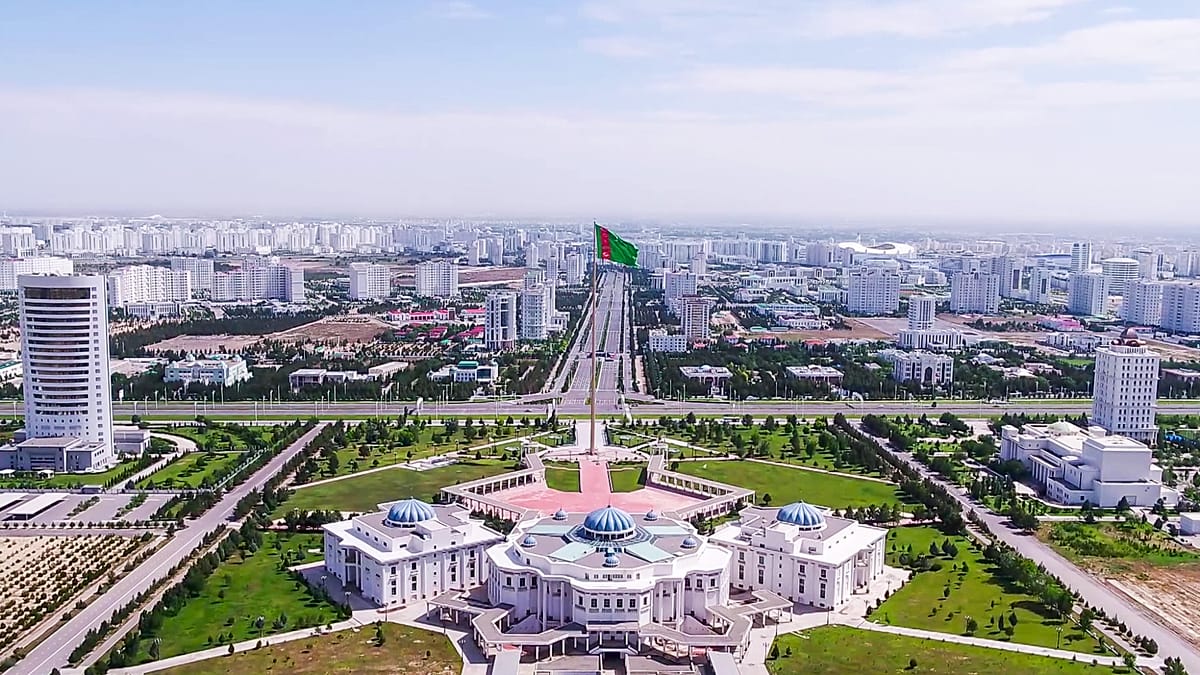
Turkmenistan marked the 35th anniversary of its independence on 27 October with a grand military and cultural parade through the centre of Ashgabat, the capital. The event drew international partners, including representatives of the United Nations, and served as a platform for the government to outline its priorities for the coming decades.
Since breaking from the Soviet Union in 1991, Turkmenistan has charted a distinctive course in Central Asia. Its status of permanent neutrality, formally recognised by the UN General Assembly in 1995, remains the bedrock of its foreign policy. That status has allowed Ashgabat to maintain diplomatic and economic ties with a wide range of partners, from Russia and China to the European Union and the United States.
Neutrality as an economic asset
The neutrality doctrine is not merely symbolic. It has helped shape an economic model that relies on steady hydrocarbon exports and cautious fiscal management. According to official figures, Turkmenistan's economy has grown at more than 6% annually in recent years, while public debt remains below 2% of GDP — a rarity among resource-rich states. The government credits this stability to its policy of avoiding foreign borrowing and prioritising self-financed infrastructure projects.
Natural gas is the backbone of the economy. The Galkynyş field, one of the largest gas reserves in the world, underpins exports to China and, increasingly, to other markets. Ashgabat has been investing in new pipelines and export routes, including the Trans-Caspian pipeline project, which remains a topic of discussion with the European Union as Brussels seeks to diversify its energy supplies away from Russia.
Beyond energy, the government has launched ambitious infrastructure programmes. The Caspian port of Türkmenbaşy has been expanded, new motorways connect the main cities, and a network of modern schools and hospitals is being built across the country. These projects are part of a long-term strategy to modernise the economy and reduce dependence on raw material exports.
Looking ahead: challenges and opportunities
Despite the celebratory mood, Turkmenistan faces significant challenges. The economy remains heavily reliant on gas, leaving it vulnerable to price fluctuations. The country's human rights record and lack of political pluralism continue to draw criticism from international organisations, including the UN and the EU. The government, however, insists that its model of gradual reform is appropriate for the country's traditions and social fabric.
In his address during the parade, President Serdar Berdimuhamedow emphasised the importance of neutrality and stability as foundations for future progress. He also highlighted the role of young people in carrying the country forward, noting that education and technology would be key to diversifying the economy.
Turkmenistan's relationship with Europe is evolving. While the EU has no formal trade agreement with Ashgabat, there is growing interest in energy cooperation and in the development of the Trans-Caspian corridor, which could link Central Asia to European markets. The recent debates about the UK's future relationship with the EU have also drawn attention to the broader question of how Europe engages with its eastern neighbours.
For now, the anniversary celebrations in Ashgabat were a display of national pride and a signal of continuity. The country's leaders are keen to project an image of a stable, neutral state that is open to international cooperation, even as it guards its sovereignty and traditions.
As Turkmenistan looks to the next 35 years, the balance between modernisation and preservation will be crucial. The gas wealth provides the means, but the political will to diversify and open up will determine whether the country can truly secure a prosperous future for its citizens.