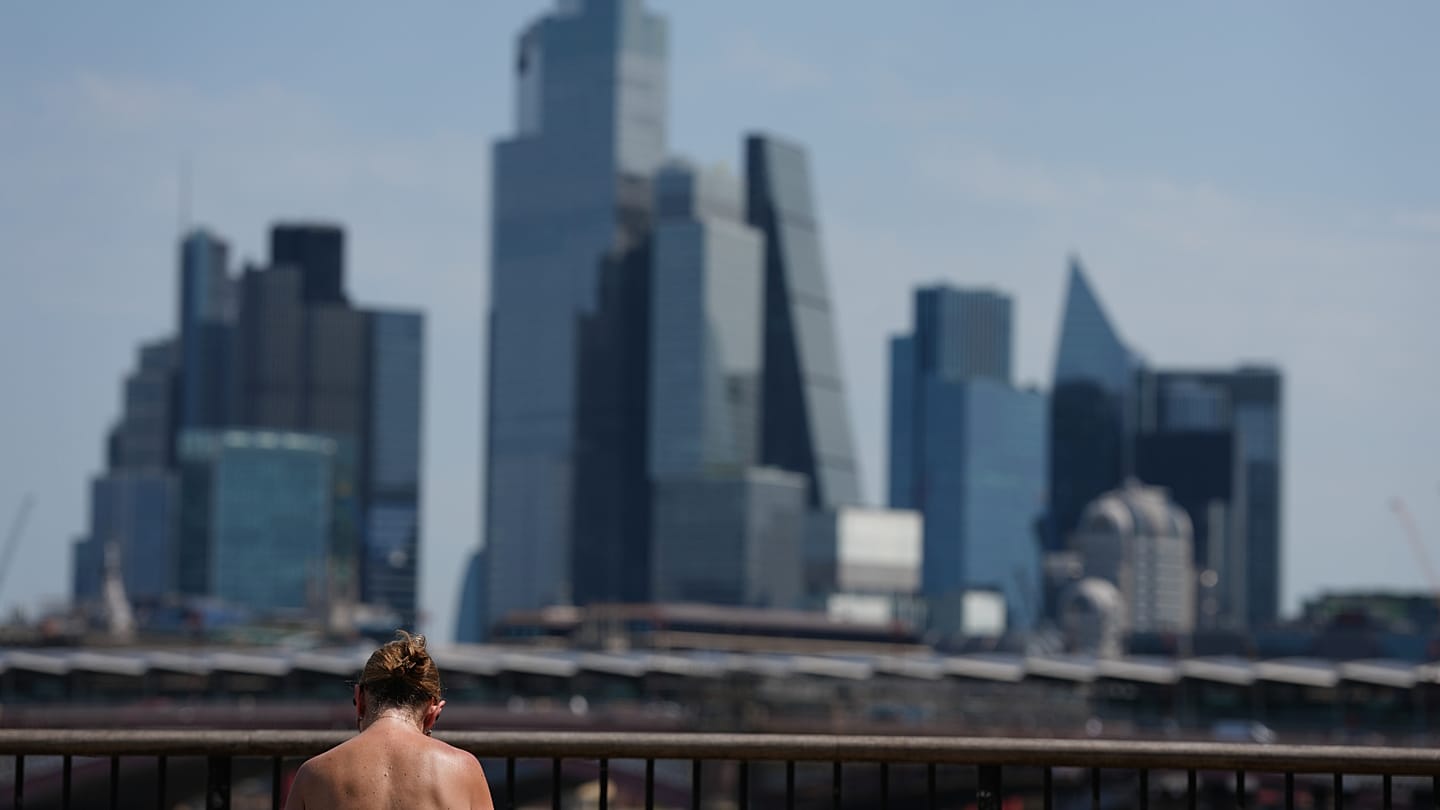
The United Kingdom has recorded its hottest June day on record, as a persistent heatwave continues to bake large parts of Europe. The Met Office confirmed that temperatures soared past previous highs, with some locations in southern England reaching above 40°C. The agency has warned that the “exceptionally warm” conditions are expected to persist through the middle of the week, raising concerns for public health and infrastructure.
This latest milestone follows a pattern of extreme heat events across the continent. In recent days, Spain recorded its hottest June days, with thermometers in Seville and Córdoba exceeding 45°C. The Spanish meteorological agency AEMET has issued red alerts for several provinces, urging residents to stay indoors during peak hours.
Health Alerts and Disruptions Spread
France is also grappling with the heatwave, which has forced the closure of tourist sites including the Eiffel Tower. The French health ministry has activated its emergency heat plan, opening cooling centers in Paris and other major cities. In the south, wildfires have broken out near Marseille, prompting evacuations in the Bouches-du-Rhône department. Belgium has issued a health alert, with the Royal Meteorological Institute warning of temperatures up to 38°C in Brussels and Antwerp.
The World Health Organization’s regional director for Europe, Dr. Hans Kluge, has called on governments to take immediate action. “This is not a temporary anomaly,” he said in a statement. “Climate change is making these events more frequent and more severe. We need robust heat-health action plans, especially for vulnerable populations.” The WHO has linked the current heatwave to a rise in excess deaths across southern Europe, with Italy and Greece reporting increased hospital admissions for heatstroke and dehydration.
In the UK, the National Health Service has issued guidance for staying cool, advising people to avoid strenuous activity during the hottest part of the day and to check on elderly neighbors. Transport for London has warned of potential delays on the Tube and rail networks due to heat-related speed restrictions. The Met Office’s chief meteorologist, Paul Gundersen, noted that while June records have been broken, the overall trend is consistent with climate projections. “We are seeing more frequent and intense heatwaves,” he said. “This is a clear signal of a warming climate.”
The heatwave has also disrupted daily life in other parts of Europe. In Germany, the DWD weather service has issued warnings for the Rhine region, where water levels are dropping, threatening shipping. In the Netherlands, the KNMI has declared a code orange for much of the country, with temperatures expected to reach 35°C in Utrecht and Rotterdam. Meanwhile, in Austria, Vienna has seen a surge in demand for public swimming pools and air-conditioned public spaces.
As the heatwave continues, experts emphasize the need for long-term adaptation. The European Environment Agency has highlighted that heat-related mortality could triple by 2100 if no further action is taken. For now, residents across the continent are seeking refuge in shaded parks, fountains, and air-conditioned shopping centers. In Paris, the city’s “Ciné-clim” initiative offers free film screenings in cooled venues, providing a respite for those without air conditioning at home.
The immediate forecast offers little relief. The Met Office expects temperatures to remain high until at least Thursday, with a slight chance of thunderstorms in northern England and Scotland. In southern Europe, the heat is likely to persist into the weekend, with no significant cooling expected. Authorities continue to urge caution, as the health and economic impacts of this extreme weather event become increasingly apparent.