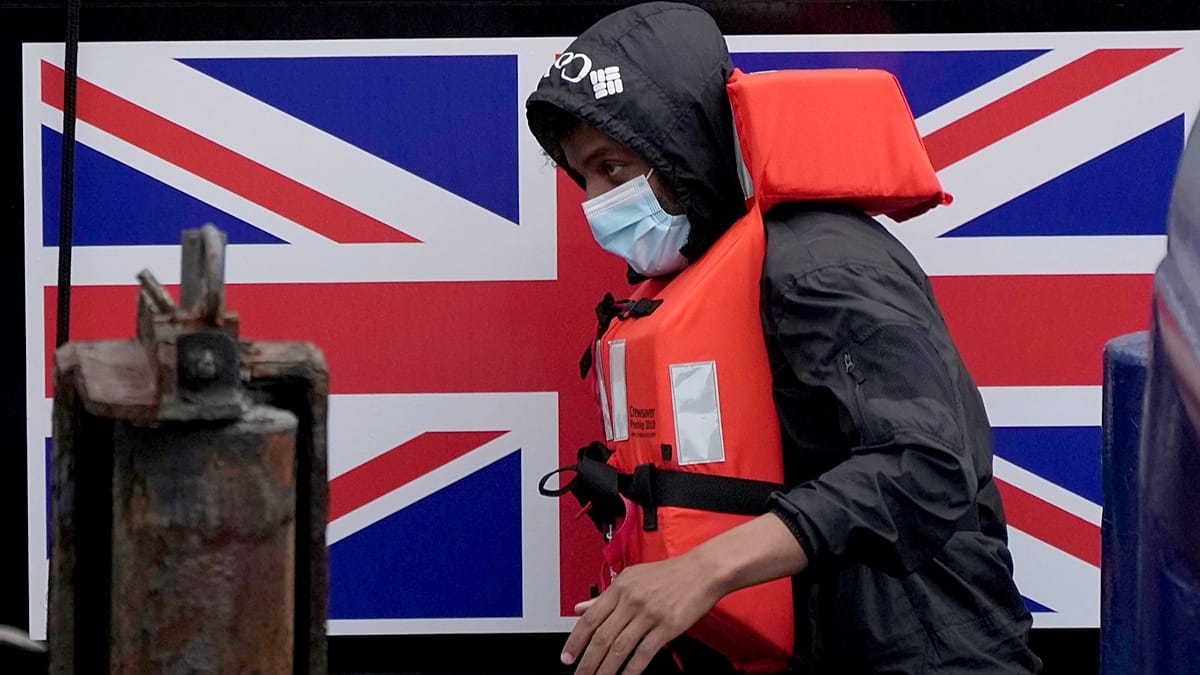
The UK Home Office confirmed on Wednesday that its year-old pilot with France to return migrants who crossed the Channel in small boats has come to an end. The so-called "one in, one out" arrangement, launched in August last year and due to expire on Thursday, will no longer process new cases.
Known as Operation Hillmore, the scheme was a joint effort by London and Paris to curb irregular migration across one of the world's busiest shipping lanes. Under its terms, Britain could send back to France migrants who arrived illegally by small boat and were deemed to have no right to remain in the UK. In exchange, the UK agreed to accept an equal number of asylum seekers from France who were considered likely to qualify for protection, with priority given to vulnerable nationalities and those with family or other ties to Britain.
The two governments had extended the pilot in June until 1 October. Home Office figures show that between 4 August 2025 and 30 June 2026, 1,087 people were returned to France, while 1,117 were transferred to the UK. Over the same period, 27,920 migrants arrived in the UK on small boats, meaning only about 4% of arrivals were sent back—a stark illustration of the programme's limited impact, despite official claims that it would deter people-smuggling networks.
Cost and criticism
Home Secretary Shabana Mahmood told MPs on 15 September that the scheme cost UK taxpayers an average of about £56,000 (€65,500) per migrant returned. That figure has drawn sharp criticism from opposition politicians and migration experts, who question whether the pilot was ever a cost-effective deterrent.
Prime Minister Andy Burnham, who succeeded Keir Starmer in July, acknowledged that Brexit had made stopping small boats harder because the UK no longer enjoys the same level of cooperation with the EU. Speaking to the BBC, Burnham declined to set a specific date for ending the crossings but insisted that he and Mahmood would not relent until they had cracked down on "every element of this criminal, illegal activity."
Burnham has said his government is "changing the whole approach" to small boats, combining tougher enforcement with safe legal routes for asylum seekers. He argues that offering legal pathways would undercut the smuggling gangs' main selling point—the promise of a perilous but possible crossing.
France pushes for a European solution
France's interior minister, Laurent Nuñez, told lawmakers in June that Paris wants a more European approach to illegal migration. He argued that France should not bear sole responsibility for policing an EU external border, pointing to weak controls in countries of first entry and the free movement within the Schengen area that allows migrants to travel onward.
The end of the bilateral pilot comes as France grapples with its own migration challenges, including record public debt that constrains spending on border enforcement. Meanwhile, research shows a sharp rise this year in small boats setting off from Belgium, as smuggling networks seek new launch points along the coast.
Migrants attempting to reach the UK pay smugglers thousands of euros for places on overcrowded inflatable boats. The crossings remain extremely dangerous, and the route has seen numerous tragedies in recent years.
The UK government has not announced a direct replacement for the pilot, but Burnham has signalled that future cooperation with the EU will be central to his strategy. He has also faced pressure from within his own party to ensure that any new approach respects the UK's post-Brexit sovereignty while addressing the humanitarian dimension of the crisis.
For now, the Channel remains a flashpoint in European migration politics, with the UK and France diverging on how best to respond. France's call for an EU-wide mechanism may gain traction as other member states watch the situation closely, particularly those on the bloc's external borders.