The British government's decision to proscribe Palestine Action as a terrorist organisation faces its sternest test yet, as the UK Supreme Court begins a two-day hearing on Wednesday. The appeal, brought by co-founder Huda Ammori, challenges the Home Office's designation, which has sparked widespread arrests and a legal battle over civil liberties.
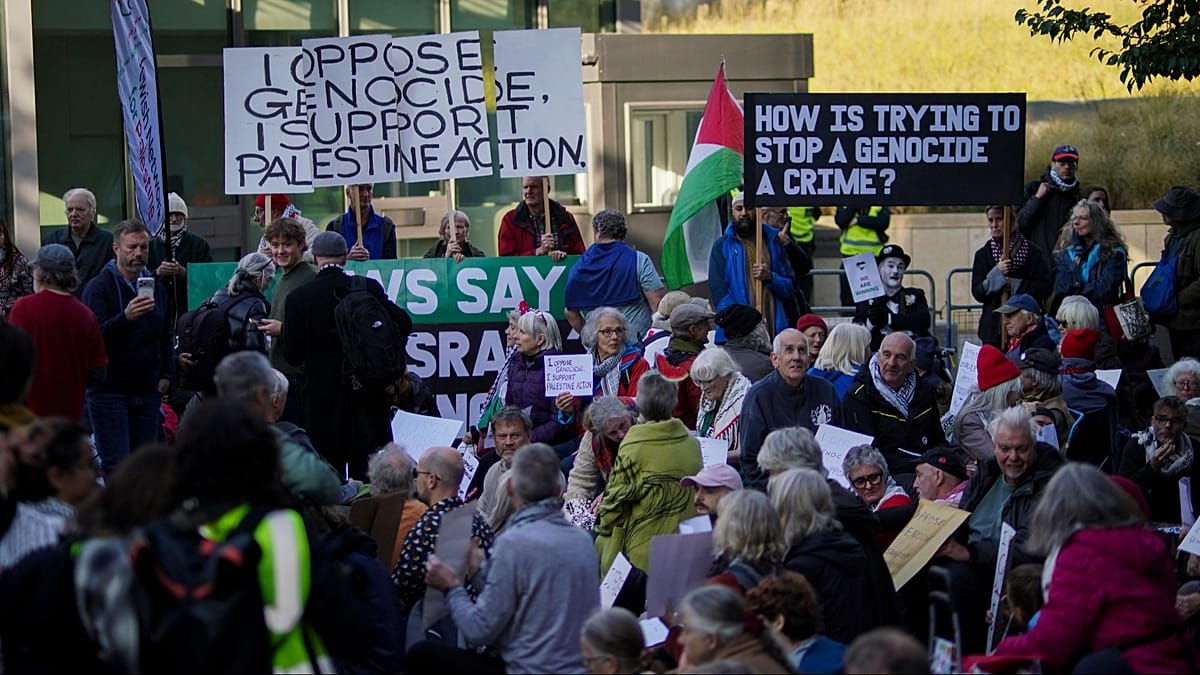
The hearing comes amid ongoing public support for the group, despite the ban. According to campaign group Defend Our Juries, around 4,200 people have been arrested since the proscription was imposed in July last year. Over the weekend, more than 300 supporters were detained by London police for displaying placards with the now-prohibited slogan: "I oppose genocide, I support Palestine Action."
Among those arrested were numerous pensioners, including a priest, a former financial adviser, a military veteran, and Swedish climate activist Greta Thunberg. Public expressions of support for Palestine Action are now a criminal offence under the UK's Terrorism Act, carrying a maximum sentence of 14 years in prison. The ban places the group in the same legal category as Al-Qaeda and Hezbollah, a comparison that has drawn criticism from civil liberties groups.
A contentious designation
Palestine Action, founded in 2020, describes itself as "a direct action movement committed to ending global support for Israel's genocidal and apartheid regime." The group has been linked to a series of acts of vandalism, including damage at a Royal Air Force base and actions targeting Israeli arms manufacturer Elbit Systems in August 2024.
Ammori's appeal is based on a narrow procedural ground, arguing that the Home Office failed to follow its own criteria in making the decision. Court documents indicate that "only three of the 385 actions undertaken by PA over five years were assessed as meeting the definition of terrorism."
The case has already seen a reversal of fortunes. In February, London's High Court ruled the ban was "disproportionate," finding that it resulted in "substantial interference" with the rights to freedom of expression and assembly. However, the Court of Appeal overturned that ruling in June, concluding the ban was "not unlawful" and describing Palestine Action as "a covert organisation operating with secret cells."
The Supreme Court's decision will have significant implications for how the UK balances national security concerns with fundamental rights. It also raises questions about the broader European approach to proscription and protest, as other nations watch closely.
While the UK is no longer an EU member, its legal rulings often influence debates across the continent. The case echoes similar tensions in other European countries, where governments have grappled with defining the line between legitimate political activism and terrorism. For instance, Poland's court crisis has highlighted the delicate balance between judicial independence and executive power, a theme that resonates here.
Supporters of Palestine Action argue that the ban criminalises dissent and targets a movement that has gained traction among a broad spectrum of society. The mass arrests, including of elderly demonstrators, have drawn comparisons to historical civil disobedience campaigns. Critics, however, point to the group's tactics, which have included property damage and alleged intimidation, as justifying the proscription.
The Supreme Court's ruling is expected later this year. Whatever the outcome, the case has already underscored the challenges of legislating against political violence in a way that respects democratic freedoms. As the hearing unfolds, observers across Europe will be watching to see how the UK navigates this contentious issue.