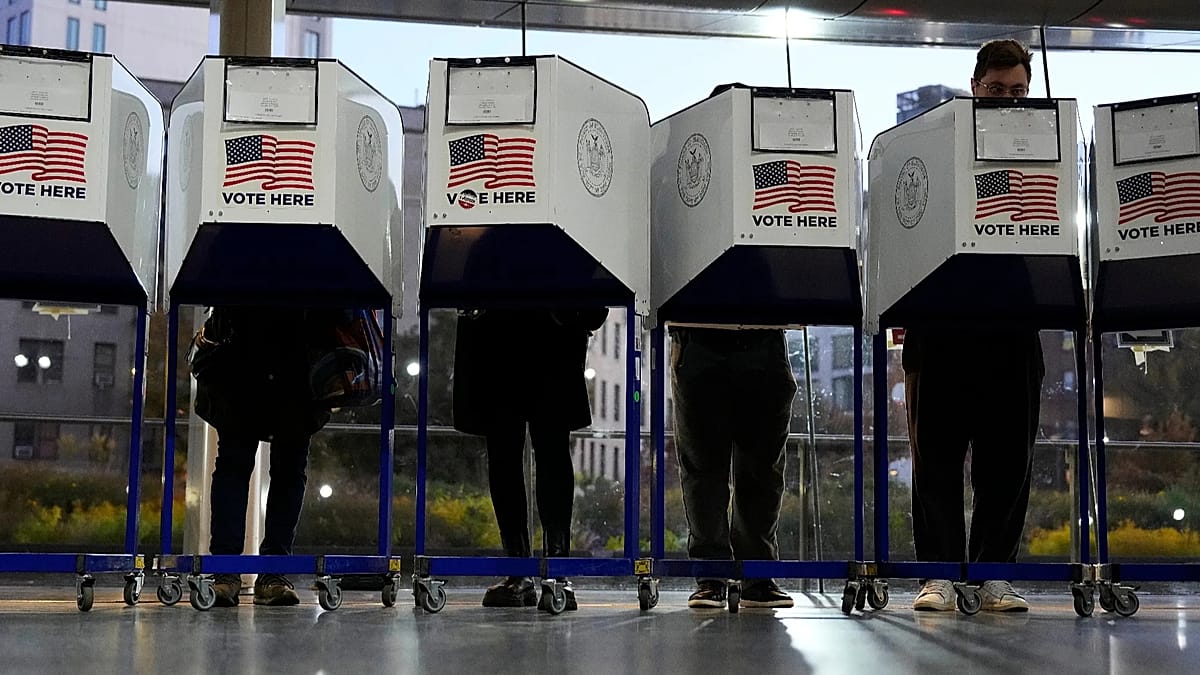
The Democratic Party has secured control of both chambers of the US Congress after a bruising midterm election night for the Republicans, with victories in states that have long been considered safe GOP territory. The result hands Democrats a powerful tool to scrutinise and challenge President Donald Trump's agenda over the next two years.
With nearly all votes counted, Democrats are projected to hold a majority in the House of Representatives, while their success in Senate races in Texas, South Carolina, Iowa, and Kansas has flipped the upper chamber as well. The party needed to win 51 seats in the Senate and 218 in the House; both thresholds have now been crossed.
Among the most striking results was in Texas, where Democrat James Talarico defeated Republican Ken Paxton, a victory that many analysts had considered unlikely in a state that has not elected a Democrat to statewide office in decades. In South Carolina, Democrat Annie Andrews also unseated the Republican incumbent, while Iowa and Kansas delivered historic Senate wins for the party.
In Ohio, a state that has leaned Republican in recent presidential elections and was previously represented by Vice President JD Vance, Democrat Amy Acton defeated Vivek Ramaswamy in the gubernatorial race. The result underscores the breadth of the Democratic wave, which extended well beyond the traditional battlegrounds.
Trump's reaction and threats of veto
President Trump responded to the results with a series of posts on his Truth Social platform, in which he sought to distance himself from the Republican losses. "I wasn't on the ballot and if I was, we would have won in a landslide!" he wrote. He later added that he planned to become a "political pundit, both good and bad, on the reasons these candidates won and lost."
Before the polls had closed, Trump had already signalled his intent to use his executive powers to block Democratic legislation. In an interview with CBS News, he said, "I have the ultimate power - it's called veto," and he did not mind being dubbed "Mr. Veto." He also shared a photo of a red cap emblazoned with the word "veto."
However, in a separate conversation with The New York Times, Trump said he was "absolutely willing" to accept the election results and was ready to work with Democrats. The mixed messages reflect the uncertainty that now surrounds Washington as the balance of power shifts.
The Democratic majority in the House will allow the party to launch investigations into the administration, subpoena documents and witnesses, and hold hearings on a range of issues, from trade policy to immigration. In the Senate, Democrats will control the legislative agenda and the confirmation process for judicial and executive appointments.
For European observers, the outcome is likely to be watched closely, as a more assertive Congress could influence US foreign policy, including relations with NATO allies and the European Union. The immediate market reaction in Asia suggested that investors are bracing for a period of political uncertainty.
The midterm results also come at a time when European leaders are grappling with their own political challenges, from questions about democratic legitimacy in EU institutions to domestic unrest in countries like Germany, where protests have escalated into violence. The US election outcome may embolden those who argue that voters across the democratic world are seeking greater accountability from their leaders.
With control of both chambers, Democrats are expected to move quickly to set their agenda, including potential legislation on voting rights, healthcare, and climate change. But with Trump's veto power and a narrow majority in the Senate, the path to significant legislative change remains fraught.
As the dust settles, the Republican Party faces a period of introspection, with many in the party questioning the direction set by Trump and his allies. The losses in traditionally conservative states have raised doubts about the party's ability to compete in future national elections.