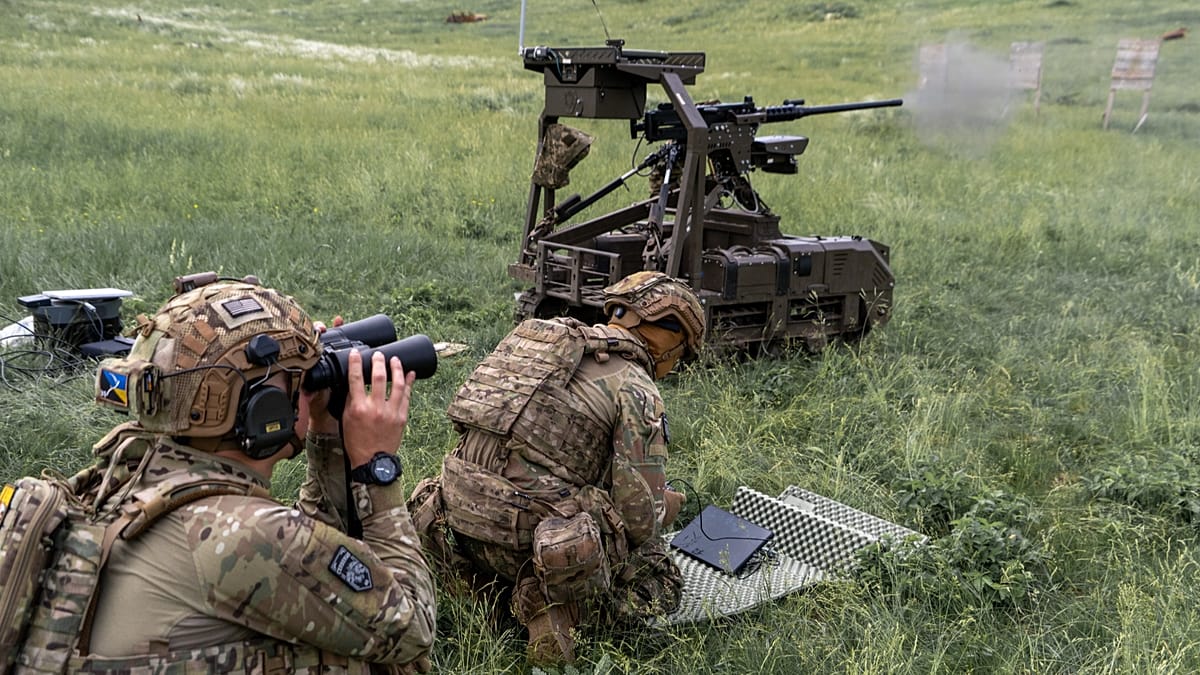
Ukraine's government has approved a new state mechanism to export its domestically produced weaponry, marking a strategic shift as the war with Russia enters its fifth year. The initiative, announced by Defence Minister Mykhailo Fedorov on Wednesday, is designed to raise funds by selling arms to partner countries while maintaining Kyiv's own defense needs as the top priority.
"The government has approved the first transparent mechanism for exporting Ukrainian weapons," Fedorov said. "Countries will be able to purchase Ukrainian weapons and technologies and work directly with Ukrainian manufacturers." The move opens a channel for European and Middle Eastern nations interested in Ukraine's combat-tested drone and anti-drone systems.
Balancing Exports and Domestic Needs
Fedorov emphasized that exports will only proceed if the Ukrainian military's supply is guaranteed. "If the state needs certain weapons, permission may not be granted," he explained. The goal, he added, is to "attract international investment without losing the priority of supplying" Kyiv's armed forces. This cautious approach reflects the delicate balance between generating revenue and ensuring battlefield readiness.
Ukraine has long relied on Western allies for weapons, but it has also developed its own technologies, particularly in drones and counter-drone systems. According to recent reports, the country now produces over 4 million drones annually and could double that number with sufficient funding. Approximately 800 arms producers are currently operating in Ukraine, many with significant production surpluses.
President Volodymyr Zelenskyy revealed last month that Kyiv is working on defense agreements with around 20 countries. In April, he confirmed that Ukrainian military personnel had shot down Iranian Shahed-type drones targeting countries in the Middle East, marking the first public acknowledgment of Kyiv's specialists' results in the Gulf region. "We sent our military experts to the Middle East, including specialists in interceptor drones and electronic warfare," Zelenskyy said. "We demonstrated to some countries how to work with interceptors."
Kyiv has signed 10-year agreements with Saudi Arabia, the United Arab Emirates, and Qatar, under which Ukrainian companies will collaborate with local armed forces to protect specific facilities. Zelenskyy also confirmed ongoing talks with Oman, Kuwait, and Bahrain. These partnerships build on Ukraine's experience in countering drone threats, a skill honed during the war with Russia.
The export mechanism is a response to long-standing demand from both foreign partners and domestic arms producers, who have awaited a formal procedure. Zelenskyy announced in April that Ukraine was opening its arms exports to global markets, and this week's approval formalizes that process. The move could bolster Ukraine's economy while strengthening ties with allies across Europe and the Middle East.
For European partners, the system offers a direct channel to acquire battle-proven technology. Ukraine and France are also negotiating a license for SCALP missile production, reflecting deeper defense cooperation. Meanwhile, a Poland-Ukraine drone deal recently collapsed, underscoring the complexities of such agreements. As Ukraine navigates these challenges, its transparent export mechanism could set a precedent for defense trade in a region reshaped by conflict.