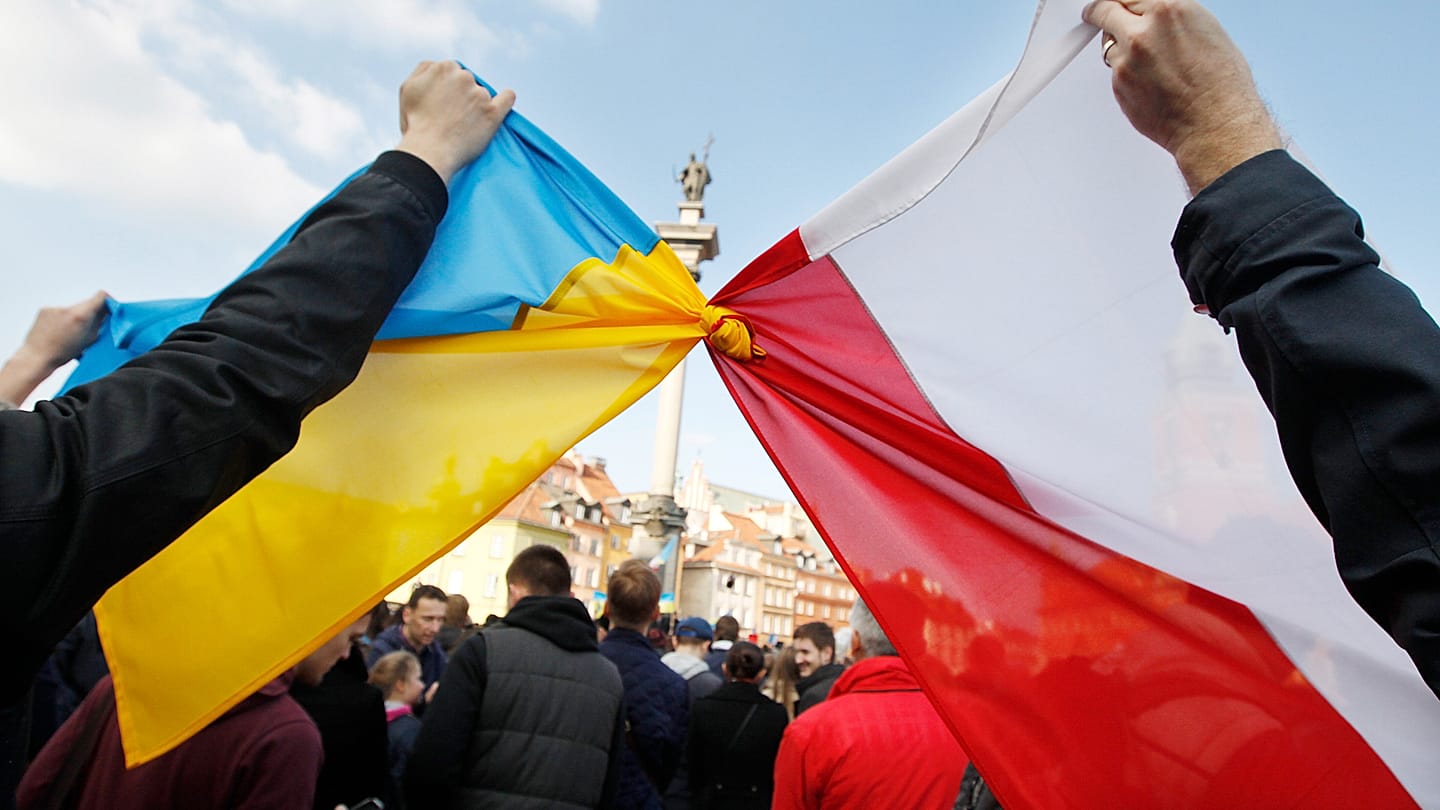
The Ukraine Recovery Conference (URC) begins on Thursday in the Polish port city of Gdańsk, but the absence of both President Volodymyr Zelenskyy and his Polish counterpart Andrzej Duda underscores the fraying of what was once Europe’s most symbolic wartime alliance. The event, which brings together government officials, international donors, and private-sector investors, is meant to coordinate the long-term rebuilding of Ukraine. Yet this year’s edition is as much about mending a bilateral relationship as it is about reconstruction.
A Gathering Without Its Key Figures
Neither Zelenskyy nor Duda will attend in person. The Ukrainian leader cited scheduling conflicts, while the Polish president’s office offered no detailed explanation. Their absence leaves the conference without the high-level political symbolism that has marked previous editions, such as the 2023 gathering in London where then-Prime Minister Rishi Sunak hosted a broad coalition of allies. Instead, Ukraine will be represented by Prime Minister Denys Shmyhal, and Poland by its prime minister, Donald Tusk.
The timing is awkward. Relations between Warsaw and Kyiv have soured sharply in recent months over a dispute about Ukrainian grain exports, which Polish farmers say undercut local prices. Poland, along with several other EU member states, has imposed a unilateral ban on Ukrainian grain imports, a move Kyiv has challenged at the World Trade Organization. The quarrel has spilled into public view, with both sides trading accusations of betrayal and ingratitude.
Beyond trade, historical grievances have resurfaced. Polish officials have revived demands for Ukraine to address the Volhynia massacre of Poles during World War II, a sensitive issue that Kyiv has been reluctant to confront. The Polish government has also blocked some Ukrainian infrastructure projects and delayed the transfer of promised military equipment, further straining ties.
Reconstruction Ambitions Amid Political Friction
The URC’s agenda remains ambitious. Organisers hope to secure new pledges of financial and technical support for Ukraine’s recovery, which the World Bank estimates will cost over $400 billion. Key sessions will focus on energy infrastructure, housing, and the modernisation of Ukraine’s transport network, including its integration with European rail and road corridors. The European Commission has already proposed a €50 billion facility for Ukraine, but disbursement has been slow, partly due to political hurdles in Brussels.
Poland, as Ukraine’s largest neighbour and a key transit hub for Western aid, remains indispensable to any reconstruction effort. The port of Gdańsk itself has handled a significant share of humanitarian and military supplies bound for Ukraine. Yet the current chill in relations threatens to complicate logistics and investment flows. Polish businesses, which have been among the most active in Ukraine’s wartime economy, are watching the political drama with concern.
“The recovery of Ukraine is not just a Ukrainian project; it is a European one,” said a senior EU official who spoke on condition of anonymity. “But if the trust between Warsaw and Kyiv erodes further, it will slow down everything from border crossings to energy projects.” The official noted that the dispute plays directly into Russian narratives about disunity among Ukraine’s supporters.
In a related development, Brussels has warned that the Poland-Ukraine spat plays into Putin's hands, urging both sides to resolve their differences quickly. Meanwhile, Berlin talks have aimed to mend the Poland-Ukraine rift, though progress has been limited.
Can the Conference Deliver?
Despite the political noise, the URC is expected to produce a series of concrete agreements. Several European energy companies are set to announce partnerships to rebuild Ukraine’s power grid, which has been devastated by Russian missile strikes. A new fund for small and medium-sized enterprises, backed by the European Investment Bank, will also be unveiled. But without the presence of the two presidents, the conference risks being seen as a technocratic exercise rather than a political breakthrough.
The absence of Zelenskyy is particularly notable given his previous eagerness to attend such gatherings. His decision to skip Gdańsk may reflect a calculation that the bilateral tensions are too raw for a productive visit. It may also signal a shift in Kyiv’s diplomatic strategy, as Ukraine increasingly looks to other partners, such as Germany and the United Kingdom, for support.
For Poland, the stakes are high. The country has been one of Ukraine’s most vocal advocates within the EU and NATO, and a prolonged rift could undermine its influence in Brussels. The Polish government is also under domestic pressure from farmers and nationalist groups who oppose further concessions to Kyiv. Prime Minister Tusk, who has a reputation for pragmatism, will need to balance these competing demands while keeping the recovery agenda on track.
The conference runs through Friday. Whether it will produce a genuine thaw in Warsaw–Kyiv relations remains uncertain, but the alternative—a deepening divide that benefits no one except Moscow—is a risk neither capital can afford.